What is the flow capacity of ss fittings?
Hey there! As a supplier of SS (stainless steel) fittings, I often get asked about the flow capacity of these fittings. So, I thought I'd sit down and write this blog to give you all the deets.
First off, let's understand what SS fittings are. Stainless steel fittings are used in a whole bunch of industries, like plumbing, chemical processing, and food and beverage. They're super popular because stainless steel is strong, resistant to corrosion, and can handle high temperatures. There are different types of SS fittings, such as elbows, tees, reducers, and couplings, each with its own role in a piping system.
Now, the flow capacity of SS fittings is a big deal. It basically refers to how much fluid (like water, gas, or chemicals) can pass through the fitting in a given amount of time. A bunch of factors can affect this flow capacity.


One of the main factors is the size of the fitting. Just like with a regular pipe, a larger SS fitting can generally allow more fluid to pass through. For example, a 2 - inch diameter SS elbow will have a higher flow capacity than a 1 - inch diameter one. The cross - sectional area of the fitting plays a crucial role here. The formula for the cross - sectional area of a circular fitting is A = πr², where r is the radius of the fitting. So, as the radius increases, the area gets bigger, and more fluid can flow.
The shape of the fitting also matters a lot. Elbows, for instance, cause the fluid to change direction. This change in direction creates turbulence in the fluid flow, which can reduce the flow capacity. The sharper the angle of the elbow, the more turbulence it creates. A 90 - degree elbow will cause more disruption to the flow compared to a 45 - degree elbow. Tees are another type of fitting. A standard tee splits the fluid flow into two directions. When fluid splits, there's a bit of resistance, and this can affect the overall flow capacity.
The roughness of the inner surface of the SS fitting is yet another factor. A smooth inner surface allows the fluid to flow more easily, with less friction. On the other hand, a rough inner surface can cause the fluid to slow down as it rubs against the surface. Stainless steel fittings are usually pretty smooth, but any imperfections or build - up on the surface can impact the flow.
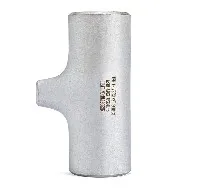
Let's talk about some specific SS fittings and their flow characteristics. Take the 304 Stainless Steel Reducer Tee. This fitting is used when you need to connect pipes of different sizes and also split the flow. The reducing part of the tee means that the cross - sectional area changes along the fitting. This change in area can cause a change in the fluid velocity. According to Bernoulli's principle, when the cross - sectional area decreases, the fluid velocity increases, and vice versa. So, in a reducer tee, the fluid might speed up or slow down depending on the direction of flow and the size of the reduction.
The Stainless Steel Reducer Tee is similar, but it's important to note that different manufacturing processes can lead to variations in the inner surface finish and the accuracy of the size reduction. A well - made reducer tee will have a more predictable flow capacity.
Another important aspect is the pressure drop across the fitting. When fluid flows through an SS fitting, there's a drop in pressure. This pressure drop is related to the flow capacity. A higher flow rate generally means a larger pressure drop. If the pressure drop is too large, it can affect the performance of the entire piping system. Engineers often calculate the pressure drop using equations like the Darcy - Weisbach equation, which takes into account factors like the length of the fitting, the friction factor, and the fluid velocity.
Now, how do we measure the flow capacity of SS fittings? One common way is through flow testing. In a laboratory setting, a known volume of fluid is passed through the fitting at a specific pressure, and the time it takes for the fluid to pass is measured. This data can then be used to calculate the flow rate. Manufacturers also use computer - based simulation tools to predict the flow capacity of their fittings. These simulations can take into account all the factors we've discussed, like shape, size, and surface roughness.
As a supplier of SS fittings, I know that getting the right flow capacity is crucial for our customers. Whether you're building a small plumbing system in your home or a large - scale industrial piping network, choosing the right SS fittings with the appropriate flow capacity is essential.
If you're in the market for SS fittings, you might be interested in the Stainless Steel Reducer Tee. It's a versatile fitting that can meet a lot of different needs. And we have a wide range of other SS fittings too, all made to high - quality standards.
We understand that every project is unique, and that's why we're here to help you select the right fittings with the right flow capacity. If you have any questions about the flow capacity of our SS fittings, or if you're not sure which fitting is best for your application, don't hesitate to reach out. We can have a chat about your project requirements and help you make the best choice.
In conclusion, the flow capacity of SS fittings is influenced by multiple factors, including size, shape, surface roughness, and pressure drop. By understanding these factors, you can make more informed decisions when it comes to selecting the right SS fittings for your project. So, if you're looking to purchase SS fittings and want to ensure optimal flow capacity, get in touch with us. We're here to assist you every step of the way.
References
- Fluid Mechanics textbooks for principles of fluid flow and pressure drop calculations
- Industry standards and guidelines for SS fittings manufacturing and testing