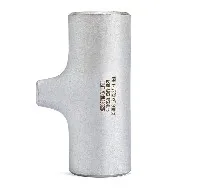
Well, let's talk about whether stainless steel reducers need to be welded during installation. As a supplier of stainless steel reducers, I've dealt with a ton of questions from customers about this topic.
First off, what are stainless steel reducers? They're basically pipe fittings that are used to connect two pipes of different diameters. They're super important in piping systems because they help in changing the flow rate and pressure of the fluid or gas running through the pipes. You can find them in all sorts of industries, like oil and gas, chemical processing, and even in plumbing for your home.
Now, back to the big question: do they need to be welded? The answer isn't always a simple yes or no. It depends on a few factors.
Factors Influencing the Need for Welding
1. Application Requirements
In some applications, a leak - proof connection is an absolute must. For example, in the chemical industry, where corrosive chemicals are being transported through the pipes, a welded joint can provide the highest level of integrity. Welding creates a continuous, seamless connection between the reducer and the pipes, which minimizes the risk of leaks. If there were leaks in these systems, it could lead to safety hazards, environmental damage, and product loss.
On the other hand, in less critical applications, like low - pressure water systems in a building, there might be other options besides welding. For instance, some reducers can be connected using threaded joints or compression fittings. These non - welded connections are much quicker and easier to install, and for low - pressure, non - hazardous applications, they can work just fine.
2. Pipe Material and Size
The material of the pipes and the reducer itself also plays a role. If you're working with thick - walled stainless steel pipes, welding might be the best option. Welding ensures that the connection is as strong as the rest of the pipe. It fuses the materials together, creating a single, unified structure.
However, if the pipes are thin - walled, welding might pose some challenges. Excessive heat from welding can cause distortion or damage to the thin walls. In such cases, non - welded methods like using a suitable adhesive or mechanical couplings could be considered.
The size of the pipes and reducer also matters. Larger diameter pipes and reducers are often welded because it's difficult to achieve a reliable and strong connection with other methods. The weight and stress on these large components require a robust connection that welding can provide.
3. Cost and Time Considerations
Let's be real, cost and time are always factors in any installation project. Welding is generally more expensive and time - consuming than non - welded methods. You need skilled welders, welding equipment, and safety measures. The welding process also takes longer because you have to prepare the surfaces, set up the welding equipment, and perform quality checks after welding.
If you're on a tight budget and need a quick installation, non - welded connections might be more appealing. But you have to balance this with the long - term reliability of the connection. Sometimes, spending a bit more on welding upfront can save you from costly repairs and replacements down the road.
Advantages of Welding Stainless Steel Reducers
1. Strength and Durability
When you weld a stainless steel reducer to the pipes, you get a connection that's as strong as the rest of the piping system. Welded joints can withstand high pressure, temperature, and mechanical stress. They're less likely to break or fail over time, which is crucial in industrial applications where the pipes are under constant use.
2. Leak - Resistance
As I mentioned earlier, welded joints are virtually leak - proof. This is essential in industries where the containment of fluids or gases is critical. Whether it's a high - pressure steam line or a pipeline carrying flammable chemicals, a leak - free connection is a must.


3. Compatibility
Stainless steel is a great material for welding. When you weld a stainless steel reducer to stainless steel pipes, the properties of the material are maintained throughout the connection. This ensures that the entire piping system has consistent corrosion resistance and other desirable properties.
Alternatives to Welding
1. Threaded Connections
Threaded connections are pretty common in smaller - diameter pipes. They're easy to install and don't require any special equipment. You just screw the reducer onto the pipe, and you're good to go. However, they might not be as strong or leak - proof as welded connections, especially in high - pressure or high - temperature applications.
2. Compression Fittings
Compression fittings work by compressing a ring or gasket around the pipe and the reducer. They're a popular choice for DIY projects and some light - duty applications. They're quick to install and can be disassembled if needed. But like threaded connections, they might not be suitable for all situations.
3. Flanged Connections
Flanged connections use flanges that are bolted together. They're often used in high - pressure or large - diameter piping systems. While they provide a strong connection, they require more space and are more expensive compared to other non - welded methods.
If you're in the market for high - quality stainless steel reducers or related products like 316 Stainless Steel Pipe Tee, Stainless Steel Tee Fittings, or Stainless Steel Tee, we've got you covered. Whether you need advice on installation methods or just want to discuss your requirements, don't hesitate to reach out. We're here to help you make the best decision for your project.
References
- "Pipe Fittings Handbook" by Joseph H. Spisak
- "Stainless Steel in Construction" by The Nickel Institute
- Industry standards and guidelines from relevant organizations such as the American Society of Mechanical Engineers (ASME)