In the realm of industrial piping systems, the choice of components is crucial, especially when dealing with corrosive liquid pipelines. One such component that often comes under scrutiny is the 304 buttweld elbow. As a trusted supplier of 304 buttweld elbows, I am frequently asked whether these elbows can be used in corrosive liquid pipelines. In this blog post, I will delve into the characteristics of 304 buttweld elbows, assess their suitability for corrosive environments, and provide insights to help you make an informed decision.
Understanding 304 Buttweld Elbows
Before discussing their use in corrosive liquid pipelines, it's essential to understand what 304 buttweld elbows are. 304 stainless steel is a widely used austenitic stainless steel grade known for its excellent corrosion resistance, formability, and weldability. Buttweld elbows, as the name suggests, are designed to be welded to the pipeline using the butt - welding process, which provides a strong and leak - tight connection.
The 304 buttweld elbows are commonly used in various industries, including food and beverage, chemical processing, and water treatment. They are available in different angles, such as 45 degrees and 90 degrees, and can be customized to meet specific project requirements. Their smooth inner surface minimizes fluid flow resistance, which is beneficial for maintaining efficient pipeline operations.
Corrosion Resistance of 304 Stainless Steel
The corrosion resistance of 304 stainless steel is primarily due to the presence of chromium. Chromium forms a thin, passive oxide layer on the surface of the steel, which acts as a protective barrier against corrosion. This layer is self - healing, meaning that if it is damaged, it can reform in the presence of oxygen.
However, the corrosion resistance of 304 stainless steel has its limitations. In environments with high concentrations of chloride ions, such as seawater or certain chemical solutions, 304 stainless steel may be susceptible to pitting corrosion and stress - corrosion cracking. Pitting corrosion occurs when small holes or pits form on the surface of the steel, while stress - corrosion cracking can lead to the sudden failure of the component under tensile stress in a corrosive environment.
Factors Affecting the Use of 304 Buttweld Elbows in Corrosive Liquid Pipelines
Several factors need to be considered when determining whether 304 buttweld elbows can be used in corrosive liquid pipelines:
1. Type of Corrosive Liquid
The nature of the corrosive liquid is a critical factor. For example, if the liquid is a mild acid or a low - concentration alkaline solution, 304 buttweld elbows may provide adequate corrosion resistance. However, if dealing with highly corrosive substances like concentrated sulfuric acid, hydrochloric acid, or solutions with high chloride content, 304 stainless steel may not be suitable.
2. Temperature and Pressure
Higher temperatures and pressures can accelerate the corrosion process. In a pipeline where the corrosive liquid is at an elevated temperature or under high pressure, the 304 buttweld elbows may experience more severe corrosion. For instance, in a chemical plant where hot corrosive liquids are transported, the increased temperature can reduce the effectiveness of the passive oxide layer on the 304 stainless steel.
3. Flow Rate and Turbulence
The flow rate and turbulence of the corrosive liquid can also impact the corrosion resistance of the 304 buttweld elbows. High - velocity flows and turbulent conditions can cause erosion - corrosion, where the protective oxide layer is continuously removed, exposing the underlying metal to the corrosive medium.
Alternatives to 304 Buttweld Elbows for Corrosive Environments
If the corrosive conditions in the pipeline are too severe for 304 buttweld elbows, there are alternative options available. One such option is the 316L Stainless Steel Elbow. 316L stainless steel contains molybdenum, which enhances its resistance to pitting and crevice corrosion, especially in chloride - containing environments.
Another alternative is to use lined elbows, where the inner surface of the elbow is lined with a corrosion - resistant material such as PTFE (polytetrafluoroethylene) or rubber. This provides an additional layer of protection against the corrosive liquid.
Applications Where 304 Buttweld Elbows Can Be Used
Despite their limitations in highly corrosive environments, 304 buttweld elbows can still be used in many applications involving corrosive liquids. In less aggressive environments, such as domestic water supply systems, where the water has a low level of contaminants, 304 buttweld elbows can provide long - term service.
In the food and beverage industry, where the corrosive agents are usually mild organic acids and salts, 304 buttweld elbows are a popular choice due to their hygienic properties and corrosion resistance. They are also suitable for some low - concentration chemical solutions where the corrosion rate is relatively slow.
Quality Assurance and Testing
As a supplier of 304 buttweld elbows, I ensure that all our products meet the highest quality standards. Our elbows are manufactured using advanced production techniques and undergo rigorous quality control procedures. We perform non - destructive testing, such as ultrasonic testing and magnetic particle testing, to detect any internal or surface defects.
We also provide chemical composition analysis to verify the correct alloy content of the 304 stainless steel. This ensures that the elbows have the expected corrosion resistance properties. Additionally, we can conduct corrosion testing in simulated environments to assess the performance of our elbows in specific corrosive conditions.


Complementary Products
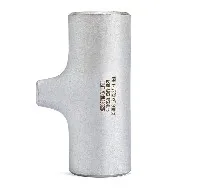
In addition to 304 buttweld elbows, we also offer a range of complementary products, such as Butt Weld Reducer Tee and 90 Degree Stainless Steel Elbow. These products are designed to work seamlessly with the 304 buttweld elbows, providing a complete piping solution for your project.
Conclusion and Call to Action
In conclusion, the use of 304 buttweld elbows in corrosive liquid pipelines depends on a variety of factors, including the type of corrosive liquid, temperature, pressure, and flow conditions. While 304 buttweld elbows have good corrosion resistance in many applications, they may not be suitable for highly corrosive environments.
If you are unsure whether 304 buttweld elbows are the right choice for your project, our team of experts is here to help. We can provide detailed technical advice and guidance based on your specific requirements. Whether you need a small quantity of elbows for a simple project or a large - scale supply for an industrial pipeline, we can meet your needs.
Contact us today to discuss your project requirements and explore how our 304 buttweld elbows and other complementary products can be the ideal solution for your piping system.
References
- ASM Handbook Volume 13A: Corrosion: Fundamentals, Testing, and Protection. ASM International.
- Stainless Steel: A Practical Guide. George E. Totten, D. Scott MacKenzie.