The elastic modulus, also known as Young's modulus, is a fundamental mechanical property that describes the stiffness of a material. It represents the ratio of stress to strain within the elastic deformation range of a material. In simpler terms, it measures how much a material will stretch or compress under a given load. When it comes to 304 stainless steel elbows, understanding their elastic modulus is crucial for a variety of applications, from construction to industrial piping systems.
As a leading supplier of 304 stainless steel elbows, we are often asked about the elastic modulus of these products. 304 stainless steel is a widely used austenitic stainless steel known for its excellent corrosion resistance, formability, and weldability. These properties make it a popular choice for a wide range of applications, including plumbing, architectural structures, and food processing equipment.
The elastic modulus of 304 stainless steel typically ranges from 193 to 200 GPa (gigapascals). This value can vary slightly depending on factors such as the exact chemical composition of the steel, the manufacturing process, and the temperature at which the material is being used. For most practical purposes, however, a value of around 193 GPa is commonly used as a standard for 304 stainless steel.
The significance of the elastic modulus in 304 stainless steel elbows cannot be overstated. In piping systems, for example, the elbow is a critical component that changes the direction of the flow. The elastic modulus determines how the elbow will respond to internal pressure and external forces. A higher elastic modulus means that the elbow will deform less under load, which is essential for maintaining the integrity of the piping system. This is particularly important in high - pressure applications, where even a small amount of deformation can lead to leaks or structural failures.
In addition to its role in piping systems, the elastic modulus of 304 stainless steel elbows also affects their performance in structural applications. When used in architectural structures, the elbows need to be able to withstand the weight of the structure and any additional loads, such as wind or seismic forces. The elastic modulus helps engineers calculate the amount of stress and strain that the elbows can handle, ensuring that the structure remains stable and safe.


Our company takes pride in providing high - quality 304 stainless steel elbows with consistent mechanical properties, including a well - defined elastic modulus. We use advanced manufacturing processes and strict quality control measures to ensure that each elbow meets or exceeds industry standards. Our manufacturing process starts with carefully selected raw materials. We source 304 stainless steel from reputable suppliers who can provide detailed chemical and mechanical property data. This ensures that the base material has the correct composition and the desired elastic modulus.
During the manufacturing process, we use precision machining and forming techniques to shape the elbows. These processes are carefully controlled to minimize any variations in the material's properties. For example, the heat treatment process is optimized to achieve the desired grain structure, which can have a significant impact on the elastic modulus. After the elbows are formed, they undergo a series of quality tests, including non - destructive testing and mechanical property testing. These tests verify that the elastic modulus and other mechanical properties of the elbows are within the specified range.
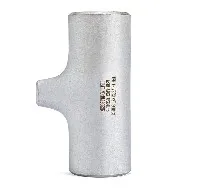
We offer a wide range of 304 stainless steel elbows to meet the diverse needs of our customers. Our product line includes Butt Weld Reducer Tee, which is used to connect pipes of different diameters while changing the flow direction. The high elastic modulus of our 304 stainless steel ensures that these tees can handle the pressure differences and flow changes without significant deformation.
Another popular product in our portfolio is the 45 Degree Steel Elbow. This type of elbow is commonly used when a more gradual change in direction is required. The elastic modulus of our 45 - degree elbows allows them to maintain their shape and structural integrity under various loads, making them suitable for a wide range of applications.
Our Weld 90 Degree Elbow is also a key product. These elbows are used to make sharp turns in piping systems. The high elastic modulus of the 304 stainless steel ensures that the elbows can withstand the high - stress concentrations at the bend without cracking or deforming.
When choosing a supplier for 304 stainless steel elbows, it is essential to consider the quality of the products and the technical support provided. Our team of experienced engineers and technicians is always available to assist customers in selecting the right elbows for their specific applications. We can provide detailed technical information, including the elastic modulus and other mechanical properties, to help customers make informed decisions.
If you are in the market for high - quality 304 stainless steel elbows, we invite you to contact us for a detailed discussion about your requirements. Our commitment to quality, combined with our extensive product range and technical expertise, makes us the ideal partner for your 304 stainless steel elbow needs. Whether you are working on a small - scale plumbing project or a large - scale industrial installation, we can provide the right solution at a competitive price.
In conclusion, the elastic modulus of 304 stainless steel elbows is a critical property that affects their performance in a wide range of applications. As a trusted supplier, we ensure that our elbows have a consistent and appropriate elastic modulus to meet the demands of our customers. Contact us today to start a discussion about your 304 stainless steel elbow procurement needs, and let us help you find the perfect solution for your project.
References
- ASM Handbook Volume 1: Properties and Selection: Irons, Steels, and High - Performance Alloys
- ASTM Standards for Stainless Steel Products