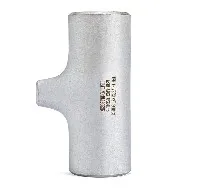
As a supplier of 90 degree weldable elbows, I've witnessed firsthand the crucial role that welding speed plays in the manufacturing and performance of these essential components. In this blog, I'll delve into the multifaceted influence of welding speed on 90 degree weldable elbows, exploring its impact on various aspects such as weld quality, mechanical properties, and production efficiency.
Impact on Weld Quality
Welding speed significantly affects the quality of the weld joint in 90 degree weldable elbows. When the welding speed is too slow, excessive heat is introduced into the joint. This can lead to a large heat - affected zone (HAZ). In the HAZ, the microstructure of the metal changes due to the high temperature. For stainless steel 90 degree elbows, a large HAZ may result in grain growth. Coarse grains in the HAZ can reduce the strength and toughness of the weld joint, making it more susceptible to cracking and corrosion.
On the other hand, if the welding speed is too fast, there may not be enough time for proper fusion between the base metal and the filler metal. This can lead to incomplete fusion, which is a serious weld defect. Incomplete fusion means that parts of the joint are not properly joined, reducing the overall integrity of the 90 degree elbow. For example, in a pipeline system, an elbow with incomplete fusion may fail under pressure, leading to leaks and potential safety hazards.


To achieve optimal weld quality, it is essential to find the right balance in welding speed. This often requires a combination of experience, testing, and understanding of the specific materials being used. For Stainless Steel Butt Weld Pipe Fittings, the recommended welding speed may vary depending on the grade of stainless steel, the thickness of the elbow wall, and the type of welding process.
Influence on Mechanical Properties
The mechanical properties of 90 degree weldable elbows, such as strength, ductility, and hardness, are also strongly influenced by welding speed. A proper welding speed helps to maintain the desired mechanical properties of the weld joint.
When the welding speed is within the appropriate range, the weld metal and the HAZ will have a fine - grained microstructure. Fine - grained microstructures generally result in higher strength and better ductility. For instance, in a Stainless Steel 90 Degree Elbow, a fine - grained weld joint can withstand higher stress and deformation without failure.
However, an incorrect welding speed can cause significant changes in mechanical properties. A slow welding speed may lead to over - tempering or annealing in the HAZ, reducing the hardness and strength of the joint. In contrast, a very fast welding speed may cause rapid cooling, resulting in a hard and brittle microstructure due to the formation of martensite in some steels. This brittle microstructure can lead to sudden and catastrophic failure of the elbow under load.
Effect on Production Efficiency
In a manufacturing setting, welding speed has a direct impact on production efficiency. A higher welding speed generally means that more 90 degree weldable elbows can be produced in a given time. This can reduce production costs and increase the overall output of the factory.
However, increasing the welding speed too much can lead to a decrease in weld quality, as mentioned earlier. This may result in more rework and scrap, which actually reduces production efficiency in the long run. Therefore, it is necessary to optimize the welding speed to achieve the best balance between production speed and weld quality.
For example, by using advanced welding equipment and techniques, it is possible to increase the welding speed without sacrificing weld quality. Some modern welding machines can automatically adjust the welding parameters, including speed, based on the real - time conditions of the weld. This allows for a more efficient and consistent production process.
Welding Speed and Different Welding Processes
Different welding processes have different optimal welding speeds for 90 degree weldable elbows. For example, in gas tungsten arc welding (GTAW), which is often used for high - quality stainless steel welds, the welding speed is relatively slower compared to shielded metal arc welding (SMAW). GTAW provides better control over the weld pool, but it requires more time to ensure proper fusion.
In contrast, submerged arc welding (SAW) can achieve relatively high welding speeds while maintaining good weld quality. SAW is commonly used for thick - walled 90 degree elbows in large - scale production. The high - speed welding capability of SAW makes it suitable for mass - producing elbows with consistent quality.
Considerations for Different Materials
The material of the 90 degree weldable elbow also affects the optimal welding speed. For carbon steel elbows, the welding speed can be adjusted based on the carbon content. Higher carbon content may require slower welding speeds to avoid cracking due to the formation of hard and brittle microstructures.
For Stainless Steel Butt Weld Pipe Fittings, the alloying elements in stainless steel, such as chromium and nickel, can influence the heat transfer and solidification characteristics during welding. Different grades of stainless steel, such as 304 and 316, may have different recommended welding speeds. For example, stainless steel 316, which contains molybdenum for better corrosion resistance, may require a slightly different welding speed compared to 304 stainless steel to achieve the best weld quality.
Conclusion
In conclusion, welding speed has a profound influence on 90 degree weldable elbows in terms of weld quality, mechanical properties, and production efficiency. As a supplier, we understand the importance of finding the optimal welding speed for each specific application. By carefully considering the material, the welding process, and the desired properties of the elbow, we can ensure that our customers receive high - quality 90 degree weldable elbows.
If you are in the market for 90 degree weldable elbows or have any questions about the welding process and its influence on the product, we are here to help. Our team of experts can provide you with detailed information and guidance on choosing the right elbows for your project. Contact us today to start a fruitful business negotiation and find the perfect solution for your needs.
References
- Welding Handbook, American Welding Society.
- Stainless Steel Handbook, Nickel Institute.
- "Influence of Welding Parameters on the Quality of Welded Joints", Journal of Materials Science and Engineering.