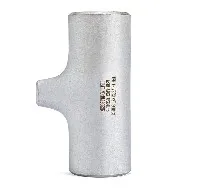
Hey there! I'm a supplier of butt weld fittings, and today I want to chat about something super important in our line of work: the effect of welding current on the quality of butt weld fittings.


First off, let's quickly understand what butt weld fittings are. They're crucial components in piping systems, used to connect pipes of different sizes, directions, or to make branches. As a supplier, I deal with all sorts of these fittings, like Stainless Steel Reducer Tee, Stainless Steel Tee, and Stainless Steel Tee Fittings.
Now, welding current is like the heartbeat of the welding process. It's the electrical current that flows through the welding arc, and it has a huge impact on how well the butt weld fittings turn out.
How Welding Current Affects Penetration
One of the most significant effects of welding current is on penetration. Penetration refers to how deep the weld metal fuses into the base metal of the butt weld fitting. When the welding current is too low, the penetration is shallow. This means that the bond between the two pieces of metal isn't as strong as it should be. The weld might look okay on the surface, but it can easily crack or break under stress.
On the other hand, if the welding current is too high, excessive penetration can occur. This can lead to burn - through, where the weld melts completely through the base metal. It's like overcooking a steak; instead of a nice, juicy piece of meat, you end up with a charred mess. In the case of butt weld fittings, burn - through can compromise the structural integrity of the fitting and make it unsuitable for use.
So, finding the right welding current is crucial for achieving the optimal penetration. It ensures that the weld has a strong bond with the base metal without causing any damage.
Impact on Weld Width and Reinforcement
Welding current also affects the width and reinforcement of the weld. The width of the weld is the distance between the edges of the melted base metal on either side of the weld centerline. When the welding current is increased, the weld width generally increases. This is because more heat is being generated, which melts a larger area of the base metal.
The reinforcement of the weld is the extra weld metal that sits on top of the joint. Higher welding currents can lead to more weld metal being deposited, resulting in a larger reinforcement. However, an overly large reinforcement can cause stress concentrations in the fitting. These stress concentrations can act as weak points, making the fitting more prone to failure.
Conversely, a low welding current can result in a narrow weld with insufficient reinforcement. This can lead to a weaker weld that may not be able to withstand the forces applied to the butt weld fitting during normal operation.
Effect on Weld Defects
Welding current plays a big role in the formation of weld defects. Low welding currents can cause lack of fusion, which is when the weld metal doesn't fully fuse with the base metal. This can create small gaps or voids in the weld, reducing its strength. Lack of fusion can also lead to porosity, where small gas bubbles are trapped in the weld metal.
High welding currents, as mentioned earlier, can cause burn - through. Additionally, they can lead to the formation of spatter. Spatter is the small droplets of molten metal that are ejected from the weld pool during the welding process. These droplets can stick to the surface of the butt weld fitting, creating a rough and uneven finish. They can also cause inclusions in the weld, where foreign particles are trapped in the weld metal.
Material Considerations
Different materials used in butt weld fittings have different requirements for welding current. For example, stainless steel butt weld fittings require a different welding current compared to carbon steel fittings. Stainless steel has a lower thermal conductivity than carbon steel, which means it retains heat better. So, generally, lower welding currents can be used for stainless steel to avoid overheating and distortion.
The thickness of the base metal also matters. Thicker butt weld fittings usually require higher welding currents to ensure proper penetration. If the current is too low for a thick - walled fitting, the weld won't penetrate deeply enough, resulting in a weak joint.
Controlling Welding Current for Quality Butt Weld Fittings
As a supplier, I know that controlling the welding current is essential for producing high - quality butt weld fittings. Welders need to carefully select the appropriate welding current based on the material, thickness of the fitting, and the type of welding process being used.
Modern welding machines often come with adjustable current settings. This allows welders to fine - tune the welding current to achieve the best results. Welders also need to monitor the welding process closely. They can use visual inspection techniques to check for signs of proper penetration, width, and reinforcement. If they notice any issues, they can adjust the welding current accordingly.
Importance of Quality Butt Weld Fittings
High - quality butt weld fittings are essential for the safe and efficient operation of piping systems. In industries such as oil and gas, chemical processing, and power generation, these fittings are subjected to high pressures, temperatures, and corrosive environments. A faulty butt weld fitting can lead to leaks, which can be not only costly but also dangerous.
As a supplier, I take pride in providing butt weld fittings that meet the highest quality standards. By understanding the effect of welding current on the quality of these fittings, I can ensure that my products are reliable and durable.
Conclusion
In conclusion, welding current has a profound effect on the quality of butt weld fittings. It affects penetration, weld width, reinforcement, and the formation of weld defects. Finding the right welding current is a delicate balance that depends on factors such as material type, thickness, and welding process.
If you're in the market for high - quality butt weld fittings, including Stainless Steel Reducer Tee, Stainless Steel Tee, and Stainless Steel Tee Fittings, don't hesitate to reach out for a procurement discussion. We're here to help you get the best fittings for your needs.
References
- AWS Welding Handbook, Volume 1: Welding Science and Technology
- ASME Boiler and Pressure Vessel Code, Section IX: Welding and Brazing Qualifications
- "Welding Metallurgy" by John C. Lippold and David J. Kotecki