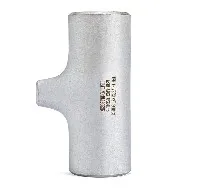
As a supplier of Weld 90 Degree Elbows, I often encounter questions from customers regarding the aging resistance of these essential components. Aging resistance is a critical factor in the performance and longevity of Weld 90 Degree Elbows, especially in various industrial applications where they are exposed to harsh environments over extended periods. In this blog, I will delve into what aging resistance means for Weld 90 Degree Elbows, the factors that influence it, and how we ensure our products meet high - aging resistance standards.
Understanding Aging Resistance in Weld 90 Degree Elbows
Aging resistance refers to the ability of a Weld 90 Degree Elbow to maintain its structural integrity, mechanical properties, and functionality over time when exposed to different environmental conditions. These conditions can include temperature variations, chemical exposure, mechanical stress, and corrosion. A high - aging resistance elbow will not degrade rapidly, which is crucial for the safety and efficiency of the entire piping system.
In industrial settings, Weld 90 Degree Elbows are used to change the direction of fluid flow in pipelines. If an elbow ages prematurely, it can lead to leaks, reduced flow capacity, and even system failures. For example, in a chemical processing plant, an elbow with poor aging resistance may corrode due to the aggressive chemicals flowing through it, causing the elbow to weaken and eventually rupture. This can result in costly downtime, environmental hazards, and potential safety risks for workers.
Factors Affecting the Aging Resistance of Weld 90 Degree Elbows
Material Selection
The choice of material is one of the most significant factors influencing the aging resistance of Weld 90 Degree Elbows. Different materials have different inherent properties that determine how well they can withstand environmental factors.
Stainless steel is a popular choice for Weld 90 Degree Elbows due to its excellent corrosion resistance. For instance, 316L Stainless Steel Elbow contains molybdenum, which enhances its resistance to pitting and crevice corrosion in chloride - containing environments. This makes it suitable for applications in marine, chemical, and food processing industries.
Carbon steel is another commonly used material. It is strong and relatively inexpensive but may be more prone to corrosion compared to stainless steel. However, with proper coatings and maintenance, carbon steel elbows can also have good aging resistance. Alloy steels can offer a combination of strength and corrosion resistance, depending on the specific alloying elements used.
Welding Quality
The welding process used to fabricate the 90 - degree elbow is crucial for its aging resistance. A high - quality weld ensures a strong and uniform joint, which is less likely to develop cracks or weaknesses over time.
Poor welding can lead to issues such as incomplete fusion, porosity, and residual stresses. These defects can act as initiation points for corrosion and fatigue, reducing the elbow's aging resistance. At our company, we use advanced welding techniques and strictly adhere to welding standards to ensure the integrity of our Weld 90 Degree Elbows. Our welders are highly trained and certified, and we conduct thorough quality control inspections to detect any potential welding defects.
Environmental Conditions
The environment in which the Weld 90 Degree Elbow operates plays a significant role in its aging process. Temperature variations can cause expansion and contraction of the material, leading to mechanical stress. High - temperature environments can also accelerate chemical reactions, such as oxidation and corrosion.
Chemical exposure is another critical factor. In industries where aggressive chemicals are present, such as the petrochemical and pharmaceutical industries, the elbow must be able to resist chemical attack. For example, in a sulfuric acid production plant, the elbows need to be made of materials that can withstand the corrosive nature of sulfuric acid.
Mechanical stress, such as vibration and pressure fluctuations, can also contribute to the aging of the elbow. Over time, these stresses can cause fatigue and cracking, especially if the elbow is not designed to handle them properly.
Ensuring High Aging Resistance in Our Weld 90 Degree Elbows
Quality Materials
We source high - quality materials from reputable suppliers. Our Stainless Steel Elbow Fitting and Stainless Steel Seamless Elbow are made from premium stainless steel grades that offer excellent corrosion resistance and mechanical properties. We conduct material testing to ensure that the materials meet our strict quality standards before they are used in the manufacturing process.
Advanced Manufacturing Processes
We employ state - of - the - art manufacturing processes to produce our Weld 90 Degree Elbows. Our manufacturing facilities are equipped with the latest machinery and technology, allowing us to achieve precise dimensions and high - quality welds.
We also use heat treatment processes to relieve residual stresses and improve the material's properties. This helps to enhance the elbow's resistance to mechanical stress and fatigue, contributing to its overall aging resistance.
Quality Control
Quality control is an integral part of our production process. We have a comprehensive quality control system in place that includes inspections at every stage of manufacturing.
Non - destructive testing methods, such as ultrasonic testing and radiographic testing, are used to detect any internal defects in the elbows. We also conduct destructive testing, such as tensile and hardness testing, to ensure that the mechanical properties of the elbows meet our specifications.
Coatings and Surface Treatments
In some cases, we apply coatings and surface treatments to further enhance the aging resistance of our Weld 90 Degree Elbows. For example, we may apply a corrosion - resistant coating to carbon steel elbows to protect them from rust and other forms of corrosion.
Surface treatments, such as passivation for stainless steel elbows, can also improve their corrosion resistance by removing impurities from the surface and forming a protective oxide layer.
Importance of Aging Resistance for Our Customers
For our customers, the aging resistance of our Weld 90 Degree Elbows translates into long - term cost savings and reliability. By investing in elbows with high aging resistance, they can reduce the frequency of replacements and maintenance, minimizing downtime and associated costs.


In industries where safety is of utmost importance, such as the nuclear and aerospace industries, the aging resistance of piping components is critical. Our high - quality Weld 90 Degree Elbows provide peace of mind to our customers, knowing that their systems are less likely to fail due to premature aging.
Conclusion
The aging resistance of Weld 90 Degree Elbows is a complex but crucial aspect of their performance. By carefully considering factors such as material selection, welding quality, and environmental conditions, we can produce elbows that have excellent aging resistance.
At our company, we are committed to providing our customers with the highest - quality Weld 90 Degree Elbows. Our focus on using premium materials, advanced manufacturing processes, and strict quality control ensures that our elbows can withstand the test of time.
If you are in need of Weld 90 Degree Elbows with high aging resistance, we invite you to contact us for a detailed discussion about your requirements. Our team of experts is ready to assist you in finding the most suitable solution for your piping system.
References
- ASME Boiler and Pressure Vessel Code.
- API Standards for Piping Components.
- ASTM Standards for Metals and Alloys.