Hey there! As a supplier of SS pipe fittings, I often get asked about the boriding process of these fittings. So, let's dive right in and explore what this process is all about.
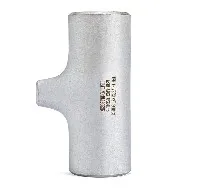
First off, what are SS pipe fittings? Well, they're essential components in various industries like plumbing, oil and gas, and chemical processing. They're used to connect, control, and change the direction of fluid flow in a piping system. For example, Stainless Steel Tee is a common type of fitting that has a T-shaped design, allowing the flow of fluid in three directions. There are also other types like 316 Stainless Steel Pipe Tee and 304 Stainless Steel Reducer Tee, each with its own unique properties and applications.
Now, let's talk about boriding. Boriding is a thermochemical surface treatment process. It involves diffusing boron into the surface of a metal, in this case, stainless steel pipe fittings. This process is carried out at high temperatures, usually between 800°C and 1050°C. The boron atoms penetrate the surface of the stainless steel, reacting with the metal to form hard and wear - resistant boride layers.
The boriding process typically starts with the preparation of the SS pipe fittings. The fittings need to be thoroughly cleaned to remove any dirt, grease, or oxide layers on the surface. This ensures that the boron can effectively diffuse into the metal. After cleaning, the fittings are placed in a boriding medium. There are different types of boriding media, such as solid, liquid, or gaseous.
Solid boriding is a popular method. In this approach, the SS pipe fittings are packed in a container filled with a boriding powder. The powder usually contains boron - rich compounds like boron carbide or ferroboron. The container is then heated in a furnace. As the temperature rises, the boron atoms from the powder start to diffuse into the surface of the stainless steel. It's kind of like a slow - motion invasion of boron atoms into the metal matrix.


Liquid boriding involves immersing the SS pipe fittings in a molten boriding bath. The bath contains boron - containing salts. This method has the advantage of providing a more uniform boride layer compared to solid boriding. However, it requires special equipment to handle the molten salts, which can be quite corrosive.
Gaseous boriding uses a boron - containing gas, such as boron trichloride or diborane. The gas is introduced into a furnace where the SS pipe fittings are located. The boron atoms in the gas react with the surface of the stainless steel to form boride layers. This method allows for precise control of the boriding process, but it also has safety concerns due to the use of toxic gases.
So, why is boriding important for SS pipe fittings? Well, the boride layers formed on the surface of the fittings offer several benefits. Firstly, they significantly increase the hardness of the fittings. Hardness is crucial in applications where the fittings are exposed to abrasive materials or high - pressure environments. For example, in the mining industry, where pipes carry slurries containing large amounts of abrasive particles, borided SS pipe fittings can withstand the wear and tear much better than non - borided ones.
Secondly, boriding improves the corrosion resistance of the SS pipe fittings. The boride layers act as a barrier, preventing corrosive substances from reaching the underlying stainless steel. This is especially important in chemical processing plants where the pipes may come into contact with aggressive chemicals.
Another advantage is the enhanced resistance to high - temperature oxidation. In applications where the SS pipe fittings are exposed to high temperatures, such as in some power generation plants, the boride layers can protect the metal from oxidation, which can weaken the material over time.
However, the boriding process also has some challenges. One of the main issues is the cost. The high - temperature treatment and the use of special boriding media can make the process relatively expensive. Another challenge is the control of the boride layer thickness and uniformity. If the boride layer is too thick, it may become brittle and prone to cracking. And non - uniform layers can lead to uneven performance of the SS pipe fittings.
As a supplier of SS pipe fittings, we understand the importance of offering high - quality products. That's why we pay close attention to the boriding process of our fittings. We have strict quality control measures in place to ensure that the boride layers are of the right thickness and uniformity. We also work with experienced technicians who can optimize the boriding parameters to meet the specific requirements of our customers.
If you're in the market for SS pipe fittings, whether it's standard Stainless Steel Tee or specialized 316 Stainless Steel Pipe Tee and 304 Stainless Steel Reducer Tee, we're here to help. We can provide you with detailed information about the boriding process of our products and how it can benefit your applications. If you're interested in purchasing our SS pipe fittings, don't hesitate to reach out for a procurement discussion. We're eager to work with you and provide the best solutions for your piping needs.
References:
- Smith, J. (2018). Surface Treatment Technologies for Metals. Elsevier.
- Johnson, R. (2020). Handbook of Stainless Steel Applications. CRC Press.