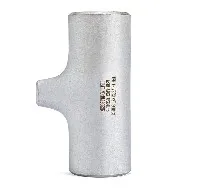
Are there different types of connections for 45 Degree Steel Elbows?
As a supplier of 45 Degree Steel Elbows, I often encounter inquiries from customers about the various types of connections available for these essential piping components. The 45 Degree Steel Elbow is a crucial part in many piping systems, used to change the direction of the pipeline by 45 degrees. Different applications require different connection types, and understanding these options is vital for ensuring the efficiency and reliability of the overall piping system.
Welded Connections
Welded connections are one of the most common types used for 45 Degree Steel Elbows. This method provides a strong and permanent joint between the elbow and the pipes. There are two main types of welded connections: butt - weld and socket - weld.
Butt - weld Connections
Butt - weld connections are widely used in high - pressure and high - temperature applications. In this process, the ends of the 45 Degree Steel Elbow and the pipes are beveled to allow for a full - penetration weld. The beveling ensures that the weld metal can fill the joint completely, creating a seamless and leak - proof connection. The strength of the butt - weld connection is comparable to that of the parent material, making it suitable for systems where integrity is of utmost importance. For more information on a related product, 90 degree butt weld can offer additional insights.
The installation of butt - weld connections requires skilled welders and proper welding equipment. Welding procedures must follow strict codes and standards, such as those set by the American Society of Mechanical Engineers (ASME). Quality control measures, including non - destructive testing (NDT) methods like ultrasonic testing (UT) and radiographic testing (RT), are often employed to ensure the quality of the welds.
Socket - weld Connections
Socket - weld connections are another type of welded joint for 45 Degree Steel Elbows. In this case, the pipe is inserted into the socket end of the elbow, and a fillet weld is used to secure the joint. Socket - weld connections are typically used in small - diameter pipes and lower - pressure applications. They are easier to install compared to butt - weld connections, as they do not require beveling of the pipe ends.
However, socket - weld connections have some limitations. The fillet weld may create a small cavity at the root of the joint, which can lead to corrosion or stress concentration if not properly designed or maintained. Despite these limitations, socket - weld connections are still a popular choice in many industrial applications due to their simplicity and cost - effectiveness.
Threaded Connections
Threaded connections are a convenient option for 45 Degree Steel Elbows, especially in low - pressure and small - diameter applications. In this type of connection, the ends of the elbow and the pipes are threaded, allowing them to be screwed together. Threaded connections are easy to install and disassemble, making them suitable for systems that require frequent maintenance or modifications.
There are different types of threads used for 45 Degree Steel Elbows, including National Pipe Thread (NPT) and British Standard Pipe Thread (BSP). NPT is commonly used in North America, while BSP is more prevalent in Europe and other parts of the world. It is important to ensure that the threads on the elbow and the pipes are compatible to prevent leaks.
One of the main advantages of threaded connections is their flexibility. They can be used in a variety of piping materials, including steel, copper, and plastic. However, threaded connections are not as strong as welded connections and may be more prone to leakage under high - pressure or high - vibration conditions.
Flanged Connections
Flanged connections are a popular choice for 45 Degree Steel Elbows in large - diameter and high - pressure applications. In this type of connection, flanges are attached to the ends of the elbow and the pipes, and the two flanges are bolted together with a gasket in between to create a sealed joint.
Flanged connections offer several advantages. They are easy to install and disassemble, which is beneficial for maintenance and replacement of components. They also provide a strong and reliable connection, capable of withstanding high pressures and temperatures. There are different types of flanges available, such as weld - neck flanges, slip - on flanges, and socket - weld flanges, each with its own characteristics and applications.


For example, weld - neck flanges are often used in high - pressure and high - temperature applications due to their high strength and good stress distribution. Slip - on flanges, on the other hand, are easier to install and are commonly used in low - to medium - pressure systems. For further exploration on stainless steel elbows with welded connections, Stainless Steel Weld Elbows gives detailed information.
Other Types of Connections
In addition to the above - mentioned connection types, there are also some specialized connections for 45 Degree Steel Elbows. For example, grooved connections are used in some fire protection systems and large - diameter water mains. In a grooved connection, grooves are machined on the ends of the elbow and the pipes, and a coupling is used to join them together. Grooved connections are quick and easy to install, and they can accommodate some pipe movement and vibration.
Clamp connections are another option, which are often used in sanitary applications. Clamp connections use a clamp to hold the elbow and the pipes together, providing a clean and easy - to - disassemble joint. This type of connection is commonly used in the food, beverage, and pharmaceutical industries, where hygiene is of utmost importance.
Factors to Consider When Choosing a Connection Type
When selecting a connection type for 45 Degree Steel Elbows, several factors need to be considered.
Pressure and Temperature
The pressure and temperature of the fluid in the piping system are crucial factors. Welded connections are generally preferred for high - pressure and high - temperature applications, as they provide a strong and permanent joint. Threaded connections are more suitable for low - pressure and low - temperature systems.
Pipe Material and Size
The material and size of the pipes also play a role in the choice of connection type. Welded connections are commonly used for large - diameter steel pipes, while threaded connections are more often used for small - diameter pipes. The compatibility of the connection material with the pipe material is also important to prevent corrosion and ensure the longevity of the piping system.
Installation and Maintenance Requirements
The ease of installation and maintenance is another important consideration. Flanged connections and threaded connections are easier to install and disassemble compared to welded connections. In systems that require frequent maintenance or modifications, these types of connections may be more suitable.
Cost
Cost is always a factor in any engineering project. Welded connections may require more labor and equipment, which can increase the overall cost. Threaded connections and flanged connections are generally more cost - effective in terms of installation, but the cost of the flanges and gaskets in flanged connections needs to be taken into account.
Conclusion
In conclusion, there are indeed different types of connections for 45 Degree Steel Elbows, each with its own advantages and disadvantages. As a supplier, we understand the importance of matching the right connection type to the specific requirements of the piping system. Whether it is a high - pressure industrial pipeline or a low - pressure plumbing system, we can provide the appropriate 45 Degree Steel Elbows with the suitable connection type.
If you are in the process of designing or upgrading a piping system and need more information about 45 Degree Steel Elbows and their connection types, or if you are interested in purchasing our products, we welcome you to reach out for a procurement discussion. Our team of experts is ready to assist you in making the best choices for your project. We offer high - quality 45 Degree Steel Elbows with reliable connection solutions to meet your needs.
References
- American Society of Mechanical Engineers (ASME). B31.3 Process Piping Code.
- The Welding Institute. Welding Procedures and Quality Control.
- Pipe Fittings Handbook. McGraw - Hill Professional.