Hey there! As a supplier of stainless pipe fittings, I've seen firsthand the differences between various grades of these essential components. In this blog, I'm gonna break down what sets these grades apart and why it matters for your projects.
1. Grade 304 Stainless Pipe Fittings
Let's start with one of the most common grades: 304 stainless steel. This grade is a go - to for many applications, and it's easy to see why. 304 stainless steel contains about 18% chromium and 8% nickel. The chromium forms a passive oxide layer on the surface of the pipe fittings, which gives them excellent corrosion resistance.
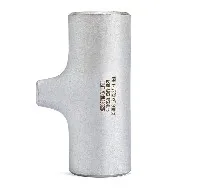
This means that 304 stainless pipe fittings can handle a wide range of environments. Whether it's a mildly corrosive industrial setting or a domestic water supply system, 304 can do the job. They're also relatively easy to fabricate, so you can get them in different shapes and sizes, like the 304 Stainless Steel Reducer Tee.
In terms of strength, 304 stainless pipe fittings are pretty sturdy. They can withstand normal pressure and stress in most piping systems. However, they're not the best choice for extremely high - temperature or highly corrosive environments. For example, in a chemical plant where there are strong acids or in a high - heat furnace, 304 might not hold up as well.
2. Grade 316 Stainless Pipe Fittings
Next up is 316 stainless steel. This grade is an upgrade from 304 in many ways. In addition to the chromium and nickel, 316 contains about 2 - 3% molybdenum. The molybdenum significantly enhances the corrosion resistance, especially against chloride - containing environments.
So, if you're dealing with seawater, salt - laden air, or certain chemicals that contain chlorides, 316 stainless pipe fittings are the way to go. They're commonly used in marine applications, like boat plumbing and offshore oil rigs.
In terms of mechanical properties, 316 is similar to 304 in terms of strength, but it has better creep resistance at high temperatures. Creep is the slow deformation of a material under constant stress over time. So, in a high - temperature piping system where there's continuous stress, 316 will maintain its shape better than 304.
Of course, all these extra benefits come at a cost. 316 stainless pipe fittings are generally more expensive than 304. But if your project requires the added corrosion and high - temperature resistance, it's worth the investment. You can find different types of 316 fittings, such as the Stainless Steel Reducer Tee made from 316 stainless steel.
3. Grade 409 Stainless Pipe Fittings
Now, let's talk about 409 stainless steel. This grade is a ferritic stainless steel, which means it has a different crystal structure compared to the austenitic 304 and 316. 409 contains around 11 - 12% chromium, which gives it some corrosion resistance, but it's not as good as 304 or 316.
The main advantage of 409 stainless pipe fittings is their cost. They're the most affordable option among these grades. They're often used in applications where the corrosion risk is low, such as in automotive exhaust systems. In an exhaust system, the main concern is withstanding high temperatures and some mild corrosion from exhaust gases.
409 has good heat resistance and can handle the thermal cycling that occurs in an exhaust system. However, it's not suitable for applications where there's a lot of moisture or exposure to aggressive chemicals. Its lower corrosion resistance means that it will start to rust or corrode faster in a more corrosive environment.
4. Grade 2205 Duplex Stainless Pipe Fittings
Duplex stainless steel, specifically grade 2205, is a unique option. It combines the best of both worlds - the strength of ferritic stainless steel and the corrosion resistance of austenitic stainless steel.
2205 contains about 22% chromium, 5% nickel, and 3% molybdenum. This combination gives it excellent corrosion resistance, similar to 316 but even better in some cases. It also has much higher strength than 304, 316, and 409.


In terms of applications, 2205 is used in demanding environments such as chemical processing plants, pulp and paper mills, and some high - pressure piping systems. The high strength allows for thinner - walled pipe fittings, which can save on material costs and weight. But again, like 316, 2205 is more expensive than 304 and 409 due to its superior properties. You can explore more duplex stainless steel fittings on our website, like the Stainless Steel Reducer Tee.
5. Choosing the Right Grade for Your Project
When it comes to picking the right grade of stainless pipe fittings for your project, there are a few things to consider. First, think about the environment. If it's a wet, salty, or chemically - aggressive environment, you'll want a grade with high corrosion resistance like 316 or 2205. If it's a low - corrosion, cost - sensitive application, 409 might be the best choice.
Next, consider the temperature and pressure requirements. For high - temperature applications, grades like 316 and 2205 are better because of their better heat and creep resistance. And for high - pressure systems, you'll need a grade with high strength, such as 2205.
Finally, think about your budget. There's no point in using an expensive grade if a cheaper one will do the job. But at the same time, skimping on quality can lead to costly repairs and replacements down the line.
6. Conclusion and Call to Action
As you can see, there are significant differences between different grades of stainless pipe fittings. Each grade has its own unique properties and is suitable for specific applications. Whether you need a 304 Stainless Steel Reducer Tee for a simple plumbing job or a 2205 duplex fitting for a high - end industrial project, we've got you covered.
If you're in the market for stainless pipe fittings, don't hesitate to reach out. We can help you choose the right grade and type of fittings for your needs. Our team of experts is always ready to answer your questions and provide you with the best solutions. Let's start a conversation about your project and find the perfect stainless pipe fittings together!
References
- ASM Handbook Volume 13A: Corrosion - Fundamentals, Testing, and Protection
- The Stainless Steel Handbook by L. Raymond Shreir