Hey there! As a supplier of stainless pipe fittings, I often get asked if our products can be used in desalination plants. Well, the short answer is yes, but let's dive deeper into this topic to understand why.
The Basics of Desalination Plants
Desalination is the process of removing salt and other impurities from seawater or brackish water to make it suitable for human consumption and various industrial uses. There are two main types of desalination processes: thermal distillation and reverse osmosis.
In thermal distillation, seawater is heated until it evaporates, leaving the salt and other impurities behind. The vapor is then condensed into freshwater. Reverse osmosis, on the other hand, uses a semi - permeable membrane to filter out salt and other contaminants under high pressure.
Why Stainless Pipe Fittings?
Stainless steel is a popular choice for pipe fittings in desalination plants for several reasons.
Corrosion Resistance
One of the most important factors in desalination plants is corrosion resistance. Seawater is extremely corrosive due to its high salt content. Stainless steel contains chromium, which forms a thin, passive oxide layer on the surface of the metal. This layer protects the underlying metal from corrosion, even in harsh marine environments.
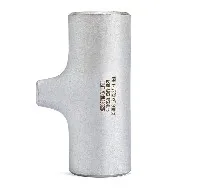
For example, 304 Stainless Steel Reducer Tee and 316 Stainless Steel Pipe Tee are commonly used in desalination systems. 316 stainless steel has a higher molybdenum content than 304, which gives it even better corrosion resistance in chloride - rich environments like seawater.


Strength and Durability
Stainless steel pipe fittings are strong and durable. They can withstand high pressures and temperatures, which are common in desalination processes. Whether it's the high - pressure pumps in reverse osmosis systems or the heating elements in thermal distillation plants, stainless steel fittings can handle the stress without failing.
Hygiene
In desalination plants that produce freshwater for human consumption, hygiene is crucial. Stainless steel is a non - porous material, which means it doesn't harbor bacteria or other contaminants. It's easy to clean and maintain, ensuring that the water produced remains safe and clean.
Types of Stainless Pipe Fittings Used in Desalination Plants
There are several types of stainless pipe fittings that are commonly used in desalination plants.
Tees
Tees are used to connect three pipes at a 90 - degree angle. They are essential for distributing water throughout the desalination system. Our Stainless Steel Reducer Tee is a great option as it can handle different pipe sizes, allowing for flexibility in the system design.
Elbows
Elbows are used to change the direction of the pipe. They come in different angles, such as 45 degrees and 90 degrees. Stainless steel elbows are resistant to corrosion and can withstand the high - velocity flow of water in the desalination process.
Flanges
Flanges are used to connect pipes to other components, such as valves and pumps. They provide a secure and leak - proof connection. Stainless steel flanges are strong and can be easily bolted together, making installation and maintenance a breeze.
Challenges and Considerations
While stainless steel pipe fittings are a great choice for desalination plants, there are some challenges and considerations to keep in mind.
Cost
Stainless steel is more expensive than some other materials, such as carbon steel. However, when you consider the long - term benefits of corrosion resistance and durability, the initial investment is often worth it. In the long run, stainless steel fittings can save money on maintenance and replacement costs.
Galvanic Corrosion
If stainless steel is in contact with a different metal in the presence of an electrolyte (like seawater), galvanic corrosion can occur. To prevent this, proper insulation and isolation techniques should be used when installing stainless steel pipe fittings in a desalination plant.
Maintenance
Although stainless steel is relatively low - maintenance, it still requires some care. Regular cleaning and inspection can help prevent the buildup of scale and other deposits, which can reduce the efficiency of the desalination system.
Conclusion
In conclusion, stainless pipe fittings can definitely be used in desalination plants. Their corrosion resistance, strength, durability, and hygiene make them an ideal choice for this demanding application. Whether you're building a new desalination plant or upgrading an existing one, our range of stainless pipe fittings can meet your needs.
If you're interested in purchasing stainless pipe fittings for your desalination project, I'd love to have a chat with you. We can discuss your specific requirements and find the best solutions for your plant. Don't hesitate to reach out and start the conversation about your procurement needs.
References
- ASM Handbook, Volume 13A: Corrosion: Fundamentals, Testing, and Protection
- Desalination and Water Treatment Journal
- Stainless Steel World Magazine