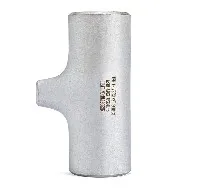
Weld quality control of a Weld 90 Degree Elbow is of utmost significance, particularly for a supplier like me. As a dedicated provider in this field, I understand that ensuring top - notch weld quality not only guarantees the functionality of the product but also enhances customer satisfaction and safety in various applications.
Understanding the Basics of Weld 90 Degree Elbows
A Weld 90 Degree Elbow is a crucial component in many piping systems. It is designed to change the direction of the flow of fluids or gases by 90 degrees. Welded 90 - degree elbows can be made from different materials such as carbon steel, stainless steel, and alloy steel. Each material has its own unique characteristics, mechanical properties, and applications. For instance, 316L Stainless Steel Elbow is well - known for its excellent corrosion resistance, making it suitable for applications in harsh environments such as chemical processing plants and food processing industries.
The welding process used to create these elbows is a critical step. Different welding methods, such as TIG (Tungsten Inert Gas) welding, MIG (Metal Inert Gas) welding, and stick welding, can be employed based on the material of the elbow, the required weld quality, and the production volume.
Key Factors in Weld Quality Control
1. Material Selection and Preparation
Proper material selection is the first step in weld quality control. The base material of the elbow must be compatible with the filler material used in the welding process. For example, when welding a stainless - steel elbow, the filler material should have similar chemical composition and mechanical properties to the base material to ensure a strong and durable weld. Suppliers like me perform thorough material testing on incoming raw materials. This includes checking the chemical composition through spectroscopy and conducting mechanical tests such as tensile strength and hardness tests.
Material preparation is equally important. The edges of the pipes to be welded need to be properly cleaned to remove any rust, dirt, grease, or oxide layers. This ensures good fusion between the base material and the filler material during the welding process. Any contaminants on the surface can lead to defects such as porosity, lack of fusion, and inclusions in the weld.
2. Welding Procedure Specification (WPS)
A well - defined Welding Procedure Specification (WPS) is essential for consistent weld quality. The WPS outlines the specific welding parameters such as welding current, voltage, welding speed, electrode or wire type, shielding gas composition, and pre - heat and post - heat treatment requirements. These parameters are determined based on factors like the type and thickness of the material, the welding method, and the joint design.
As a supplier, I adhere strictly to the WPS during the production of Weld 90 Degree Elbows. Regular audits and reviews of the WPS are conducted to ensure that it remains up - to - date with the latest industry standards and technological advancements. Any changes in the production process or material specifications are promptly incorporated into the WPS.
3. Welder Qualification
The skill and qualifications of the welders play a significant role in weld quality control. Welders are required to have proper training and certification according to the relevant industry standards. Regular performance evaluations are carried out to ensure that they are capable of producing high - quality welds consistently.


I provide continuous training and development opportunities for my welders. This includes hands - on practice, theoretical classes on welding techniques and procedures, and simulations of different welding scenarios. By investing in the professional growth of my welders, I can ensure that they are well - equipped to handle the challenges associated with welding Weld 90 Degree Elbows.
4. Welding Environment
The welding environment can also affect the quality of the weld. Factors such as temperature, humidity, and wind can have a direct impact on the welding process. For example, high humidity can cause moisture to be absorbed by the electrode or filler material, leading to porosity in the weld. Similarly, strong winds can disrupt the shielding gas, resulting in incomplete protection of the weld pool and increased oxidation.
To mitigate these effects, welding operations are carried out in controlled environments. We use enclosures or tents to protect the welding area from adverse weather conditions. In addition, environmental monitoring devices are installed to continuously monitor temperature, humidity, and other relevant parameters during the welding process.
Weld Quality Inspection and Testing
1. Visual Inspection
Visual inspection is the most basic and commonly used method of weld quality inspection. It can be performed during or after the welding process. A welder will typically carry out a visual inspection during the welding to check for obvious defects such as cracks, porosity, lack of fusion, and excessive spatter. After the welding is completed, a more detailed visual inspection is carried out using magnifying glasses or other visual aids.
2. Non - Destructive Testing (NDT)
Non - Destructive Testing (NDT) methods are used to detect internal and surface defects in the weld without causing damage to the elbow. Common NDT methods include ultrasonic testing (UT), radiographic testing (RT), magnetic particle testing (MT), and liquid penetrant testing (PT).
Ultrasonic testing is used to detect internal defects such as cracks and inclusions. It works by sending high - frequency sound waves into the weld and analyzing the reflected waves. Radiographic testing uses X - rays or gamma rays to create an image of the internal structure of the weld. This method is particularly effective for detecting volumetric defects.
Magnetic particle testing is suitable for detecting surface and near - surface defects in ferromagnetic materials. It involves applying a magnetic field to the weld and then sprinkling magnetic particles on the surface. The particles will accumulate at the locations of defects, making them visible. Liquid penetrant testing is used to detect surface - open defects. A liquid penetrant is applied to the surface of the weld, and after a certain period of time, the excess penetrant is removed. A developer is then applied, which draws out the penetrant from the defects, making them visible.
3. Destructive Testing
Destructive testing methods are sometimes used to verify the mechanical properties of the weld. This includes tensile testing, bend testing, and impact testing. Tensile testing is used to determine the ultimate tensile strength and yield strength of the weld. Bend testing is used to evaluate the ductility and soundness of the weld. Impact testing measures the ability of the weld to withstand sudden impacts.
Importance of Weld Quality in Weld 90 Degree Elbows
High - quality welds in 90 - degree elbows are crucial for several reasons. Firstly, they ensure the structural integrity of the piping system. A poorly welded elbow can lead to leaks, which can result in the loss of fluids or gases, environmental pollution, and potential safety hazards.
Secondly, good weld quality enhances the performance of the piping system. A well - welded elbow provides smooth flow of fluids or gases, reducing pressure drop and energy consumption. In the case of high - pressure applications, such as in oil and gas pipelines, the quality of the weld can determine the safety and reliability of the entire system.
Conclusion
As a weldable 90 elbow and 90 Degree Steel Pipe Elbow supplier, I am committed to maintaining the highest standards of weld quality control. From material selection and preparation to the final inspection and testing, every step in the production process is carefully monitored and optimized.
If you are in the market for high - quality Weld 90 Degree Elbows, I invite you to contact me for further discussions. I am confident that my products will meet your expectations in terms of quality, performance, and reliability.
References
- AWS D1.1/D1.1M:2020, Structural Welding Code - Steel
- ASME B31.3:2022, Process Piping
- API 1104:2020, Welding of Pipelines and Related Facilities