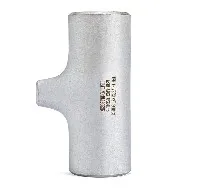
As a supplier of Weld 90 Degree Elbows, I often encounter inquiries about the weld joint design of these essential components. The weld joint design of a Weld 90 Degree Elbow is a critical aspect that directly impacts its performance, strength, and durability. In this blog, I will delve into the details of weld joint design for Weld 90 Degree Elbows, exploring the various factors involved and the best practices to ensure high - quality welds.
Understanding Weld 90 Degree Elbows
A Weld 90 Degree Elbow is a crucial part in piping systems, used to change the direction of the pipeline by 90 degrees. These elbows are widely used in industries such as oil and gas, chemical processing, and water treatment. They are typically made from materials like stainless steel, carbon steel, and alloy steel. Each material has its own properties, which influence the weld joint design. For instance, stainless steel offers excellent corrosion resistance, but its high thermal conductivity and low thermal expansion coefficient require specific welding techniques. You can find more information about Weld 90 Degree Elbow on our website.
Key Factors in Weld Joint Design
Material Compatibility
The first and foremost factor in weld joint design is the compatibility of the materials being joined. When welding a Weld 90 Degree Elbow, the base material of the elbow and the connecting pipe must be compatible in terms of their chemical composition and mechanical properties. For example, if you are welding a 304 Buttweld Elbow And Stainless Steel Seamless Elbow to a stainless - steel pipe, both should have similar grades of stainless steel to ensure a strong and durable weld. Mismatched materials can lead to issues such as cracking, reduced corrosion resistance, and poor mechanical strength.
Joint Geometry
The geometry of the weld joint plays a significant role in its performance. There are several types of joint designs commonly used for Weld 90 Degree Elbows, including butt joints, fillet joints, and socket joints.
- Butt Joints: Butt joints are often used when the ends of the elbow and the pipe are joined together with their surfaces flush. This type of joint provides a smooth transition and is suitable for high - pressure applications. The preparation of the butt joint involves beveling the edges of the components to create a V - shaped or U - shaped groove. The bevel angle, root face, and root gap are critical parameters that need to be carefully controlled. A proper bevel angle allows for better penetration of the weld metal, while the root face and root gap prevent excessive melting and distortion.
- Fillet Joints: Fillet joints are used when the elbow and the pipe are joined at an angle. They are commonly used in applications where the load is not as high as in butt - joint applications. Fillet joints are relatively easy to weld, but they require careful attention to the weld size and shape. The size of the fillet weld is determined by the thickness of the materials being joined and the expected load on the joint.
- Socket Joints: Socket joints involve inserting the end of the pipe into a socket in the elbow. This type of joint is often used in low - pressure applications or where ease of installation is a priority. However, socket joints may require additional sealing or welding around the joint to ensure a leak - proof connection.
Welding Process
The choice of welding process also affects the weld joint design. Common welding processes used for Weld 90 Degree Elbows include shielded metal arc welding (SMAW), gas tungsten arc welding (GTAW), and gas metal arc welding (GMAW).
- Shielded Metal Arc Welding (SMAW): SMAW is a versatile and widely used welding process. It is suitable for welding various materials, including carbon steel and stainless steel. However, SMAW requires a skilled welder to control the arc length and the deposition of the weld metal. The quality of the weld depends on factors such as the electrode type, welding current, and welding speed.
- Gas Tungsten Arc Welding (GTAW): GTAW is known for its high - quality welds and precise control. It is often used for welding thin - walled stainless - steel components, such as Stainless steel 90 degrees elbow. GTAW uses a non - consumable tungsten electrode and an inert gas shield to protect the weld pool from oxidation. This process is ideal for applications where a clean and aesthetically pleasing weld is required.
- Gas Metal Arc Welding (GMAW): GMAW is a fast and efficient welding process that uses a consumable wire electrode and a shielding gas. It is suitable for high - volume production of Weld 90 Degree Elbows. GMAW offers good deposition rates and can be automated, which reduces labor costs and improves productivity.
Weld Joint Design Standards
To ensure the quality and safety of Weld 90 Degree Elbows, various national and international standards govern the weld joint design. These standards specify the requirements for materials, joint geometry, welding processes, and inspection methods. For example, the American Society of Mechanical Engineers (ASME) Boiler and Pressure Vessel Code provides detailed guidelines for the design and construction of pressure - containing components, including Weld 90 Degree Elbows. Compliance with these standards is essential for ensuring the reliability and performance of the elbows in different applications.


Inspection and Testing
After the welding process is completed, the weld joint must be inspected and tested to ensure its quality. Non - destructive testing (NDT) methods such as ultrasonic testing (UT), radiographic testing (RT), and magnetic particle testing (MT) are commonly used to detect internal and surface defects in the weld. Destructive testing methods, such as tensile testing and bend testing, can also be used to evaluate the mechanical properties of the weld joint. Any defects found during the inspection process must be repaired before the elbow can be used in the piping system.
Best Practices for Weld Joint Design
- Proper Material Selection: Choose the right materials for the elbow and the connecting pipe based on the application requirements. Consider factors such as corrosion resistance, mechanical strength, and temperature resistance.
- Accurate Joint Preparation: Ensure that the joint surfaces are clean, free of contaminants, and properly beveled or prepared according to the joint design. Use appropriate tools and techniques for joint preparation.
- Skilled Welders: Employ skilled and certified welders who are familiar with the welding processes and materials used. Provide them with proper training and supervision to ensure consistent and high - quality welds.
- Quality Control: Implement a comprehensive quality control program that includes inspection and testing at every stage of the manufacturing process. This will help to identify and correct any issues before the elbows are delivered to the customers.
Contact Us for Weld 90 Degree Elbows
If you are in the market for high - quality Weld 90 Degree Elbows, we are here to help. Our company specializes in the production of a wide range of Weld 90 Degree Elbow products, including 304 Buttweld Elbow And Stainless Steel Seamless Elbow and Stainless steel 90 degrees elbow. We have a team of experienced engineers and welders who can ensure that our products meet the highest standards of quality and performance. Contact us today to discuss your specific requirements and let us provide you with the best solutions for your piping system needs.
References
- American Society of Mechanical Engineers (ASME). Boiler and Pressure Vessel Code.
- Welding Handbook, American Welding Society.
- Standards for Pipe Fittings, various national and international standards organizations.