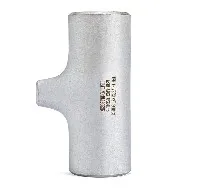
Shear strength is a fundamental property that significantly influences the performance and reliability of steel 90-degree elbows in various industrial applications. As a supplier of high - quality steel 90 - degree elbows, understanding and communicating the concept of shear strength is crucial for our customers to make informed decisions.
Understanding Shear Strength
Shear strength refers to the maximum amount of shear stress that a material can withstand before it fails. In the context of a steel 90 - degree elbow, shear stress occurs when forces act parallel to the cross - sectional area of the elbow. These forces can arise from fluid flow within the pipe, external mechanical loads, or vibrations.


When a fluid flows through a 90 - degree elbow, it changes direction abruptly. This change in direction creates a complex flow pattern, which in turn generates shear forces on the inner walls of the elbow. The magnitude of these shear forces depends on several factors, including the velocity of the fluid, the density of the fluid, and the viscosity of the fluid. For example, in a high - pressure hydraulic system, the fluid flowing through the elbow at a high velocity can exert substantial shear forces on the elbow walls.
External mechanical loads can also cause shear stress in a steel 90 - degree elbow. If the elbow is part of a piping system that is subject to lateral forces, such as wind or seismic activity, the elbow will experience shear forces. Vibrations from nearby machinery can also induce shear stress over time, potentially leading to fatigue failure if the shear strength of the elbow is exceeded.
Factors Affecting the Shear Strength of Steel 90 - Degree Elbows
Material Composition
The type of steel used in the manufacturing of the 90 - degree elbow plays a vital role in determining its shear strength. Different grades of steel have different chemical compositions, which affect their mechanical properties. For instance, stainless steel contains chromium, which provides excellent corrosion resistance. High - strength low - alloy (HSLA) steels are alloyed with elements such as manganese, vanadium, and niobium to enhance their strength.
Stainless steel elbows, like the Stainless Steel Weld Elbows, are often preferred in applications where corrosion resistance is a concern. The austenitic stainless steels, such as 304 and 316, have good ductility and relatively high shear strength. On the other hand, carbon steel elbows are known for their high strength and are commonly used in high - pressure applications.
Manufacturing Process
The way a steel 90 - degree elbow is manufactured can significantly impact its shear strength. There are several manufacturing methods, including hot bending, cold bending, and welding.
Hot bending involves heating the steel pipe to a high temperature and then bending it into a 90 - degree angle. This process can improve the ductility of the steel and reduce internal stresses, resulting in a more uniform distribution of shear strength. Cold bending, on the other hand, is done at room temperature. While it is a more cost - effective method, it can introduce residual stresses in the elbow, which may reduce its shear strength.
Welding is another critical aspect of elbow manufacturing. A well - executed weld joint can have shear strength comparable to that of the base metal. However, poor welding techniques can lead to defects such as porosity, lack of fusion, or excessive heat - affected zones, which can weaken the elbow and reduce its shear strength.
Elbow Geometry
The geometry of the 90 - degree elbow also affects its shear strength. The wall thickness of the elbow is a key factor. A thicker - walled elbow can generally withstand higher shear forces than a thinner - walled one. The radius of curvature of the elbow also plays a role. Elbows with a larger radius of curvature tend to have a more gradual change in flow direction, which reduces the shear forces generated by fluid flow.
Measuring Shear Strength
There are several standard test methods for measuring the shear strength of steel 90 - degree elbows. One common method is the direct shear test. In this test, a specimen of the elbow is subjected to a shear force until it fails. The shear strength is then calculated by dividing the maximum shear force by the cross - sectional area of the specimen.
Another method is the torsion test. In a torsion test, the elbow is twisted until failure. The shear stress is calculated based on the torque applied and the dimensions of the elbow. These test results provide valuable information for engineers and designers to ensure that the elbow can withstand the expected shear forces in a given application.
Importance of Shear Strength in Industrial Applications
In industrial applications, the shear strength of a steel 90 - degree elbow is of utmost importance. In the oil and gas industry, for example, pipelines are used to transport crude oil and natural gas over long distances. These pipelines often contain numerous 90 - degree elbows to change the direction of the flow. The elbows must be able to withstand the high - pressure fluid flow and the external loads associated with the pipeline installation, such as soil pressure and seismic activity.
In the chemical processing industry, steel 90 - degree elbows are used in piping systems that carry corrosive chemicals. The shear strength of these elbows must be sufficient to handle the fluid flow and any mechanical stresses, while also maintaining their integrity in the presence of corrosive substances.
In the power generation industry, whether it is a thermal power plant or a nuclear power plant, 90 - degree elbows are used in steam and water piping systems. The high - temperature and high - pressure steam flowing through these elbows can generate significant shear forces. Ensuring the adequate shear strength of the elbows is essential for the safe and reliable operation of the power plant.
Our Offerings as a Supplier
As a supplier of steel 90 - degree elbows, we offer a wide range of products to meet the diverse needs of our customers. Our Elbow Stainless Steel products are made from high - quality stainless steel grades, providing excellent corrosion resistance and high shear strength. We also offer 90 Degree Steel Pipe Elbow products in various wall thicknesses and radii of curvature to suit different applications.
We have a strict quality control system in place to ensure that all our elbows meet or exceed the relevant industry standards. Our manufacturing processes are carefully monitored to ensure that the elbows have consistent shear strength and other mechanical properties. We also provide technical support to our customers, helping them select the right elbow for their specific application based on the expected shear forces and other factors.
Contact Us for Procurement
If you are in need of high - quality steel 90 - degree elbows for your industrial application, we invite you to contact us for procurement. Our team of experts is ready to assist you in choosing the most suitable elbow based on your requirements. We can provide detailed product information, including shear strength data, and offer competitive pricing. Don't hesitate to reach out to us and start a productive discussion about your procurement needs.
References
- ASME B31.3 - Process Piping Code
- ASTM A234 - Standard Specification for Piping Fittings of Wrought Carbon Steel and Alloy Steel for Moderate and High - Temperature Service
- API 5L - Specification for Line Pipe