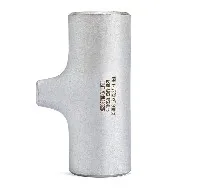
As a supplier of Weld 90 Degree Elbows, I am often asked about the quality standards of these essential components in piping systems. In this blog, I will delve into the key aspects that define the quality of a Weld 90 Degree Elbow, providing valuable insights for those involved in the procurement and use of such products.


1. Material Quality
The material used in the manufacturing of a Weld 90 Degree Elbow is the foundation of its quality. High - grade materials ensure the elbow's durability, corrosion resistance, and mechanical strength.
Stainless Steel
Stainless steel is a popular choice for Weld 90 Degree Elbows due to its excellent corrosion resistance. Different grades of stainless steel, such as 304 and 316, offer varying levels of resistance to different types of corrosion. For example, 316 stainless steel contains molybdenum, which enhances its resistance to pitting and crevice corrosion in chloride - containing environments. When sourcing a Elbow Pipe Stainless Steel, it is crucial to ensure that the material meets the relevant industry standards, such as ASTM (American Society for Testing and Materials) specifications.
Carbon Steel
Carbon steel elbows are known for their high strength and affordability. They are commonly used in applications where corrosion is not a major concern. However, proper surface treatment, such as galvanizing or painting, may be required to protect carbon steel elbows from rust. The quality of carbon steel elbows is also determined by the chemical composition and mechanical properties, which should comply with standards like API (American Petroleum Institute) or ASME (American Society of Mechanical Engineers).
2. Dimensional Accuracy
Accurate dimensions are essential for a Weld 90 Degree Elbow to fit properly into a piping system. Any deviation from the specified dimensions can lead to installation difficulties, leaks, and reduced system performance.
Outer Diameter and Wall Thickness
The outer diameter (OD) and wall thickness of the elbow must be within the tolerance range specified by the standards. For example, in a steel pipe system, a slight variation in the OD of the elbow can prevent a proper fit with the connecting pipes. Similarly, inconsistent wall thickness can affect the elbow's pressure - bearing capacity and overall strength. Measurement tools such as calipers and ultrasonic thickness gauges are commonly used during the manufacturing process to ensure dimensional accuracy.
Bend Radius
The bend radius of a 90 Degree Weldable Elbow is another critical dimension. The bend radius affects the flow characteristics of the fluid or gas passing through the piping system. A too - small bend radius can cause increased pressure drop and turbulence, while a too - large bend radius may require more space in the installation. Standars such as ASME B16.9 provide guidelines for the acceptable bend radius of different sizes of Weld 90 Degree Elbows.
3. Weld Quality
Since these are Weld 90 Degree Elbows, the quality of the weld is of utmost importance. A high - quality weld ensures the integrity and strength of the elbow, preventing leaks and failures.
Welding Process
The choice of welding process can significantly impact the weld quality. Common welding processes for Weld 90 Degree Elbows include TIG (Tungsten Inert Gas) welding and MIG (Metal Inert Gas) welding. TIG welding is known for its precision and high - quality welds, making it suitable for applications where a clean and strong weld is required. MIG welding, on the other hand, is faster and more suitable for high - volume production. The welding process should be carried out by qualified welders following the appropriate welding procedures.
Weld Inspection
Comprehensive weld inspection is necessary to detect any defects in the weld. Non - destructive testing methods, such as ultrasonic testing (UT), radiographic testing (RT), and magnetic particle testing (MT), are commonly used to check for internal and surface defects. For example, UT can detect internal flaws like cracks and lack of fusion, while MT is effective in detecting surface - breaking defects. Any weld defects found during inspection should be repaired according to the specified repair procedures.
4. Surface Finish
The surface finish of a Weld 90 Degree Elbow affects not only its appearance but also its performance. A smooth surface finish reduces friction, which is beneficial for fluid or gas flow in the piping system.
Cleanliness
The elbow should be free from contaminants such as dirt, rust, and scale. Proper cleaning and pre - treatment processes are essential before welding and coating. For example, sandblasting or chemical cleaning can be used to remove surface contaminants and create a clean surface for better paint or coating adhesion.
Coating
Applying a suitable coating can enhance the corrosion resistance of the elbow. The coating material should be selected based on the operating environment of the piping system. Epoxy coatings are commonly used in water - based systems, while polyurethane coatings are suitable for more aggressive chemical environments. The coating thickness and adhesion should be tested to ensure its effectiveness.
5. Performance Testing
Before being released to the market, Weld 90 Degree Elbows should undergo performance testing to ensure they meet the required standards.
Pressure Testing
Pressure testing is a fundamental test to verify the pressure - bearing capacity of the elbow. The elbow is subjected to a specified pressure for a certain period, and any signs of leakage or deformation are carefully observed. Hydrostatic testing, which uses water as the testing medium, is a common method for pressure testing.
Flow Testing
Flow testing can be conducted to evaluate the flow characteristics of the elbow. This test helps to determine if the elbow's design and dimensions are suitable for the intended flow rate and fluid type. By measuring the pressure drop across the elbow, engineers can assess its impact on the overall system performance.
Why Choose Our Weld 90 Degree Elbows?
At our company, we are committed to providing high - quality Weld 90 Degree Elbows that meet the strictest industry standards. We carefully select the materials, ensuring they are of the highest grade and comply with relevant standards. Our manufacturing process is equipped with advanced machinery and quality control systems to guarantee dimensional accuracy and excellent weld quality.
We also offer a wide range of options, including different materials, sizes, and bend radii, to meet the diverse needs of our customers. Whether you need a 90 Degree Weldable Elbows for a small - scale project or a Steel Pipe 90 Degree Elbow for a large - scale industrial application, we have the right solution for you.
If you are in the market for Weld 90 Degree Elbows, we invite you to contact us for a detailed discussion about your requirements. Our team of experts is ready to assist you in selecting the most suitable products and providing you with competitive pricing.
References
- ASTM International. (2023). ASTM Standards for Piping Components.
- ASME. (2023). ASME B16.9 - Factory - Made Wrought Buttwelding Fittings.
- API. (2023). API Standards for Oil and Gas Piping Systems.