Yo, that's a solid question you're asking about whether stainless pipe fittings need special tools for installation. As a provider of stainless pipe fittings, I've seen my fair share of installation scenarios, and I'm here to share the lowdown with you.
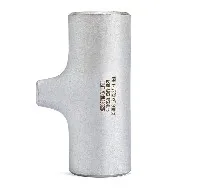
Let's kick things off by taking a look at the different types of stainless pipe fittings. There are a bunch of them, like elbows, tees, and reducers. For instance, a 304 Stainless Steel Reducer Tee is super handy when you need to change the pipe's diameter at a junction. Or a Stainless Steel Tee that allows the flow to split into two directions. And don't forget the Stainless Steel Reducer Tee, which is a versatile option for various piping systems.
Now, do these require special tools? Well, it depends. For some basic installations, you might be able to get by with common hand tools. Let's say you're doing a simple DIY project at home, like installing a small stainless pipe fitting in your kitchen sink or a garden hose connection. In such cases, a pair of adjustable wrenches can often do the job. You can use them to tighten the fittings onto the pipes securely. Just make sure you don't overtighten, or you might damage the threads on the fittings or the pipes.


But when it comes to more complex or professional installations, special tools can really make a difference. For example, in industrial settings where high-pressure or high-temperature applications are involved, you'll likely need tools like pipe cutters. A good quality pipe cutter ensures a clean and precise cut, which is crucial for a proper fit of the fittings. If the pipe ends are rough or uneven, the fittings won't seal properly, and you could end up with leaks.
Another important tool for stainless pipe fitting installations is a torque wrench. This tool allows you to apply the correct amount of torque when tightening the fittings. Different types and sizes of stainless pipe fittings have specific torque requirements, and using a torque wrench helps you meet those requirements accurately. Over - torquing can lead to cracked fittings or damaged gaskets, while under - torquing can result in loose connections and leaks.
For welding stainless pipe fittings, which is a common method for creating permanent connections, you'll definitely need specialized welding equipment. TIG (Tungsten Inert Gas) welding is often used for stainless steel because it provides a high - quality, clean weld. You'll need a TIG welder, along with the appropriate electrodes and shielding gas. Welding stainless steel requires some skill and knowledge, as the material has different properties compared to other metals. You need to control the heat input carefully to avoid warping or creating weak spots in the weld.
Flaring tools are also essential in certain situations. When you're working with stainless pipe fittings that require flared ends, like in some plumbing or hydraulic systems, a flaring tool is used to create a flared shape at the end of the pipe. This flared end then fits into the corresponding fitting, providing a tight and leak - proof connection.
Now, I know what you might be thinking. "Do I really need to invest in all these special tools?" Well, it really depends on the scale and frequency of your projects. If you're just doing a one - time or occasional installation, you might be able to rent the tools you need. There are plenty of tool rental stores that offer a wide range of tools for stainless pipe fitting installations. However, if you're a professional installer or have a lot of projects in the pipeline, investing in your own set of tools can be cost - effective in the long run.
In addition to the tools themselves, there are also some accessories that can make the installation process smoother. For example, pipe lubricants can be used to make it easier to thread the fittings onto the pipes. They also help reduce friction and prevent galling, which is a common problem when working with stainless steel. Gaskets and seals are also crucial for ensuring a leak - proof connection. Make sure you choose the right type of gasket for your application, as different materials are suitable for different temperatures, pressures, and chemicals.
Let's talk a bit about the challenges of installing stainless pipe fittings. Stainless steel is a tough and durable material, but it can also be a bit tricky to work with. For instance, it's more prone to galling compared to other metals. Galling occurs when the surfaces of the fittings rub against each other during installation, causing the metal to seize up and damage the threads. To prevent galling, you can use anti - galling compounds or make sure the surfaces are clean and lubricated.
Another challenge is dealing with the high cost of some of the special tools. As I mentioned earlier, tools like TIG welders and torque wrenches can be quite expensive. But remember, they're an investment in the quality and reliability of your installations. If you're on a tight budget, you can start with the basic tools and gradually add to your collection as your needs grow.
So, to sum it all up, while it's possible to install some stainless pipe fittings with common hand tools, special tools are often necessary for more complex or professional installations. Whether you're a DIY enthusiast or a professional installer, having the right tools and accessories is key to ensuring a successful and long - lasting installation.
If you're in the market for high - quality stainless pipe fittings or have any questions about installation, don't hesitate to reach out and start a conversation. We're here to help you find the perfect solutions for your projects.
References
- "Stainless Steel Pipe Fittings Handbook"
- "Piping Installation Guide for Industrial Applications"
- Various industry blogs and forums related to stainless pipe fitting installations.