Can SS Pipe Fittings Be Welded?
As a seasoned supplier of SS (Stainless Steel) pipe fittings, I've encountered numerous inquiries regarding the weldability of these products. This blog post aims to comprehensively explore whether SS pipe fittings can be welded, delving into the technical aspects, processes, and considerations involved.
Understanding Stainless Steel Pipe Fittings
Stainless steel pipe fittings are essential components in various industries, including construction, chemical processing, food and beverage, and water treatment. They are used to connect, control, and direct the flow of fluids within a piping system. These fittings come in a wide range of types, such as elbows, tees, reducers, and couplings, each serving a specific purpose.
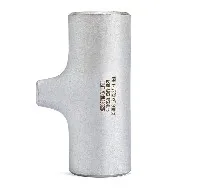
One of the most popular types of stainless steel pipe fittings is the 316 Stainless Steel Pipe Tee. This tee fitting is made from 316 stainless steel, which contains molybdenum, providing enhanced corrosion resistance, especially in environments with high chloride levels. Another common type is the Stainless Steel Tee Fittings, which are available in different grades and sizes to meet various application requirements. The Stainless Steel Reducer Tee is also widely used when there is a need to change the pipe diameter while maintaining a smooth flow of fluid.
Weldability of SS Pipe Fittings
The short answer is yes, SS pipe fittings can be welded. However, the weldability depends on several factors, including the type of stainless steel, the welding process, and the welding conditions.
Types of Stainless Steel
There are different grades of stainless steel, each with its own chemical composition and properties. The most common grades used for pipe fittings are austenitic, ferritic, and martensitic stainless steels.
- Austenitic Stainless Steels: These grades, such as 304 and 316, are the most weldable. They have excellent ductility and corrosion resistance, and they do not undergo a phase change during welding. This makes them suitable for a wide range of welding processes, including TIG (Tungsten Inert Gas), MIG (Metal Inert Gas), and SMAW (Shielded Metal Arc Welding).
- Ferritic Stainless Steels: These grades, such as 430, have lower carbon content and are more prone to cracking during welding. They require preheating and post - weld heat treatment to minimize the risk of cracking. The welding processes for ferritic stainless steels are more limited compared to austenitic grades.
- Martensitic Stainless Steels: These grades, such as 410, are hard and brittle. They require careful preheating, controlled welding parameters, and post - weld heat treatment to avoid cracking. Welding martensitic stainless steels is more challenging and requires experienced welders.
Welding Processes
Several welding processes can be used to weld SS pipe fittings:
- TIG Welding: TIG welding is a popular choice for welding stainless steel pipe fittings. It provides precise control over the welding process, resulting in high - quality welds with excellent appearance. TIG welding uses a non - consumable tungsten electrode and an inert gas (usually argon) to protect the weld area from oxidation.
- MIG Welding: MIG welding is a faster process compared to TIG welding. It uses a consumable wire electrode and an inert gas (usually a mixture of argon and carbon dioxide) to shield the weld. MIG welding is suitable for thicker materials and can be used for both automatic and semi - automatic welding.
- SMAW Welding: SMAW welding, also known as stick welding, is a simple and versatile process. It uses a coated electrode to create the weld. SMAW welding is suitable for outdoor applications and can be used on dirty or rusty surfaces. However, it requires more skill to achieve high - quality welds compared to TIG and MIG welding.
Considerations for Welding SS Pipe Fittings
When welding SS pipe fittings, several considerations should be taken into account to ensure successful welding:
Cleaning
Stainless steel surfaces must be clean before welding. Any dirt, oil, grease, or oxide layers can affect the quality of the weld. The surfaces should be cleaned using a stainless - steel wire brush, solvents, or pickling solutions.


Joint Design
The joint design plays a crucial role in the welding process. The joint should be designed to provide adequate access for the welding electrode and to ensure proper fusion of the materials. Common joint designs for SS pipe fittings include butt joints, lap joints, and tee joints.
Welding Parameters
The welding parameters, such as welding current, voltage, welding speed, and gas flow rate, must be carefully selected based on the type of stainless steel, the thickness of the material, and the welding process. Incorrect welding parameters can result in poor weld quality, such as porosity, lack of fusion, or excessive heat input.
Post - Weld Treatment
After welding, the SS pipe fittings may require post - weld treatment to improve the corrosion resistance and mechanical properties of the weld. This may include passivation, annealing, or stress relieving. Passivation is a chemical process that removes any free iron from the surface of the stainless steel, enhancing its corrosion resistance. Annealing is a heat treatment process that relieves internal stresses and restores the ductility of the material.
Quality Assurance
To ensure the quality of the welded SS pipe fittings, a comprehensive quality assurance program should be implemented. This may include visual inspection, non - destructive testing (such as ultrasonic testing, radiographic testing, or magnetic particle testing), and mechanical testing (such as tensile testing and hardness testing).
Conclusion
In conclusion, SS pipe fittings can be welded, but the success of the welding process depends on various factors, including the type of stainless steel, the welding process, and the welding conditions. As a supplier of SS pipe fittings, we are committed to providing high - quality products and technical support to our customers. Whether you are a contractor, engineer, or end - user, we can help you select the right SS pipe fittings and provide guidance on the welding process.
If you are interested in purchasing SS pipe fittings or have any questions about welding them, please feel free to contact us. We look forward to discussing your requirements and working with you on your next project.
References
- ASME Boiler and Pressure Vessel Code, Section IX - Welding and Brazing Qualifications
- AWS D1.6: Structural Welding Code - Stainless Steel
- Welding Handbook, Volume 2: Welding Processes, American Welding Society