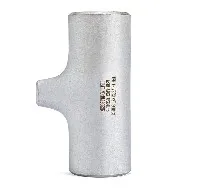
Pitting corrosion is a form of localized corrosion that leads to the creation of small holes in the metal. For a stainless 90 - degree elbow, understanding its pitting corrosion resistance is crucial, especially for industries where these elbows are used in harsh environments. As a supplier of stainless 90 - degree elbows, I've seen firsthand the importance of this property and its impact on the performance and longevity of the product.
The Basics of Pitting Corrosion
Pitting corrosion occurs when the passive film on the surface of stainless steel is damaged or disrupted. Stainless steel forms a thin, protective oxide layer on its surface, which gives it corrosion - resistant properties. However, certain factors can cause this layer to break down, allowing the underlying metal to be exposed to the corrosive environment. Chloride ions are one of the most common culprits. They can penetrate the passive film and initiate pitting at specific points on the surface.


Once a pit starts to form, it acts as a self - accelerating corrosion site. The metal inside the pit dissolves, creating a more acidic environment. This acidic environment further promotes the dissolution of the metal, causing the pit to grow deeper and wider. If left unchecked, pitting corrosion can lead to perforation of the stainless 90 - degree elbow, resulting in leaks and system failures.
Factors Affecting Pitting Corrosion Resistance of Stainless 90 - Degree Elbows
Chemical Composition
The chemical composition of the stainless steel used in the 90 - degree elbow plays a significant role in its pitting corrosion resistance. For example, 304 stainless steel is a common material for these elbows. It contains approximately 18% chromium and 8% nickel. Chromium is essential for forming the passive oxide layer, while nickel enhances the stability of this layer. However, 304 stainless steel may not be the best choice in highly corrosive environments with high chloride concentrations.
On the other hand, higher - grade stainless steels, such as those with a higher molybdenum content, offer better pitting corrosion resistance. Molybdenum improves the resistance of the passive film to chloride ion attack. When choosing a stainless 90 - degree elbow, customers should consider the specific chemical composition based on the operating environment. [304 Stainless Steel 90 Degree Elbow](/stainless - steel - elbow/304 - stainless - steel - 90 - degree - elbow.html) is a popular option, but for more demanding conditions, alternative materials might be necessary.
Surface Finish
The surface finish of the stainless 90 - degree elbow also affects its pitting corrosion resistance. A smooth surface is less likely to trap corrosive agents compared to a rough surface. During the manufacturing process, proper finishing techniques can be employed to achieve a smooth and uniform surface. For example, polishing the elbow can reduce the number of surface irregularities where chloride ions can accumulate and initiate pitting.
Manufacturing Process
The way the stainless 90 - degree elbow is manufactured can influence its corrosion resistance. Processes such as forging, welding, and heat treatment can affect the microstructure of the stainless steel. Improper welding can lead to the formation of heat - affected zones, where the passive film may be damaged or the chemical composition may be altered. This can make these areas more susceptible to pitting corrosion.
Testing Pitting Corrosion Resistance
There are several standard tests available to evaluate the pitting corrosion resistance of stainless 90 - degree elbows. One of the most common tests is the ASTM G48 test, which involves immersing the test specimen in a ferric chloride solution. The solution contains chloride ions, which can simulate a corrosive environment. After a specified period, the specimen is examined for the presence and size of pits.
Another test is the electrochemical potentiodynamic polarization test. This test measures the corrosion potential and current density of the stainless steel in a specific electrolyte. By analyzing the polarization curve, it is possible to determine the pitting potential, which is an indicator of the material's resistance to pitting corrosion.
Applications and Pitting Corrosion Concerns
Stainless 90 - degree elbows are widely used in various industries, including chemical processing, oil and gas, and water treatment. In the chemical processing industry, these elbows may be exposed to highly corrosive chemicals, including acids and salts. Chloride - containing chemicals are particularly problematic, as they can cause pitting corrosion.
In the oil and gas industry, stainless 90 - degree elbows are used in pipelines that transport crude oil and natural gas. These pipelines may be exposed to seawater or brine, which are rich in chloride ions. Pitting corrosion in these pipelines can lead to leaks, which can be not only costly but also pose environmental risks.
In water treatment plants, stainless 90 - degree elbows are used in the piping systems for transporting treated water. Although water is generally less corrosive than some industrial chemicals, the presence of dissolved salts, including chlorides, can still cause pitting corrosion over time.
Choosing the Right Stainless 90 - Degree Elbow for Pitting Corrosion Resistance
When customers are looking for a stainless 90 - degree elbow with good pitting corrosion resistance, they should consider the following:
- Environment Assessment: First, assess the operating environment. Determine the presence and concentration of corrosive agents, especially chloride ions. Based on this assessment, select the appropriate stainless steel grade. For less corrosive environments, [304 Buttweld Elbow](/stainless - steel - elbow/304 - buttweld - elbow.html) may be sufficient. However, for more aggressive environments, a higher - grade stainless steel should be chosen.
- Manufacturer Reputation: Choose a reliable manufacturer. A reputable manufacturer will have strict quality control measures in place during the manufacturing process. They will ensure proper heat treatment, welding, and surface finishing to enhance the pitting corrosion resistance of the elbows.
- Certification and Testing: Look for elbows that come with certification of pitting corrosion resistance. Manufacturers should be able to provide test results from standard tests such as ASTM G48. This ensures that the elbows meet the required standards for pitting corrosion resistance.
Conclusion
As a supplier of stainless 90 - degree elbows, I understand the critical importance of pitting corrosion resistance. Pitting corrosion can significantly impact the performance and lifespan of these elbows, especially in harsh industrial environments. By considering factors such as chemical composition, surface finish, and manufacturing process, customers can choose the right stainless 90 - degree elbow for their specific applications.
If you are in the market for high - quality stainless 90 - degree elbows with excellent pitting corrosion resistance, we are here to help. We offer a wide range of [Buttweld Elbow](/stainless - steel - elbow/buttweld - elbow.html) options to meet your needs. Contact us to discuss your requirements and start a procurement negotiation. We are committed to providing you with the best products and services.
References
- ASTM International. (Year). ASTM G48 - Standard Test Methods for Pitting and Crevice Corrosion Resistance of Stainless Steels and Related Alloys by Use of Ferric Chloride Solution.
- Uhlig, H. H., & Revie, R. W. (2010). Corrosion and Corrosion Control: An Introduction to Corrosion Science and Engineering. Wiley - Interscience.
- ASM Handbook Committee. (2003). ASM Handbook Volume 13A: Corrosion: Fundamentals, Testing, and Protection. ASM International.