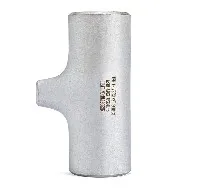
When it comes to the world of piping systems, stainless steel fittings (ss fittings) are a staple due to their durability, corrosion resistance, and versatility. As a leading ss fittings supplier, I often get asked about the maximum temperature these fittings can withstand. Understanding this crucial aspect is essential for ensuring the safety and efficiency of any piping application.

Factors Affecting the Maximum Temperature of SS Fittings
The maximum temperature that ss fittings can handle is not a one - size - fits - all value. It depends on several factors, including the grade of stainless steel, the specific design of the fitting, and the environment in which it operates.
Grade of Stainless Steel
Stainless steel comes in various grades, each with its own unique chemical composition and properties. The most common grades used in ss fittings are 304 and 316.
- 304 Stainless Steel: This is a widely used grade known for its good corrosion resistance and formability. 304 stainless steel can generally withstand temperatures up to about 870°C (1600°F) in continuous service. However, at high temperatures, it may experience a decrease in strength and an increase in the risk of oxidation. For example, in a heat exchanger application where the temperature fluctuates, a 304 Stainless Steel Reducer Tee made of 304 stainless steel should be carefully evaluated based on the maximum temperature it will encounter.
- 316 Stainless Steel: This grade contains molybdenum, which enhances its corrosion resistance, especially in chloride - rich environments. 316 stainless steel can typically handle slightly higher temperatures than 304, up to around 925°C (1700°F) in continuous service. The addition of molybdenum also improves its resistance to pitting and crevice corrosion at elevated temperatures.
Design of the Fitting
The design of the ss fitting also plays a significant role in determining its maximum temperature tolerance. Complex fittings with thin walls or intricate geometries may have a lower maximum temperature compared to simpler, thicker - walled fittings. For instance, a Stainless Steel Tee with a more complex branching design may be more susceptible to thermal stress and deformation at high temperatures. The internal pressure and flow characteristics within the fitting can also affect its performance at elevated temperatures.
Operating Environment
The environment in which the ss fittings are used can have a profound impact on their maximum temperature rating. Factors such as the presence of corrosive substances, moisture, and oxygen can accelerate the degradation of stainless steel at high temperatures. In a chemical processing plant, for example, where the fittings may be exposed to aggressive chemicals, the maximum temperature they can withstand may be lower than in a clean, dry environment. Oxidation is a common issue at high temperatures, and it can lead to the formation of scale on the surface of the fitting, which can further reduce its performance and lifespan.
Testing and Certification
To ensure the reliability of ss fittings at high temperatures, rigorous testing and certification processes are carried out. These tests simulate real - world conditions and measure the performance of the fittings under various temperature and pressure conditions.
Laboratory Testing
In a laboratory setting, ss fittings are subjected to controlled heating and cooling cycles to evaluate their thermal expansion, contraction, and mechanical properties at different temperatures. Non - destructive testing methods, such as ultrasonic testing and X - ray inspection, are used to detect any internal defects or changes in the material structure. For example, a Stainless Steel Reducer Tee may be tested to ensure that it maintains its integrity and tightness at the maximum temperature specified for its grade.
Industry Standards and Certifications
There are several industry standards and certifications that govern the manufacturing and performance of ss fittings at high temperatures. For example, the American Society of Mechanical Engineers (ASME) has established standards for pressure piping systems, including requirements for the temperature ratings of stainless steel fittings. Fittings that meet these standards are more likely to perform safely and effectively at high temperatures. Certifications such as ISO 9001 also ensure that the manufacturing process is of high quality and that the fittings are produced to consistent standards.
Applications at High Temperatures
SS fittings are used in a wide range of applications where high temperatures are involved.

Power Generation
In power plants, ss fittings are used in steam piping systems, where temperatures can reach several hundred degrees Celsius. The high - temperature resistance of these fittings is crucial for ensuring the efficient transfer of steam from the boiler to the turbines. For example, in a coal - fired power plant, the main steam lines may use large - diameter ss fittings that need to withstand temperatures above 500°C (932°F).
Chemical Processing
The chemical industry often requires ss fittings that can handle high temperatures and corrosive chemicals. In processes such as distillation and polymerization, where temperatures can exceed 200°C (392°F), ss fittings are used to transport and control the flow of various chemicals. The corrosion resistance of stainless steel ensures that the fittings do not contaminate the chemicals and maintain their structural integrity over time.
Food and Beverage Industry
Although the temperatures in the food and beverage industry are generally lower compared to power generation and chemical processing, ss fittings are still used in applications such as pasteurization and sterilization, where temperatures can reach up to 120°C (248°F). The hygienic properties of stainless steel make it an ideal choice for these applications, as it can be easily cleaned and does not react with food products.
Importance of Choosing the Right Fittings
Selecting the appropriate ss fittings for high - temperature applications is crucial for the overall safety and performance of the piping system. Using fittings that are not rated for the expected temperature can lead to a variety of problems, including leakage, deformation, and even catastrophic failure.
Safety Considerations
At high temperatures, the strength of stainless steel can decrease, and the risk of failure increases. A fitting that fails due to over - temperature can cause the release of hot fluids or gases, which can pose a significant safety hazard to personnel and the surrounding environment. For example, in a steam system, a leaking fitting can cause burns or steam explosions.
Cost - Effectiveness
Choosing the right ss fittings from the start can save costs in the long run. Fittings that are rated for higher temperatures may be more expensive initially, but they can prevent costly downtime, repairs, and replacements. By investing in high - quality, temperature - rated fittings, companies can ensure the long - term reliability of their piping systems.
Conclusion
As a ss fittings supplier, I understand the importance of providing accurate information about the maximum temperature that our fittings can withstand. The maximum temperature depends on multiple factors, including the grade of stainless steel, the design of the fitting, and the operating environment. Rigorous testing and adherence to industry standards are essential to ensure the reliability of these fittings at high temperatures.

Whether you are in the power generation, chemical processing, or food and beverage industry, choosing the right ss fittings for your high - temperature applications is crucial for safety and cost - effectiveness. If you have any questions about the temperature ratings of our ss fittings or need assistance in selecting the appropriate products for your project, please feel free to contact us. We are here to help you make the best choice for your piping system needs.
References
- ASME Boiler and Pressure Vessel Code
- Stainless Steel World Magazine
- Technical data sheets from stainless steel manufacturers