Hey there! As a butt weld tee supplier, I often get asked about all sorts of technical questions regarding these fittings. One question that comes up quite a bit is, "What is the electrical conductivity of a butt weld tee?" Let's dive into this topic and break it down in a way that's easy to understand.
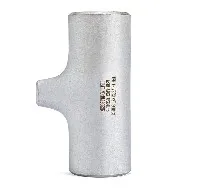
First off, let's talk about what a butt weld tee is. A butt weld tee is a type of pipe fitting that is used to connect three pipes together at a 90-degree angle. It's commonly used in plumbing, industrial piping systems, and other applications where fluid or gas needs to be redirected. These tees are typically made from various materials, including stainless steel, carbon steel, and alloy steel.

Now, onto the electrical conductivity part. Electrical conductivity is a measure of how well a material can conduct an electric current. It's usually measured in siemens per meter (S/m). Different materials have different levels of electrical conductivity, and this can have a big impact on how they're used in electrical applications.
When it comes to butt weld tees, the electrical conductivity largely depends on the material they're made from. For example, stainless steel is a popular choice for butt weld tees because of its corrosion resistance and durability. Stainless steel has a relatively low electrical conductivity compared to some other metals, like copper or aluminum. This is because stainless steel contains a high percentage of chromium, which forms a passive oxide layer on the surface of the metal. This oxide layer acts as an insulator, reducing the flow of electric current.
However, the electrical conductivity of stainless steel can vary depending on the specific grade of stainless steel. For instance, 304 Stainless Steel Reducer Tee is a common grade that has a decent level of electrical conductivity. It's often used in applications where both corrosion resistance and some level of electrical conductivity are required.
On the other hand, if you're looking for a butt weld tee with higher electrical conductivity, you might consider using a copper or aluminum tee. Copper is an excellent conductor of electricity, with a very high electrical conductivity. It's often used in electrical wiring and other applications where efficient electrical conduction is crucial. Aluminum also has a relatively high electrical conductivity, although it's not as good as copper.
So, why does the electrical conductivity of a butt weld tee matter? Well, in some applications, it can be very important. For example, in electrical grounding systems, the tee needs to have a certain level of electrical conductivity to ensure that electrical currents can flow safely to the ground. In other applications, like in the chemical industry, the electrical conductivity of the tee might affect the performance of certain processes.
Another factor to consider is the presence of any coatings or surface treatments on the butt weld tee. These can also affect the electrical conductivity. For example, if a tee is coated with a non-conductive paint or a corrosion-resistant coating, it will reduce the electrical conductivity of the tee.

Now, let's talk about how you can measure the electrical conductivity of a butt weld tee. There are several methods that can be used, but one of the most common is the four-point probe method. This method involves using four probes to apply an electric current to the material and measure the voltage across it. By using Ohm's law (V = IR), you can calculate the electrical conductivity of the material.
As a butt weld tee supplier, I understand that different customers have different requirements when it comes to electrical conductivity. That's why we offer a wide range of butt weld tees made from different materials, including Stainless Steel Reducer Tee and Stainless Steel Tee. Whether you need a tee with high electrical conductivity or one that's more resistant to corrosion, we've got you covered.
If you're in the market for butt weld tees and have questions about electrical conductivity or any other technical aspects, don't hesitate to reach out. We're here to help you find the right fitting for your application. Whether you're working on a small plumbing project or a large industrial installation, we can provide you with the high-quality butt weld tees you need.
In conclusion, the electrical conductivity of a butt weld tee depends on the material it's made from, as well as any coatings or surface treatments. Different materials have different levels of electrical conductivity, and it's important to choose the right tee for your specific application. If you're unsure which tee is best for you, just give us a shout, and we'll work with you to find the perfect solution.
References

- "Introduction to Materials Science for Engineers" by James F. Shackelford
- "Handbook of Electrical Conductivity of Metals and Alloys" by Robert A. Oriani