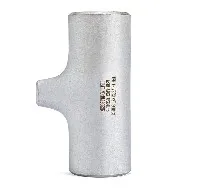
Ductility is a crucial mechanical property that significantly influences the performance and application of materials, especially in the realm of stainless - steel butt - weld elbows such as the 304 buttweld elbow. As a supplier of 304 buttweld elbows, understanding and communicating the ductility of these products is essential for our customers to make informed decisions.

Understanding Ductility
Ductility refers to the ability of a material to deform plastically under tensile stress without fracturing. In other words, it is the measure of how much a material can be stretched, drawn, or bent before it breaks. This property is of particular importance in the manufacturing and use of 304 buttweld elbows, which are often subjected to various forms of stress during installation and operation.
The 304 stainless steel, from which these buttweld elbows are made, is an austenitic stainless steel known for its excellent corrosion resistance, formability, and weldability. The chemical composition of 304 stainless steel, primarily consisting of chromium (18 - 20%) and nickel (8 - 10.5%), along with other elements in smaller quantities, contributes to its unique mechanical properties, including ductility.

Factors Affecting the Ductility of 304 Buttweld Elbows
- Chemical Composition The presence of alloying elements in 304 stainless steel has a profound impact on its ductility. Chromium forms a passive oxide layer on the surface of the steel, which protects it from corrosion and also affects the material's internal structure. Nickel enhances the austenitic structure of the steel, improving its ductility and toughness. Other elements such as carbon, manganese, and silicon are also present in small amounts, and their precise ratios can influence the overall ductility of the material.
- Manufacturing Process The manufacturing process of 304 buttweld elbows plays a significant role in determining their ductility. Processes such as hot forming and cold forming can affect the grain structure of the steel. Hot forming at high temperatures allows the grains to recrystallize, resulting in a more uniform and ductile structure. Cold forming, on the other hand, can introduce strain hardening, which may reduce ductility to some extent. However, proper heat treatment after cold forming can help restore and improve the ductility of the elbows.
- Heat Treatment Heat treatment is a critical step in the production of 304 buttweld elbows. Annealing, for example, is a common heat - treatment process used to relieve internal stresses and improve ductility. During annealing, the elbows are heated to a specific temperature and then slowly cooled. This process allows the grains in the steel to grow and realign, reducing the internal stresses and increasing the material's ability to deform without breaking.
Measuring the Ductility of 304 Buttweld Elbows
There are several methods to measure the ductility of 304 buttweld elbows. One of the most common methods is the tensile test. In a tensile test, a sample of the elbow material is subjected to a gradually increasing tensile force until it breaks. The amount of elongation and reduction in cross - sectional area at the point of fracture are measured. The elongation percentage and reduction in area are two important indicators of ductility.
Another method is the bend test. In a bend test, the elbow is bent to a specific angle or radius. If the elbow can withstand the bending without cracking or fracturing, it indicates good ductility. Bend tests are often used in the field to quickly assess the quality and ductility of the elbows.

Importance of Ductility in 304 Buttweld Elbows
- Installation During the installation of 304 buttweld elbows, they may need to be bent or adjusted slightly to fit the pipeline system. Good ductility allows the elbows to be deformed without cracking, ensuring a proper fit and a secure connection. This is especially important in complex pipeline layouts where precise alignment is required.
- Operation In service, 304 buttweld elbows are subjected to various stresses, such as internal pressure, thermal expansion and contraction, and vibration. Ductile elbows can better withstand these stresses by deforming plastically without failing. This helps to prevent leaks and ensure the long - term reliability of the pipeline system.
- Weldability The ductility of 304 buttweld elbows is also closely related to their weldability. Ductile materials are more likely to form high - quality welds because they can better accommodate the thermal stresses generated during the welding process. This reduces the risk of weld defects such as cracks and porosity, which can compromise the integrity of the pipeline.
Our 304 Buttweld Elbows and Ductility
As a supplier of 304 buttweld elbows, we are committed to providing products with excellent ductility. We carefully control the chemical composition of the raw materials, use advanced manufacturing processes, and perform strict quality control during production. Our elbows are manufactured using state - of - the - art equipment and techniques to ensure a uniform and fine - grained structure, which contributes to high ductility.
We offer a wide range of 304 buttweld elbows, including weldable 90 elbow, which are designed to meet the diverse needs of our customers. These elbows are suitable for various applications, such as in the chemical, food, and pharmaceutical industries, where corrosion resistance and ductility are of utmost importance.
Our Stainless Steel Butt Weld Pipe Fittings are also known for their high - quality and excellent ductility. They are manufactured in accordance with international standards, ensuring reliable performance in different pipeline systems. And our SS 304 Welded Elbows are carefully inspected to guarantee that they meet the required ductility criteria.
Contact Us for Your Procurement Needs
If you are in the market for high - quality 304 buttweld elbows with excellent ductility, we invite you to contact us for procurement and further discussions. Our team of experts is ready to provide you with detailed product information, technical support, and competitive pricing. Whether you are working on a small - scale project or a large - scale industrial installation, we can offer the right solutions to meet your specific requirements.
References
- ASM Handbook Volume 1: Properties and Selection: Irons, Steels, and High - Performance Alloys. ASM International.
- "Stainless Steel: A Technical Guide" by The Nickel Institute.
- Standards and specifications related to stainless - steel pipe fittings, such as ASTM A403.