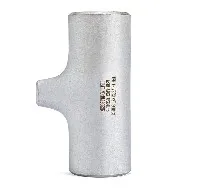
As a supplier of steel pipe fittings, I've delved deep into the electrical conductivity properties of these essential components. Steel pipe fittings are ubiquitous in various industries, from construction to manufacturing, and understanding their electrical conductivity is crucial for both safety and functionality.
1. Basics of Electrical Conductivity in Steel
Steel is an alloy primarily composed of iron and carbon, with other elements added in varying proportions to enhance specific properties. Electrical conductivity is the measure of a material's ability to conduct an electric current. In metals, this is due to the presence of free electrons that can move easily through the lattice structure of the material.
The electrical conductivity of steel is generally lower compared to pure metals like copper or aluminum. This is because the alloying elements in steel, such as carbon, manganese, and chromium, can disrupt the regular lattice structure of iron, making it more difficult for electrons to flow freely. However, the exact conductivity of steel depends on its composition, heat treatment, and microstructure.
2. Factors Affecting Electrical Conductivity of Steel Pipe Fittings
2.1 Alloy Composition
Different types of steel pipe fittings are made from various alloy compositions, which significantly impact their electrical conductivity. For example, stainless steel pipe fittings, which contain chromium and nickel, have different conductivity values compared to carbon steel fittings.
- Carbon Steel: Carbon steel is one of the most common materials for pipe fittings. It typically has a relatively low carbon content (less than 2%), which gives it good mechanical properties. However, the presence of carbon can reduce the electrical conductivity to some extent. The more carbon in the steel, the more it can interfere with the flow of electrons.
- Stainless Steel: Stainless steel is a corrosion - resistant alloy that contains at least 10.5% chromium. The addition of chromium forms a passive oxide layer on the surface of the steel, which protects it from corrosion. However, this oxide layer can also act as an insulator to some degree, reducing the overall electrical conductivity. Different grades of stainless steel, such as 316 Stainless Steel Pipe Tee and 304 Stainless Steel Reducer Tee, have different alloy compositions, and thus different electrical conductivity values. 316 stainless steel, which contains molybdenum, has better corrosion resistance but may have slightly different conductivity compared to 304 stainless steel.
2.2 Heat Treatment
Heat treatment processes, such as annealing, quenching, and tempering, can alter the microstructure of steel pipe fittings, thereby affecting their electrical conductivity.
- Annealing: Annealing is a heat treatment process that involves heating the steel to a specific temperature and then slowly cooling it. This process can relieve internal stresses and improve the ductility of the steel. In terms of electrical conductivity, annealing can sometimes increase the conductivity by allowing the atoms in the steel to arrange themselves in a more regular pattern, making it easier for electrons to move.
- Quenching and Tempering: Quenching involves rapidly cooling the steel from a high temperature, which can result in a hard and brittle microstructure. Tempering is then carried out to reduce the brittleness. These processes can change the crystal structure of the steel, which may have an impact on its electrical conductivity. Generally, quenched and tempered steel may have different conductivity values compared to annealed steel.
2.3 Surface Condition
The surface condition of steel pipe fittings can also influence their electrical conductivity. A clean, smooth surface allows for better electrical contact, while a dirty or oxidized surface can increase the electrical resistance.
- Oxidation: When steel is exposed to air and moisture, it can oxidize, forming a layer of rust on the surface. Rust is an insulator, and a thick layer of rust can significantly reduce the electrical conductivity of the pipe fitting. Therefore, proper surface treatment, such as coating or galvanizing, is often used to prevent oxidation and maintain good electrical conductivity.
- Surface Roughness: A rough surface can increase the contact resistance between two pipe fittings when they are connected. This is because the uneven surface reduces the effective contact area for the flow of electrons. Smooth - finished pipe fittings generally have lower contact resistance and better electrical conductivity.
3. Applications and Implications of Electrical Conductivity in Steel Pipe Fittings
3.1 Electrical Grounding Systems
In electrical grounding systems, steel pipe fittings are often used to provide a path for electrical current to flow safely into the ground. The electrical conductivity of these fittings is crucial to ensure that the grounding system works effectively. If the conductivity is too low, it may not be able to dissipate the electrical energy quickly enough, which can pose a safety hazard.
For example, in industrial facilities where there is a high risk of electrical faults, such as power plants or chemical plants, the use of steel pipe fittings with appropriate electrical conductivity is essential for grounding electrical equipment.


3.2 Electrochemical Processes
In some electrochemical processes, such as electroplating or electrolysis, steel pipe fittings may be used as part of the electrical circuit. The electrical conductivity of the pipe fittings affects the efficiency of these processes. A higher conductivity allows for a more uniform distribution of electrical current, which can improve the quality of the electroplated coating or the performance of the electrolytic cell.
3.3 Signal Transmission
In some applications, steel pipe fittings may be used in conjunction with electrical or electronic systems for signal transmission. Although steel is not as good a conductor as copper for high - frequency signals, in certain low - frequency or low - power applications, it can still be used. The electrical conductivity of the pipe fittings can affect the signal strength and quality.
4. Measuring Electrical Conductivity of Steel Pipe Fittings
There are several methods to measure the electrical conductivity of steel pipe fittings.
- Four - Point Probe Method: This is a common method for measuring the electrical conductivity of solid materials. Four probes are placed on the surface of the pipe fitting, and a current is passed through the outer two probes. The voltage is then measured between the inner two probes. Using Ohm's law, the electrical conductivity can be calculated based on the measured current and voltage values.
- Eddy Current Testing: Eddy current testing is a non - destructive testing method that can be used to measure the electrical conductivity of metals. An alternating magnetic field is applied to the pipe fitting, which induces eddy currents in the material. The electrical conductivity of the pipe fitting affects the magnitude and phase of the eddy currents, which can be measured to determine the conductivity.
5. Conclusion and Call to Action
In conclusion, the electrical conductivity properties of steel pipe fittings are influenced by various factors, including alloy composition, heat treatment, and surface condition. Understanding these properties is essential for ensuring the proper performance of steel pipe fittings in different applications, from electrical grounding to electrochemical processes.
As a leading supplier of steel pipe fittings, we offer a wide range of products, including 316 Stainless Steel Pipe Tee, Stainless Steel Reducer Tee, and 304 Stainless Steel Reducer Tee. Our products are carefully manufactured to meet the highest quality standards, and we can provide detailed information about their electrical conductivity properties.
If you are in need of high - quality steel pipe fittings for your projects, we invite you to contact us for procurement and further discussion. We are committed to providing you with the best products and services to meet your specific requirements.
References
- ASM Handbook, Volume 1: Properties and Selection: Irons, Steels, and High - Performance Alloys
- Metals Handbook: Desk Edition, 3rd Edition
- Standard Handbook for Electrical Engineers, 15th Edition