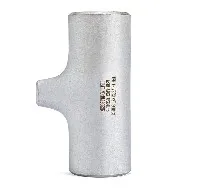
Hey there! I'm a supplier of butt weld reducer tees, and today I'm gonna dive into the various applications of these nifty pipe fittings. Butt weld reducer tees are super versatile and find their use in a wide range of industries. Let's take a closer look at where they shine.
Oil and Gas Industry
The oil and gas industry is one of the biggest users of butt weld reducer tees. In oil refineries, these tees are used to connect pipes of different diameters in the fluid transfer systems. For example, when crude oil is being processed, it needs to flow through pipes of various sizes depending on the stage of refinement. A butt weld reducer tee can smoothly transition the flow from a larger pipe to a smaller one or vice versa, ensuring that the process runs efficiently.
In offshore oil rigs, the conditions are harsh, with high pressure and corrosive environments. Stainless steel butt weld reducer tees are often the go-to choice here. The Stainless Steel Reducer Tee is resistant to corrosion, which is crucial when dealing with saltwater and other corrosive substances. These tees help in the transportation of oil and gas from the wellhead to the processing facilities on the rig and then to the shore.
Chemical Industry
In the chemical industry, precision and safety are of utmost importance. Butt weld reducer tees are used to connect pipes in chemical processing plants. Different chemicals require different pipe sizes for proper handling and reaction. For instance, in a chemical reactor, a reducer tee can be used to connect a large feed pipe to a smaller reaction chamber pipe.
The 316 Stainless Steel Pipe Tee is a popular choice in this industry due to its excellent resistance to a wide range of chemicals. It can withstand the aggressive nature of acids, alkalis, and other corrosive chemicals, ensuring that there are no leaks or contamination during the chemical processes. This helps in maintaining the quality of the final chemical products and also ensures the safety of the workers in the plant.
Water Treatment Plants
Water treatment plants rely on a complex network of pipes to treat and distribute water. Butt weld reducer tees play a vital role in these systems. They are used to connect pipes of different sizes in the filtration, sedimentation, and disinfection processes.


For example, when water is being pumped from a large storage tank to a smaller filtration unit, a reducer tee can be used to make the connection. The Stainless Steel Tee is often used in water treatment plants because it is hygienic and resistant to rust. This helps in maintaining the quality of the treated water and prevents any contamination from the pipe fittings.
HVAC Systems
Heating, ventilation, and air conditioning (HVAC) systems also make use of butt weld reducer tees. In large commercial buildings, these systems need to distribute air efficiently through a network of ducts and pipes. A reducer tee can be used to connect a large main duct to smaller branch ducts, allowing for proper air flow and distribution.
The ability of butt weld reducer tees to handle different pipe sizes helps in optimizing the HVAC system's performance. They can also be used to connect pipes in the refrigerant lines, ensuring that the cooling or heating process works smoothly. This is important for maintaining a comfortable indoor environment in the building.
Food and Beverage Industry
In the food and beverage industry, hygiene is a top priority. Butt weld reducer tees are used in the processing and packaging of food and beverages. They are made from materials that are safe for contact with food, such as stainless steel.
For example, in a brewery, a reducer tee can be used to connect a large fermentation tank to a smaller bottling line. The smooth interior surface of the stainless steel tee prevents the accumulation of bacteria and other contaminants, ensuring the quality and safety of the beer. Similarly, in a dairy processing plant, these tees are used to transfer milk and other dairy products from one processing stage to another.
Power Generation Plants
Power generation plants, whether they are coal-fired, gas-fired, or nuclear, require a reliable piping system. Butt weld reducer tees are used in these plants to connect pipes in the steam and water circuits.
In a steam turbine system, a reducer tee can be used to connect a large steam pipe to a smaller pipe leading to the turbine blades. This helps in controlling the flow and pressure of the steam, which is essential for the efficient operation of the turbine and the generation of electricity. The high-quality construction of butt weld reducer tees ensures that they can withstand the high temperatures and pressures in these power generation systems.
Construction Industry
In the construction industry, butt weld reducer tees are used in plumbing systems. They are used to connect pipes of different sizes in residential, commercial, and industrial buildings. For example, in a multi-story building, a reducer tee can be used to connect a large main water supply pipe to smaller pipes that serve individual apartments or offices.
These tees are also used in fire sprinkler systems. A reducer tee can be used to connect a large water main to smaller sprinkler pipes, ensuring that the water is distributed evenly throughout the building in case of a fire. The durability and reliability of butt weld reducer tees make them an essential component in the construction of safe and efficient plumbing systems.
Conclusion
As you can see, butt weld reducer tees have a wide range of applications across various industries. Their ability to connect pipes of different sizes, along with their durability and resistance to corrosion, make them a valuable component in many piping systems.
If you're in need of high-quality butt weld reducer tees for your project, I'm here to help. Whether you're in the oil and gas, chemical, water treatment, HVAC, food and beverage, power generation, or construction industry, I can provide you with the right fittings for your needs. Feel free to reach out to me to discuss your requirements and start a procurement conversation.
References
- Engineering textbooks on piping systems
- Industry standards and guidelines for pipe fittings
- Technical documentation from pipe fitting manufacturers