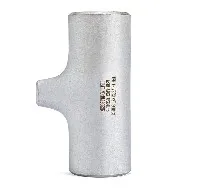
In the world of piping systems, stainless steel reducers are a common and crucial component. As a supplier of stainless steel reducers, I often get asked a variety of questions from customers. One question that comes up quite a bit is, "Do stainless steel reducers need to be insulated in some cases?" Well, let's dig into this topic and find out.
What Are Stainless Steel Reducers?
First off, let's quickly talk about what stainless steel reducers are. They're basically pipe fittings used to connect pipes of different diameters. They come in different types, like concentric and eccentric reducers. Concentric reducers have a centered bore, while eccentric reducers have an offset bore. These reducers are super handy in many industries, such as oil and gas, chemical processing, and food and beverage.
Reasons for Insulation
Now, let's get to the main question. There are actually several scenarios where insulating stainless steel reducers makes a lot of sense.
Temperature Control
One of the most common reasons is temperature control. In some industrial processes, the fluid flowing through the pipes needs to be kept at a specific temperature. If the temperature drops too much, it can cause issues like viscosity changes, which can affect the flow rate and the overall efficiency of the system.


For example, in a hot water heating system, insulating the stainless steel reducers helps to keep the water hot as it moves through the pipes. This means less energy is wasted in reheating the water, which can save a lot of money in the long run. On the other hand, in a cold storage facility, insulation can prevent the cold air from escaping and the warm air from entering, helping to maintain a consistent low temperature.
Energy Efficiency
Insulation also plays a big role in energy efficiency. When pipes are not insulated, heat transfer occurs between the fluid inside the pipes and the surrounding environment. This can lead to significant energy losses. By insulating the stainless steel reducers, we can reduce this heat transfer and make the whole system more energy - efficient.
In a large industrial plant, these energy savings can be substantial. For instance, in a steam distribution system, insulating the reducers can prevent steam from condensing prematurely, which means more steam is available to do useful work, like powering turbines or heating processes.
Condensation Prevention
Another reason for insulation is to prevent condensation. When a cold fluid is flowing through the pipes, the outer surface of the pipes can become cold. If the surrounding air is humid, moisture can condense on the pipe surface. This can lead to corrosion, especially in the case of stainless steel reducers.
Corrosion can weaken the structure of the reducers over time, leading to leaks and potential system failures. By insulating the reducers, we can keep the outer surface temperature above the dew point, preventing condensation from forming.
When Insulation May Not Be Necessary
However, there are also situations where insulation may not be required.
Low - Temperature or Room - Temperature Applications
If the fluid flowing through the pipes is at or near room temperature, there may not be a need for insulation. For example, in a simple water supply system for a residential building where the water is at normal tap water temperature, insulating the stainless steel reducers might not provide any significant benefits.
Short - Duration or Low - Flow Applications
In some short - duration processes or systems with low flow rates, the heat transfer is minimal. In these cases, the cost of installing insulation may outweigh the benefits. For instance, in a small laboratory setup where the fluid is only flowing for a short period, the energy losses may be negligible, and insulation may not be cost - effective.
Types of Insulation Materials
If you've decided that insulation is necessary for your stainless steel reducers, there are several types of insulation materials available.
Fiberglass Insulation
Fiberglass is a popular choice. It's relatively inexpensive, easy to install, and has good thermal insulation properties. It's made of fine glass fibers that trap air, which helps to reduce heat transfer.
Mineral Wool Insulation
Mineral wool is another option. It's made from natural or synthetic minerals and has excellent fire - resistance properties. It's also good at reducing noise, which can be an added benefit in some industrial settings.
Foam Insulation
Foam insulation, such as polyurethane foam, is also commonly used. It has a high insulation value and can be applied in a variety of ways, including spray - on applications. It forms a tight seal around the reducers, providing good insulation and protection against moisture.
Installation Considerations
When installing insulation on stainless steel reducers, there are a few things to keep in mind.
Proper Fitting
The insulation should fit properly around the reducers. Any gaps or loose areas can reduce the effectiveness of the insulation. Make sure to measure the reducers accurately and choose the right size of insulation material.
Weather Protection
If the reducers are located outdoors, the insulation should be protected from the weather. This can be done using a weather - resistant outer layer, such as aluminum foil or a polymer coating.
Maintenance
Regular maintenance of the insulation is also important. Over time, the insulation may get damaged or degraded. Inspect the insulation periodically and replace any damaged parts to ensure continued performance.
Conclusion
So, do stainless steel reducers need to be insulated in some cases? The answer is yes. In applications where temperature control, energy efficiency, or condensation prevention are important, insulation can provide significant benefits. However, in some low - temperature or short - duration applications, insulation may not be necessary.
As a supplier of stainless steel reducers, I can provide you with high - quality products. If you're interested in Stainless Steel Reducer Tee, Stainless Steel Tee Fittings, or Stainless Steel Reducer Tee, feel free to reach out for more information. Whether you need advice on insulation or just want to discuss your piping system requirements, I'm here to help. Let's have a chat and see how we can work together to meet your needs.
References
- ASHRAE Handbook - Fundamentals. American Society of Heating, Refrigerating and Air - Conditioning Engineers.
- Piping Design Handbook. McGraw - Hill.
- Corrosion of Stainless Steels. Wiley.