Can SS Pipe Fittings Be Used in High - Temperature Environments?
As a supplier of SS (Stainless Steel) pipe fittings, I often encounter questions from customers regarding the suitability of our products in high - temperature environments. This blog post aims to comprehensively explore this topic, considering the properties of stainless steel, different types of SS pipe fittings, and their performance under high - temperature conditions.
Properties of Stainless Steel in High - Temperature Environments
Stainless steel is an alloy primarily composed of iron, chromium, nickel, and other elements. The addition of chromium forms a thin, protective oxide layer on the surface of the steel, which gives stainless steel its corrosion - resistant properties. When it comes to high - temperature applications, several key properties of stainless steel come into play.
One of the most important factors is its oxidation resistance. At high temperatures, many metals react with oxygen in the air to form oxides, which can lead to corrosion and degradation. Stainless steel, however, has excellent oxidation resistance due to the formation of a stable chromium oxide layer. This layer acts as a barrier, preventing further oxidation of the underlying metal.
Another crucial property is its strength retention. As the temperature rises, the strength of most metals decreases. Stainless steel, especially certain grades, can maintain a relatively high level of strength even at elevated temperatures. For example, austenitic stainless steels, which are commonly used in pipe fittings, have good high - temperature strength and creep resistance. Creep is the slow deformation of a material under a constant load at high temperatures.
Types of SS Pipe Fittings and Their High - Temperature Performance
There are various types of SS pipe fittings, each with its own characteristics and suitability for high - temperature applications.
Stainless Steel Tee
A Stainless Steel Tee is a common fitting used to connect three pipes at a 90 - degree angle. In high - temperature environments, the tee must be able to withstand the thermal expansion and contraction of the pipes. Austenitic stainless steel tees, such as those made from 304 or 316 grades, are often used in high - temperature systems. They can handle temperatures up to around 800 - 900°C (1472 - 1652°F) without significant loss of strength or corrosion.
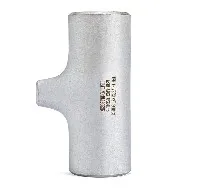
Stainless Steel Reducer Tee
A Stainless Steel Reducer Tee is used when there is a need to connect pipes of different diameters. Similar to the regular tee, it must also be able to cope with high - temperature conditions. The reducer tee's design and material selection are crucial. For high - temperature applications, a 304 Stainless Steel Reducer Tee is a popular choice. The 304 grade stainless steel has good formability and corrosion resistance, making it suitable for use in systems where the temperature may reach up to 750 - 850°C (1382 - 1562°F).
Factors Affecting the Use of SS Pipe Fittings in High - Temperature Environments
While stainless steel pipe fittings generally have good high - temperature performance, several factors can affect their suitability for specific applications.
Grade of Stainless Steel
Different grades of stainless steel have different compositions and properties. For example, 304 stainless steel is a common austenitic grade with good general corrosion resistance and high - temperature strength. However, in more demanding high - temperature applications, such as those involving exposure to sulfur - containing gases or very high temperatures, higher - grade stainless steels like 310 or 321 may be required. Grade 310 stainless steel has a higher chromium and nickel content, which gives it better oxidation resistance at temperatures up to 1150°C (2102°F).
Duration of Exposure
The length of time the pipe fittings are exposed to high temperatures also matters. Short - term exposure to high temperatures may not cause significant damage, but long - term exposure can lead to microstructural changes in the stainless steel. These changes can affect the material's strength, corrosion resistance, and ductility. For example, prolonged exposure to high temperatures can cause carbide precipitation in austenitic stainless steels, which may reduce their corrosion resistance.
Operating Conditions
The presence of other substances in the environment, such as chemicals, moisture, or abrasive particles, can also impact the performance of SS pipe fittings in high - temperature environments. For instance, in a chemical processing plant, the pipe fittings may be exposed to corrosive chemicals at high temperatures. In such cases, the choice of stainless steel grade and proper surface treatment are essential to ensure long - term reliability.


Case Studies
Let's look at some real - world examples of SS pipe fittings used in high - temperature environments.
In a power generation plant, stainless steel pipe fittings are used in the steam - generating system. The steam temperature can reach up to 550 - 600°C (1022 - 1112°F). Austenitic stainless steel tees and reducers are commonly used in this system. These fittings have been able to withstand the high - temperature and high - pressure conditions for many years, thanks to their good strength and corrosion resistance.
In a petrochemical refinery, where the pipes may carry hot oil and other hydrocarbons at temperatures up to 400 - 500°C (752 - 932°F), SS pipe fittings are also widely used. The fittings are selected based on the specific requirements of the process, such as the type of hydrocarbon, the presence of sulfur compounds, and the operating pressure.
Conclusion
In general, SS pipe fittings can be used in high - temperature environments, but careful consideration must be given to the grade of stainless steel, the duration of exposure, and the operating conditions. With the right selection and proper installation, stainless steel pipe fittings can provide reliable performance in a wide range of high - temperature applications.
If you are in need of SS pipe fittings for high - temperature applications, we are here to help. Our team of experts can assist you in selecting the most suitable products based on your specific requirements. We offer a wide range of high - quality SS pipe fittings, including Stainless Steel Tee, Stainless Steel Reducer Tee, and 304 Stainless Steel Reducer Tee. Contact us to start a procurement discussion and find the best solutions for your project.
References
- ASM Handbook Volume 13A: Corrosion: Fundamentals, Testing, and Protection. ASM International.
- Stainless Steel Handbook. The Nickel Institute.
- Perry's Chemical Engineers' Handbook. McGraw - Hill Education.