Hey there! As a supplier of SS pipe fittings, I've seen and dealt with a wide variety of these nifty components. SS, or stainless steel, pipe fittings are super important in many industries, from plumbing to construction, and even in some high - tech manufacturing. They're used to connect, change the direction, or control the flow of fluids in piping systems. So, let's take a look at the different types of SS pipe fittings out there.
Elbows
Elbows are one of the most common types of SS pipe fittings. They're used to change the direction of the pipe run. You'll often see 90 - degree and 45 - degree elbows. The 90 - degree elbow makes a sharp turn, which is great for creating right - angled corners in a piping system. For example, if you're installing a plumbing system in a building and need to make the pipes go around a corner, a 90 - degree elbow is your go - to. The 45 - degree elbow, on the other hand, provides a more gradual turn. It's useful when you don't want a sharp bend, like in some industrial processes where a smooth flow of fluid is crucial.
Tees
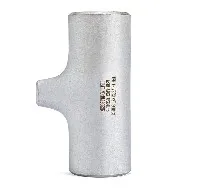
Tees are another essential type. A Stainless Steel Tee has a T - shaped design, allowing one pipe to branch off from another. This is really handy when you need to split the flow of a fluid into two different directions or combine two flows into one. For instance, in a water distribution system, a tee can be used to send water to different parts of a building. There's also the Stainless Steel Reducer Tee and 304 Stainless Steel Reducer Tee. These are special types of tees where one of the outlets has a different diameter than the others. They're used when you need to connect pipes of different sizes while still maintaining the branching function.
Couplings
Couplings are used to connect two pipes of the same diameter. They provide a simple and effective way to extend the length of a piping system. There are different types of couplings, like threaded couplings and compression couplings. Threaded couplings have threads on the inside that match the threads on the pipes, allowing them to be screwed together. Compression couplings, on the other hand, use a compression ring to create a tight seal between the pipes. They're easy to install and can be used in a variety of applications, from small - scale plumbing projects to large - scale industrial piping.
Unions
Unions are similar to couplings, but they have a unique feature. They allow for easy disconnection and reconnection of pipes. This is really useful in situations where you might need to perform maintenance or make changes to the piping system. A union consists of three parts: a nut, a male end, and a female end. By loosening the nut, you can separate the two ends of the union, and then reconnect them when needed. It's a great option for systems that require frequent access.
Caps and Plugs
Caps and plugs are used to close the end of a pipe. Caps are typically used on the outside of the pipe, while plugs are inserted into the pipe. They're important for preventing the flow of fluid or debris into the pipe when it's not in use. For example, in a plumbing system, a cap can be used to close off a pipe that's no longer needed. In an industrial setting, plugs can be used to seal off a pipe during maintenance or testing.
Reducers
Reducers are used to connect pipes of different diameters. There are two main types: concentric reducers and eccentric reducers. Concentric reducers have a centered reduction, meaning the centerlines of the two pipes are aligned. They're used when a smooth and even flow of fluid is required. Eccentric reducers, on the other hand, have an offset reduction. This is useful when you need to maintain a specific level in a piping system, like in a gravity - fed system where you don't want air pockets to form.
Crosses
Crosses, also known as four - way tees, have a cross - shaped design. They allow for the connection of four pipes at right angles to each other. This type of fitting is used in complex piping systems where multiple branches are required. For example, in a large - scale chemical processing plant, crosses can be used to distribute different chemicals to various parts of the plant.
Flanges
Flanges are used to connect pipes to other components, like valves, pumps, or other equipment. They provide a strong and leak - proof connection. There are different types of flanges, such as weld neck flanges, slip - on flanges, and blind flanges. Weld neck flanges are welded to the pipe and provide a high - strength connection. Slip - on flanges are easier to install and are often used in low - pressure applications. Blind flanges are used to close the end of a flange connection when no further piping is required.


Now that you know about the different types of SS pipe fittings, you might be wondering how to choose the right ones for your project. Well, it depends on several factors. First, you need to consider the type of fluid that will be flowing through the pipes. If it's a corrosive fluid, you'll need to choose a high - quality stainless steel fitting that can withstand the corrosion. Second, think about the pressure and temperature of the system. High - pressure and high - temperature systems require fittings that can handle these conditions. Third, consider the size and layout of your piping system. Make sure the fittings you choose are the right size and shape to fit your needs.
If you're in the market for SS pipe fittings, we're here to help. We've got a wide range of high - quality fittings at competitive prices. Whether you're working on a small plumbing project or a large - scale industrial installation, we can provide you with the right fittings for your needs. Don't hesitate to reach out to us for more information or to start a purchase negotiation. We're always happy to assist you in finding the perfect SS pipe fittings for your project.
References
- Piping Handbook, by Cameron Engineering & Associates
- Stainless Steel Handbook, by ASM International