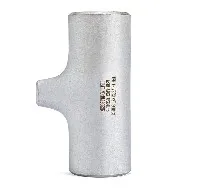
The roughness of the outer surface of 90 degree weldable elbows is a crucial factor that impacts their performance, durability, and overall quality. As a supplier of 90 degree weldable elbows, I understand the significance of this characteristic and its implications in various industrial applications. In this blog post, we will delve into the concept of surface roughness, its measurement, and its influence on the functionality of 90 degree weldable elbows.
Understanding Surface Roughness
Surface roughness refers to the irregularities present on the surface of a material. These irregularities can vary in size, shape, and distribution, and they can significantly affect the surface properties of the material. In the context of 90 degree weldable elbows, surface roughness plays a vital role in determining the elbow's corrosion resistance, fluid flow characteristics, and weldability.
The roughness of the outer surface of 90 degree weldable elbows is typically measured using a profilometer, which is a device that measures the height variations of the surface. The measurement results are usually expressed in terms of roughness average (Ra), which is the arithmetic average of the absolute values of the height deviations from the mean line within a specified sampling length. A lower Ra value indicates a smoother surface, while a higher Ra value indicates a rougher surface.
Factors Affecting Surface Roughness
Several factors can influence the surface roughness of 90 degree weldable elbows. These factors include the manufacturing process, the material used, and the finishing operations performed on the elbows.
Manufacturing Process
The manufacturing process used to produce 90 degree weldable elbows can have a significant impact on their surface roughness. For example, elbows that are manufactured using the hot forming process tend to have a rougher surface compared to those manufactured using the cold forming process. This is because the hot forming process involves heating the material to a high temperature, which can cause the surface to oxidize and form scale, resulting in a rougher surface finish.
Material Used
The material used to manufacture 90 degree weldable elbows can also affect their surface roughness. For instance, elbows made from stainless steel generally have a smoother surface compared to those made from carbon steel. This is because stainless steel has a higher resistance to corrosion and oxidation, which helps to maintain a smooth surface finish.
Finishing Operations
The finishing operations performed on 90 degree weldable elbows can further enhance or reduce their surface roughness. Common finishing operations include grinding, polishing, and buffing, which can be used to remove surface imperfections and achieve a smoother surface finish. Additionally, coatings and platings can be applied to the elbows to improve their corrosion resistance and reduce surface roughness.
Importance of Surface Roughness in 90 Degree Weldable Elbows
The surface roughness of 90 degree weldable elbows has several implications for their performance and functionality. Here are some of the key reasons why surface roughness is important:
Corrosion Resistance
A smoother surface finish can improve the corrosion resistance of 90 degree weldable elbows. This is because a rough surface provides more sites for corrosion to initiate, such as pits and crevices, which can trap moisture and other corrosive substances. By reducing the surface roughness, the risk of corrosion can be minimized, extending the lifespan of the elbows.
Fluid Flow Characteristics
The surface roughness of 90 degree weldable elbows can also affect the fluid flow characteristics within the piping system. A rough surface can cause turbulence and increase the frictional resistance, which can lead to higher energy consumption and reduced flow efficiency. On the other hand, a smoother surface can promote laminar flow, reducing energy losses and improving the overall performance of the piping system.
Weldability
The surface roughness of 90 degree weldable elbows can impact their weldability. A rough surface can make it more difficult to achieve a clean and strong weld, as it can trap contaminants and prevent proper fusion between the elbow and the pipe. By ensuring a smooth surface finish, the weldability of the elbows can be improved, resulting in more reliable and durable weld joints.


Controlling Surface Roughness in 90 Degree Weldable Elbows
As a supplier of 90 degree weldable elbows, we take several steps to control the surface roughness of our products and ensure that they meet the highest quality standards. Some of the measures we implement include:
Selecting the Right Manufacturing Process
We carefully select the manufacturing process based on the specific requirements of the application. For applications that require a smooth surface finish, we may opt for the cold forming process, which can produce elbows with a lower surface roughness.
Using High-Quality Materials
We source our materials from reputable suppliers and ensure that they meet the required specifications. By using high-quality materials, we can minimize the presence of surface imperfections and achieve a smoother surface finish.
Performing Finishing Operations
We perform various finishing operations on our 90 degree weldable elbows to improve their surface roughness. These operations may include grinding, polishing, and buffing, which are carried out using state-of-the-art equipment and techniques to ensure consistent and high-quality results.
Conducting Quality Control Checks
We have a rigorous quality control system in place to monitor the surface roughness of our 90 degree weldable elbows. We use advanced measuring instruments to verify that the surface roughness meets the specified requirements, and we reject any products that do not meet our quality standards.
Conclusion
In conclusion, the roughness of the outer surface of 90 degree weldable elbows is a critical factor that can significantly impact their performance, durability, and overall quality. By understanding the concept of surface roughness, its measurement, and its influence on the functionality of 90 degree weldable elbows, we can take appropriate measures to control and optimize this characteristic. As a supplier of 90 degree weldable elbows, we are committed to providing our customers with high-quality products that meet their specific requirements. If you are in the market for 90 Degree Weldable Elbows, 90 degree butt weld, or 304 Buttweld Elbow And Stainless Steel Seamless Elbow, we invite you to contact us to discuss your needs and explore how our products can meet your requirements.
References
- ASME B16.9 - Factory-Made Wrought Buttwelding Fittings
- ASTM A403 - Standard Specification for Wrought Austenitic Stainless Steel Piping Fittings
- ISO 4287 - Geometrical Product Specifications (GPS) - Surface texture: Profile method - Terms, definitions and surface texture parameters