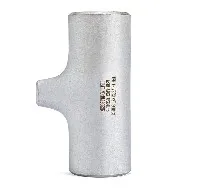
What is the fatigue life of stainless steel reducers?
As a dedicated supplier of stainless steel reducers, I've often encountered inquiries regarding the fatigue life of these essential components. Fatigue life is a critical aspect to consider when selecting stainless steel reducers, as it directly impacts the reliability and longevity of piping systems. In this blog, I'll delve into the concept of fatigue life, the factors influencing it, and how it relates to stainless steel reducers.
Understanding Fatigue Life
Fatigue life refers to the number of stress cycles a material can withstand before failure occurs due to fatigue. Fatigue failure is a progressive and localized structural damage that occurs when a material is subjected to cyclic loading. Unlike static loading, where a constant force is applied, cyclic loading involves repeated application and removal of stress, which can lead to the initiation and propagation of cracks over time.
In the context of stainless steel reducers, fatigue can occur due to various factors, including pressure fluctuations, vibration, thermal cycling, and mechanical shock. These cyclic loads can cause stress concentrations at critical points in the reducer, such as the transition region between the different diameters, leading to the formation of cracks. Once a crack initiates, it can propagate under continued cyclic loading until the reducer fails.
Factors Influencing the Fatigue Life of Stainless Steel Reducers
Several factors influence the fatigue life of stainless steel reducers. Understanding these factors is crucial for predicting and improving the performance of these components in piping systems.
Material Properties
The material properties of stainless steel play a significant role in determining its fatigue life. Stainless steel is known for its excellent corrosion resistance, high strength, and good ductility, which make it a popular choice for reducer applications. However, different grades of stainless steel have different mechanical properties, and the choice of grade can significantly impact the fatigue life of the reducer.
For example, austenitic stainless steels, such as 304 and 316, are commonly used in reducer applications due to their good corrosion resistance and formability. These grades have a face-centered cubic (FCC) crystal structure, which provides excellent ductility and toughness, making them more resistant to fatigue cracking. On the other hand, ferritic stainless steels, such as 430, have a body-centered cubic (BCC) crystal structure, which is less ductile and more prone to fatigue cracking.

In addition to the base material, the heat treatment and surface finish of the stainless steel can also affect its fatigue life. Heat treatment can improve the mechanical properties of the material, such as strength and hardness, which can enhance its resistance to fatigue. A smooth surface finish can also reduce stress concentrations and prevent crack initiation, thereby increasing the fatigue life of the reducer.
Design and Geometry
The design and geometry of the stainless steel reducer can also have a significant impact on its fatigue life. Reducers are typically designed to transition between different pipe diameters, and the shape and dimensions of the transition region can affect the stress distribution in the component.
A well-designed reducer will have a smooth and gradual transition between the different diameters, which can minimize stress concentrations and reduce the likelihood of fatigue cracking. On the other hand, a poorly designed reducer with a sharp or abrupt transition can cause high stress concentrations at the transition region, leading to premature fatigue failure.
In addition to the transition region, the overall shape and dimensions of the reducer can also affect its fatigue life. For example, a reducer with a large diameter ratio (i.e., a significant difference in diameter between the inlet and outlet) may be more prone to fatigue cracking due to the higher stress levels generated during operation. Similarly, a reducer with a long length may be more susceptible to vibration and thermal cycling, which can also contribute to fatigue failure.
Operating Conditions
The operating conditions of the piping system can also have a significant impact on the fatigue life of the stainless steel reducer. Factors such as pressure, temperature, flow rate, and vibration can all affect the stress levels in the component and increase the likelihood of fatigue cracking.
High-pressure applications can generate significant stress levels in the reducer, especially at the transition region. The higher the pressure, the greater the stress, and the more likely the reducer is to experience fatigue failure. Similarly, high-temperature applications can cause thermal expansion and contraction of the material, which can lead to cyclic stress and fatigue cracking.
Flow rate and vibration can also contribute to fatigue failure in stainless steel reducers. High flow rates can cause turbulence and pressure fluctuations in the piping system, which can generate cyclic stress in the reducer. Vibration, whether caused by external sources or internal flow-induced vibrations, can also increase the stress levels in the component and accelerate fatigue cracking.
Measuring and Predicting Fatigue Life
Measuring and predicting the fatigue life of stainless steel reducers can be a complex process, as it involves considering multiple factors and variables. However, there are several methods and techniques available that can help in estimating the fatigue life of these components.
Fatigue Testing
One of the most common methods for measuring the fatigue life of stainless steel reducers is through fatigue testing. Fatigue testing involves subjecting the reducer to cyclic loading in a controlled environment and monitoring the number of cycles until failure occurs. This method can provide valuable information about the fatigue behavior of the material and the component under specific loading conditions.
There are several types of fatigue tests that can be used, including axial fatigue tests, bending fatigue tests, and torsional fatigue tests. Each type of test is designed to simulate different types of cyclic loading that the reducer may experience in real-world applications. By conducting fatigue tests on a representative sample of reducers, it is possible to obtain statistical data on the fatigue life of the component and establish design guidelines and standards.
Finite Element Analysis (FEA)
Finite element analysis (FEA) is another powerful tool for predicting the fatigue life of stainless steel reducers. FEA is a numerical method that uses computer software to simulate the behavior of a component under different loading conditions. By creating a detailed finite element model of the reducer and applying the appropriate boundary conditions and loading, it is possible to analyze the stress distribution and predict the fatigue life of the component.
FEA can provide valuable insights into the design and performance of the reducer, allowing engineers to optimize the design and improve the fatigue life of the component. By identifying areas of high stress concentration and potential fatigue failure, FEA can help in making design modifications and selecting the appropriate material and manufacturing processes to enhance the fatigue resistance of the reducer.
Improving the Fatigue Life of Stainless Steel Reducers
Based on the factors influencing the fatigue life of stainless steel reducers, there are several strategies that can be employed to improve their performance and longevity.
Material Selection
Selecting the appropriate grade of stainless steel is crucial for improving the fatigue life of the reducer. As mentioned earlier, austenitic stainless steels are generally more resistant to fatigue cracking than ferritic stainless steels. Therefore, for applications where fatigue is a concern, it is recommended to use austenitic grades such as 304 or 316.
In addition to the base material, the quality of the stainless steel can also affect its fatigue life. It is important to source stainless steel from reputable suppliers who can provide high-quality material with consistent mechanical properties.
Design Optimization
Optimizing the design of the stainless steel reducer can significantly improve its fatigue life. This includes ensuring a smooth and gradual transition between the different diameters, minimizing stress concentrations, and avoiding sharp corners and edges.
In addition, the overall shape and dimensions of the reducer should be carefully considered to minimize the effects of vibration and thermal cycling. For example, using a shorter reducer length or adding supports and dampers can help reduce vibration and improve the fatigue resistance of the component.
Surface Treatment
Applying a surface treatment to the stainless steel reducer can also enhance its fatigue life. Surface treatments such as shot peening, nitriding, and coating can improve the surface hardness and residual stress distribution of the material, which can reduce the likelihood of crack initiation and propagation.
Shot peening is a common surface treatment method that involves bombarding the surface of the material with small spherical particles to create a compressive residual stress layer. This compressive stress can counteract the tensile stress generated during cyclic loading, thereby improving the fatigue resistance of the component.
Maintenance and Inspection
Regular maintenance and inspection are essential for ensuring the long-term performance and reliability of stainless steel reducers. This includes monitoring the operating conditions of the piping system, checking for signs of wear and damage, and performing preventive maintenance tasks such as cleaning and lubrication.
In addition, periodic inspections using non-destructive testing methods such as ultrasonic testing, magnetic particle testing, and radiographic testing can help detect the presence of cracks and other defects in the reducer before they lead to failure. By identifying and addressing potential issues early, it is possible to extend the fatigue life of the reducer and prevent costly downtime and repairs.
Conclusion
The fatigue life of stainless steel reducers is a critical factor to consider when selecting these components for piping systems. By understanding the concept of fatigue life, the factors influencing it, and the methods for measuring and predicting it, it is possible to make informed decisions about the design, material selection, and maintenance of stainless steel reducers.
As a supplier of Stainless Steel Reducer Tee, Stainless Steel Tee, and Stainless Steel Tee Fittings, we are committed to providing high-quality products that meet the highest standards of performance and reliability. Our team of experts can work with you to select the right reducer for your application and provide technical support and advice to ensure its long-term success.
If you have any questions or would like to discuss your specific requirements, please feel free to contact us. We look forward to the opportunity to serve you and help you find the best stainless steel reducer solutions for your needs.

References
- ASME Boiler and Pressure Vessel Code, Section VIII, Division 2: Alternative Rules for Construction of Pressure Vessels
- ASTM A403/A403M - Standard Specification for Wrought Austenitic Stainless Steel Piping Fittings
- Dowling, N. E. (2012). Mechanical Behavior of Materials: Engineering Methods for Deformation, Fracture, and Fatigue. Pearson.
- Hertzberg, R. W., Vinci, J. P., & Hertzberg, R. D. (2013). Deformation and Fracture Mechanics of Engineering Materials. Wiley.