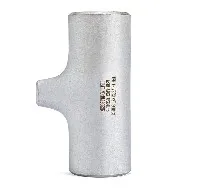
Stainless steel U-bends are essential components in various industrial applications, known for their durability, corrosion resistance, and versatility. As a supplier of stainless steel U-bends, I often encounter inquiries about their chemical composition. Understanding the chemical makeup of these products is crucial for selecting the right material for specific applications. In this blog post, I'll delve into the chemical composition of stainless steel U-bends, exploring the key elements and their roles.
Key Elements in Stainless Steel U-Bends
Stainless steel is an alloy primarily composed of iron (Fe) with a minimum of 10.5% chromium (Cr) by mass. This chromium content is what gives stainless steel its characteristic corrosion resistance. When exposed to oxygen, chromium forms a thin, invisible layer of chromium oxide on the surface of the steel. This layer acts as a protective barrier, preventing further oxidation and corrosion.
Chromium (Cr)
Chromium is the most important element in stainless steel, as it is responsible for the material's corrosion resistance. The higher the chromium content, the greater the resistance to corrosion. In most stainless steel U-bends, the chromium content ranges from 10.5% to 30%. Chromium also enhances the steel's strength and hardness, making it suitable for a wide range of applications.
Nickel (Ni)
Nickel is another key element in stainless steel, often added to improve the material's corrosion resistance, especially in acidic environments. It also enhances the steel's ductility and toughness, making it easier to form into U-bends. Nickel is typically present in stainless steel U-bends in amounts ranging from 0% to 22%. Austenitic stainless steels, which are commonly used for U-bends, often contain significant amounts of nickel.
Molybdenum (Mo)
Molybdenum is added to stainless steel to enhance its corrosion resistance, particularly in environments containing chloride ions, such as seawater. It also improves the steel's strength and pitting resistance. Molybdenum is typically present in stainless steel U-bends in amounts ranging from 0% to 6%.
Carbon (C)
Carbon is a common element in steel, and its content affects the material's strength and hardness. In stainless steel U-bends, the carbon content is usually kept low (less than 0.1%) to maintain good corrosion resistance. High carbon content can lead to the formation of chromium carbides, which can reduce the chromium content in the steel and weaken the protective oxide layer.
Manganese (Mn)
Manganese is often added to stainless steel to improve its hot workability and strength. It also helps to deoxidize the steel during the manufacturing process. Manganese is typically present in stainless steel U-bends in amounts ranging from 0.5% to 2%.
Silicon (Si)
Silicon is added to stainless steel as a deoxidizer and to improve its strength and oxidation resistance. It is typically present in stainless steel U-bends in amounts ranging from 0.2% to 1%.
Nitrogen (N)
Nitrogen is sometimes added to stainless steel to improve its strength, corrosion resistance, and pitting resistance. It can also enhance the steel's austenitic structure, making it more stable. Nitrogen is typically present in stainless steel U-bends in amounts ranging from 0% to 0.2%.


Common Grades of Stainless Steel U-Bends
There are several common grades of stainless steel used for U-bends, each with its own unique chemical composition and properties. Here are some of the most popular grades:
304 Stainless Steel
304 stainless steel is the most widely used grade of stainless steel, known for its excellent corrosion resistance, formability, and weldability. It contains approximately 18% chromium and 8% nickel, along with small amounts of other elements. 304 stainless steel U-bends are suitable for a wide range of applications, including food processing, chemical processing, and architectural applications.
316 Stainless Steel
316 stainless steel is similar to 304 stainless steel but contains 2% to 3% molybdenum, which enhances its corrosion resistance, especially in chloride-containing environments. It is commonly used in marine applications, pharmaceutical manufacturing, and other industries where corrosion resistance is critical.
409 Stainless Steel
409 stainless steel is a ferritic stainless steel with a lower chromium and nickel content than 304 and 316 stainless steels. It is less expensive and has good corrosion resistance in mild environments. 409 stainless steel U-bends are often used in automotive exhaust systems and other applications where cost is a major factor.
2205 Duplex Stainless Steel
2205 duplex stainless steel is a high-strength, corrosion-resistant alloy that combines the properties of austenitic and ferritic stainless steels. It contains approximately 22% chromium, 5% nickel, and 3% molybdenum, along with nitrogen. 2205 duplex stainless steel U-bends are used in applications where high strength and corrosion resistance are required, such as oil and gas pipelines, chemical processing plants, and desalination plants.
Importance of Chemical Composition in Application Selection
The chemical composition of stainless steel U-bends plays a crucial role in determining their suitability for specific applications. When selecting a grade of stainless steel for a particular application, it's important to consider the following factors:
Corrosion Resistance
The primary reason for using stainless steel is its corrosion resistance. The chromium, nickel, and molybdenum content of the steel determine its ability to resist corrosion in different environments. For example, 316 stainless steel is more suitable for marine applications than 304 stainless steel due to its higher molybdenum content.
Strength and Ductility
The carbon, nitrogen, and other alloying elements in stainless steel affect its strength and ductility. For applications that require high strength, such as structural components, a grade of stainless steel with a higher carbon or nitrogen content may be preferred. However, for applications that require good formability, such as bending or welding, a grade with lower carbon content may be more suitable.
Temperature Resistance
Stainless steel can maintain its strength and corrosion resistance at high temperatures. The chromium and nickel content of the steel determine its ability to resist oxidation and scaling at elevated temperatures. For applications that involve high temperatures, such as furnace components or exhaust systems, a grade of stainless steel with a higher chromium and nickel content may be required.
Our Product Range and Quality Assurance
As a supplier of stainless steel U-bends, we offer a wide range of products in different grades, sizes, and wall thicknesses to meet the diverse needs of our customers. Our products are manufactured using high-quality materials and advanced production techniques to ensure excellent quality and performance.
We also provide custom fabrication services to meet specific customer requirements. Whether you need a standard U-bend or a custom-designed component, our experienced team can work with you to develop the right solution.
In addition to our high-quality products, we are committed to providing excellent customer service. Our knowledgeable sales team can help you select the right grade of stainless steel for your application and provide technical support throughout the purchasing process.
Related Products
In addition to stainless steel U-bends, we also offer a variety of other stainless steel pipe fittings, including Steel 90 Degree Elbow, Stainless Steel Equal Tee, and Steel Pipe Fittings. These products are designed to work together to create a reliable and efficient piping system.
Contact Us for Your Stainless Steel U-Bend Needs
If you're in the market for high-quality stainless steel U-bends or other pipe fittings, we'd love to hear from you. Our team of experts can help you select the right products for your application and provide competitive pricing and excellent customer service.
Contact us today to discuss your requirements and get a quote. We look forward to working with you to meet your stainless steel piping needs.
References
- ASM Handbook, Volume 1: Properties and Selection: Irons, Steels, and High-Performance Alloys. ASM International.
- Stainless Steel World. Various articles on stainless steel grades and applications.
- Perry's Chemical Engineers' Handbook. McGraw-Hill Education.