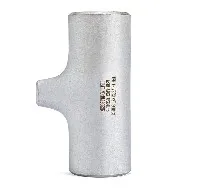
The bending strength of a 304 stainless steel elbow is a critical property that determines its performance and suitability for various applications. As a leading supplier of 304 Stainless Steel Elbows, I am often asked about this important characteristic. In this blog, I will delve into the concept of bending strength, factors affecting it in 304 stainless steel elbows, and how it influences their use in different industries.
Understanding Bending Strength
Bending strength, also known as flexural strength, refers to the maximum stress a material can withstand before it fails under bending. In the case of 304 stainless steel elbows, this is a measure of their ability to resist deformation or fracture when subjected to a bending force. When a load is applied to an elbow, it creates a combination of tension on one side and compression on the other. The bending strength is the stress at which the material begins to yield or break.
Composition and Properties of 304 Stainless Steel
304 stainless steel is one of the most widely used grades of stainless steel. It is an austenitic stainless steel that contains approximately 18% chromium and 8% nickel. The addition of these alloying elements gives 304 stainless steel excellent corrosion resistance, high ductility, and good formability. These properties make it suitable for a wide range of applications, including plumbing, food processing, architectural, and automotive industries.
The chemical composition of 304 stainless steel directly affects its bending strength. Chromium forms a passive oxide layer on the surface of the steel, which protects it from corrosion. Nickel enhances the ductility and toughness of the steel, allowing it to withstand bending forces without cracking. The high ductility of 304 stainless steel means that it can be bent to a certain degree without losing its structural integrity.
Factors Affecting the Bending Strength of 304 Stainless Steel Elbows
Several factors can influence the bending strength of 304 stainless steel elbows. These include:


- Wall Thickness: The thicker the wall of the elbow, the higher its bending strength. A thicker wall provides more material to resist the bending force, reducing the stress on the elbow.
- Radius of Bend: The radius of the bend in the elbow also affects its bending strength. Elbows with a larger radius of bend generally have higher bending strength than those with a smaller radius. This is because a larger radius distributes the bending force over a greater area, reducing the stress concentration.
- Manufacturing Process: The manufacturing process used to produce the elbow can have a significant impact on its bending strength. Elbows that are formed through hot bending or cold bending processes may have different mechanical properties. Hot bending can improve the ductility of the steel, while cold bending can increase its strength.
- Heat Treatment: Heat treatment can also affect the bending strength of 304 stainless steel elbows. Annealing, for example, can relieve internal stresses in the steel and improve its ductility. Quenching and tempering can increase the strength of the steel but may reduce its ductility.
- Surface Finish: The surface finish of the elbow can also play a role in its bending strength. A smooth surface finish can reduce stress concentration and improve the material's ability to withstand bending forces.
Testing the Bending Strength of 304 Stainless Steel Elbows
To ensure the quality and performance of 304 stainless steel elbows, it is important to test their bending strength. There are several methods available for testing bending strength, including the three - point bending test and the four - point bending test.
In a three - point bending test, a specimen is supported at two points and a load is applied at the center. The bending strength is calculated based on the maximum load the specimen can withstand before it fails. The four - point bending test is similar, but the load is applied at two points between the supports.
These tests are typically conducted in accordance with international standards such as ASTM (American Society for Testing and Materials) or ISO (International Organization for Standardization). By performing these tests, we can determine the bending strength of our 304 stainless steel elbows and ensure that they meet the required specifications.
Applications and Bending Strength Requirements
The bending strength requirements for 304 stainless steel elbows vary depending on the application. In plumbing systems, for example, elbows are used to change the direction of pipes. They need to be able to withstand the normal pressure and flow of water without deforming. A relatively lower bending strength may be sufficient for these applications.
In the food processing industry, 304 stainless steel elbows are used in pipelines that transport food products. These elbows must be able to withstand the pressure of the product flow and any cleaning or sterilization processes. They also need to maintain their shape and integrity to prevent contamination. Higher bending strength may be required in these applications.
In architectural applications, 304 stainless steel elbows are used for decorative purposes as well as for structural support. They need to be aesthetically pleasing while also providing the necessary strength. In automotive exhaust systems, elbows need to withstand high temperatures and vibrations. The bending strength requirements are also high in these applications to ensure the durability and reliability of the system.
Our Products and Their Bending Strength
As a supplier of 304 Stainless Steel Elbows, we offer a wide range of products with different wall thicknesses, radii of bend, and manufacturing processes. Our elbows are carefully manufactured and tested to ensure that they meet the highest standards of quality and performance.
We have Steel Pipe 90 Degree Elbow which are widely used in various industries. These elbows are designed to provide excellent bending strength and corrosion resistance. Our 90 Degree Weldable Elbows are also popular among customers. They are easy to install and have high bending strength, making them suitable for a variety of applications.
Our Stainless steel 90 elbow are made from high - quality 304 stainless steel. We use advanced manufacturing techniques to ensure that they have consistent bending strength and other mechanical properties. Whether you need elbows for a small plumbing project or a large industrial application, we can provide you with the right product.
Contact Us for Your 304 Stainless Steel Elbow Needs
If you are in the market for high - quality 304 stainless steel elbows, we invite you to contact us. Our team of experts can help you select the right product based on your specific requirements, including the bending strength needed for your application. We can also provide you with detailed technical information and support to ensure that you make the best decision.
We are committed to providing our customers with the best products and services. We offer competitive prices, fast delivery, and excellent customer support. Whether you are a contractor, a manufacturer, or a distributor, we can be your reliable partner for 304 stainless steel elbows.
References
- ASTM International. (20XX). Standard test methods for flexural properties of unreinforced and reinforced plastics and electrical insulating materials.
- ASM Handbook Committee. (20XX). ASM Handbook Volume 1: Properties and Selection: Irons, Steels, and High - Performance Alloys. ASM International.
- ISO. (20XX). ISO standards related to stainless steel products and testing methods.