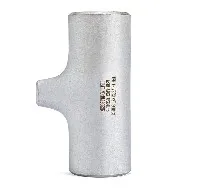
Connecting SS (Stainless Steel) pipe fittings together is a crucial process in various industries, including plumbing, chemical processing, and food and beverage production. The quality of the connection can significantly impact the overall performance and safety of the piping system. As an SS pipe fittings supplier, I have extensive experience in this field and would like to share some effective methods for connecting SS pipe fittings.
Welding Methods
Welding is one of the most common and reliable ways to connect SS pipe fittings. It provides a strong, permanent bond that can withstand high pressure and temperature. There are several welding techniques suitable for SS pipe fittings, each with its own advantages and applications.
TIG (Tungsten Inert Gas) Welding
TIG welding is a precise and clean welding method that is widely used for SS pipe fittings. It uses a non - consumable tungsten electrode to create an arc, and an inert gas (usually argon) is used to protect the weld area from oxidation. This results in a high - quality weld with excellent appearance and mechanical properties.


The process of TIG welding SS pipe fittings typically involves the following steps:
- Preparation: Clean the surfaces of the pipe and fittings thoroughly to remove any dirt, oil, or oxide layers. This can be done using a stainless - steel wire brush or a chemical cleaner.
- Fit - up: Align the pipe and fittings accurately. Use clamps or fixtures to hold them in place during welding.
- Welding: Set the appropriate welding parameters, such as current, voltage, and gas flow rate, according to the thickness of the SS. Start the arc and move the torch steadily along the joint, adding filler metal if necessary.
- Post - welding treatment: After welding, the weld area should be cleaned to remove any welding slag or spatter. In some cases, heat treatment may be required to relieve stress and improve the corrosion resistance of the weld.
TIG welding is particularly suitable for applications where high - quality welds are required, such as in the pharmaceutical and food industries. For example, when connecting Stainless Steel Tee in a food - processing pipeline, TIG welding can ensure a smooth and hygienic joint.
MIG (Metal Inert Gas) Welding
MIG welding is a faster and more efficient welding method compared to TIG welding. It uses a consumable wire electrode that is continuously fed into the weld pool, and an inert gas (usually a mixture of argon and carbon dioxide) is used to protect the weld.
The steps for MIG welding SS pipe fittings are similar to those of TIG welding, but the welding speed is generally higher. MIG welding is suitable for thicker SS pipes and fittings and is often used in industrial applications where productivity is a key concern.
Mechanical Connection Methods
In addition to welding, there are several mechanical connection methods available for SS pipe fittings. These methods offer advantages such as ease of installation, disassembly, and flexibility.
Threaded Connections
Threaded connections are a simple and commonly used way to connect SS pipe fittings. The pipes and fittings are threaded, and a thread - sealing compound or tape is used to prevent leakage.
When using threaded connections, it is important to ensure that the threads are properly cut and matched. The pipe and fittings should be tightened to the appropriate torque to avoid over - tightening or under - tightening. Threaded connections are suitable for low - pressure applications and can be easily disassembled for maintenance or modification. For instance, in a small - scale plumbing system, 304 Stainless Steel Reducer Tee can be connected using threaded joints.
Flanged Connections
Flanged connections provide a strong and reliable connection for SS pipe fittings. The pipes are connected to flanges, and the flanges are then bolted together with a gasket in between to ensure a tight seal.
The installation process of flanged connections involves the following steps:
- Prepare the flanges and pipes: Clean the flange faces and the pipe ends. Check the flatness and parallelism of the flanges.
- Install the gasket: Select the appropriate gasket material based on the application requirements, such as temperature, pressure, and chemical compatibility. Place the gasket on one of the flange faces.
- Align the flanges: Align the two flanges and insert the bolts. Tighten the bolts evenly in a cross - pattern to ensure uniform pressure on the gasket.
Flanged connections are suitable for high - pressure and high - temperature applications, as well as applications where frequent disassembly is required. For example, in a chemical processing plant, Stainless Steel Reducer Tee can be connected using flanged joints to ensure the safety and reliability of the piping system.
Adhesive Bonding
Adhesive bonding is another option for connecting SS pipe fittings, especially in applications where welding or mechanical connections are not suitable. Adhesive bonding can provide a strong and durable bond, and it can also be used to join dissimilar materials.
When using adhesive bonding, it is important to select the appropriate adhesive based on the application requirements, such as temperature, pressure, and chemical resistance. The surfaces of the pipe and fittings need to be properly prepared to ensure good adhesion. This usually involves cleaning and roughening the surfaces.
The adhesive is applied evenly to one or both of the surfaces, and the pipe and fittings are then joined together and held in place until the adhesive cures. Adhesive bonding is suitable for applications where a clean and aesthetically pleasing joint is required, such as in architectural applications.
Considerations for Connecting SS Pipe Fittings
When connecting SS pipe fittings, there are several factors that need to be considered to ensure a successful connection:
Material Compatibility
It is important to ensure that the pipe and fittings are made of the same or compatible SS materials. Different grades of SS have different chemical compositions and mechanical properties, which can affect the quality of the connection. For example, if a 304 SS pipe is connected to a 316 SS fitting, there may be a potential for galvanic corrosion.
Environmental Conditions
The environmental conditions, such as temperature, humidity, and chemical exposure, can also affect the connection of SS pipe fittings. In high - temperature or corrosive environments, special welding techniques or connection methods may be required to ensure the long - term performance of the piping system.
Quality Control
Quality control is essential throughout the connection process. This includes inspecting the pipe and fittings for defects before installation, ensuring proper installation procedures are followed, and conducting post - installation inspections to check for leaks or other issues.
Conclusion
Connecting SS pipe fittings together requires careful consideration of the application requirements, available connection methods, and various influencing factors. As an SS pipe fittings supplier, we offer a wide range of high - quality SS pipe fittings and can provide professional advice on the best connection methods for your specific needs. Whether you need 304 Stainless Steel Reducer Tee, Stainless Steel Reducer Tee, or Stainless Steel Tee, we are committed to helping you achieve a reliable and efficient piping system.
If you are interested in purchasing our SS pipe fittings or have any questions about connecting them, please feel free to contact us for further discussion. We look forward to working with you to meet your piping system needs.
References
- ASME B31.3 Process Piping Code
- AWS D1.6 Structural Welding Code - Stainless Steel
- ASTM Standards for Stainless Steel Pipe Fittings