Hey there! As a butt weld tee supplier, I've had my fair share of chats with folks in the industry about how these little (or not - so - little) components can really shake things up when it comes to fluid flow. So, let's dive right in and take a closer look at how a butt weld tee affects fluid flow.
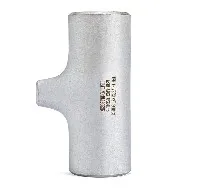
First off, what exactly is a butt weld tee? Well, it's a type of pipe fitting that has a T - shaped structure. It's used to connect three pipes together, allowing the fluid to flow from one pipe into two other pipes or vice versa. We offer a variety of these, like the Stainless Steel Tee Fittings, which are super popular due to their durability and corrosion - resistance.
When fluid enters a butt weld tee, things start to get interesting. One of the most significant effects on fluid flow is the change in direction. Fluid flowing through a straight pipe is used to a nice, smooth, laminar flow. But when it hits the tee, it suddenly has to make a turn. This change in direction can cause the flow to become turbulent. Turbulence is like a mini - storm inside the pipe. Instead of flowing smoothly in parallel layers, the fluid starts to swirl and mix.
Why does this matter? Well, turbulent flow can increase the energy loss in the system. You see, when the fluid is swirling around, it has to use more energy to keep moving. This means that pumps or other equipment in the system have to work harder to maintain the desired flow rate. And that's not just bad for the energy bill; it can also put more stress on the equipment, potentially leading to more frequent breakdowns and maintenance.
Another factor to consider is the division of flow. When fluid reaches the tee, it has to split between the two outlet pipes. How the flow divides depends on a few things, like the diameter of the pipes and the resistance in each branch. If one of the outlet pipes has a smaller diameter or more resistance (maybe due to a valve or a bend further down the line), more fluid will go into the other pipe.
Let's say you've got a 304 Stainless Steel Reducer Tee. The reducer part means that one of the outlet pipes has a different diameter than the other. This will definitely affect how the fluid divides. In a well - designed system, engineers will take these factors into account to ensure that the fluid is distributed evenly where it's needed. But if not, it can lead to inefficiencies. For example, if a process requires a certain amount of fluid in each branch, an uneven flow can cause the process to malfunction.
The shape and design of the butt weld tee also play a crucial role. A well - made tee with smooth internal surfaces can minimize the disruption to the fluid flow. On the other hand, a tee with rough or uneven surfaces can create more turbulence. At our company, we pay a lot of attention to the manufacturing process to make sure our tees have the best possible internal finish. We also offer 316 Stainless Steel Pipe Tee, which are made with high - quality materials and precision manufacturing to ensure optimal fluid flow.
The angle of the tee is another important aspect. A standard 90 - degree tee will cause a more abrupt change in the fluid's direction compared to a tee with a more gradual angle. This abrupt change can lead to more turbulence and energy loss. Some applications might benefit from using a tee with a different angle to reduce these effects.
Now, let's talk about how all these factors can impact different types of fluids. For liquids, the density and viscosity play a big role. A more viscous liquid, like oil, will be more resistant to changes in flow. It will create more turbulence when it hits the tee, and the energy loss will be more significant compared to a less viscous liquid like water. Gases, on the other hand, are much more compressible. When a gas flows through a butt weld tee, the change in pressure and flow can be quite complex. The compression and expansion of the gas can also affect the overall flow characteristics.
In industrial applications, understanding how a butt weld tee affects fluid flow is crucial. For example, in a chemical processing plant, precise control of fluid flow is necessary to ensure the quality of the products. A small miscalculation in the flow distribution at a tee can lead to incorrect chemical reactions and lower - quality output. In a water supply system, efficient fluid flow is essential to meet the demand of consumers. Any unnecessary energy loss at the tees can increase the cost of water treatment and distribution.


So, if you're in the market for butt weld tees, it's important to choose the right ones for your application. Consider the type of fluid, the flow rate, and the overall system requirements. At our company, we've got a wide range of butt weld tees to suit different needs. Whether you need a standard tee or a custom - designed one, we can help.
If you're interested in learning more about our products or have any questions about how our butt weld tees can work for your fluid flow system, don't hesitate to reach out. We're always happy to have a chat and help you find the best solutions for your project.
References
- Fluid Mechanics textbooks: They provide in - depth knowledge about fluid flow principles and how fittings like butt weld tees affect them.
- Industry research papers: Many studies have been conducted on the performance of pipe fittings in fluid systems, which offer valuable insights.