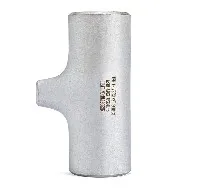
As a trusted provider of butt weld fittings, I've had in - depth experiences and discussions with many customers regarding these essential components in piping systems. Butt weld fittings are widely employed in a variety of industries due to their excellent sealing performance, high strength, and smooth internal surfaces that minimize flow resistance. However, like any product, the use of butt weld fittings is not without limitations. In this blog, I'll explore several key areas where these limitations come into play.
1. Installation Complexity
One of the primary limitations of butt weld fittings is the installation process. Unlike threaded or socket - welded fittings, butt weld connections require highly skilled welders. Welding is a specialized trade, and improper welding can lead to a series of problems. For instance, issues such as incomplete penetration, porosity, or excessive heat input during welding can weaken the joint strength.
In industries like petrochemical and power generation, where the piping systems carry high - pressure and high - temperature fluids, the quality of the weld is of utmost importance. A faulty weld can result in leaks, which can not only lead to the loss of valuable products but also pose significant safety risks. The training and certification process for welders is time - consuming and costly. As a result, the installation cost of butt weld fittings can be relatively high compared to other types of fittings.
Moreover, the installation of butt weld fittings often requires specific tools and equipment, such as welding machines, beveling tools, and measuring instruments. This means that the installation process is not only complex but also requires careful planning and preparation. Non - standard or complex piping configurations can further complicate the installation, requiring customized solutions that may increase costs and lead - times.
2. Material Compatibility
Butt weld fittings are available in a wide range of materials, including stainless steel, carbon steel, alloy steel, and others. However, material compatibility issues can arise when butt weld fittings are used in certain environments. For example, in corrosive environments, choosing the wrong material can lead to premature corrosion and failure of the fittings.
Stainless steel is a popular choice for many applications due to its corrosion resistance. However, not all stainless steels are suitable for every corrosive environment. Stainless Steel Tee, such as 316 Stainless Steel Pipe Tee and Stainless Steel Reducer Tee, have different chemical compositions, and their corrosion - resistance properties vary accordingly. In environments with high concentrations of chloride ions, austenitic stainless steels like 304 may be susceptible to pitting corrosion, while 316 stainless steel, which contains molybdenum, offers better resistance.
In addition to corrosion, high - temperature and high - pressure environments can also pose challenges to material compatibility. Different materials have different thermal expansion coefficients and mechanical properties at elevated temperatures. If the materials of the butt weld fittings and the connected pipes are not carefully selected to match these conditions, thermal stress and mechanical failure can occur over time.
3. Design Limitations
The design of butt weld fittings may also present limitations in some applications. Standard butt weld fittings are designed for common piping configurations and flow requirements. However, in special situations, such as non - standard pipe diameters, irregular flow patterns, or specific pressure and temperature conditions, standard fittings may not be suitable.
Custom - designed butt weld fittings can be manufactured to meet these unique requirements, but this comes at a cost. The design and manufacturing process for custom fittings are more complex and time - consuming. There may also be limitations in terms of the shape and size that can be realistically produced. For example, extremely large - diameter or very thin - walled butt weld fittings can be challenging to manufacture due to the limitations of welding technology and material properties.
Furthermore, the design of butt weld fittings may not be as flexible as some other types of fittings when it comes to future modifications or expansions of the piping system. Once a butt weld connection is made, it is a permanent joint. If changes need to be made to the piping layout, the welded joint may need to be cut and re - welded, which is a labor - intensive and costly process.
4. Inspection and Maintenance Difficulties
Inspection of butt weld fittings is crucial to ensure their long - term reliability. However, inspecting welded joints can be a complex and challenging task. Non - destructive testing methods, such as ultrasonic testing, radiography, and magnetic particle testing, are commonly used to detect internal defects in welded joints. These inspection methods require specialized equipment and trained operators.
In addition, the location of the welded joint can also affect the ease of inspection. In some cases, welded joints may be difficult to access, especially in large - scale industrial piping systems or in tight spaces. This can lead to incomplete or inaccurate inspections, increasing the risk of undetected defects.


Maintenance of butt weld fittings is also more complicated compared to other types of fittings. If a problem is detected in a butt weld fitting, repair or replacement often involves cutting the welded joint and then re - welding. This process can disrupt the operation of the entire piping system and may require extended downtime. For continuous - process industries, such as chemical plants and refineries, this downtime can result in significant economic losses.
Conclusion
While butt weld fittings offer numerous advantages, including high strength, excellent sealing, and low flow resistance, it is clear that there are limitations to their use. The installation complexity, material compatibility issues, design limitations, and inspection and maintenance difficulties should all be carefully considered when selecting butt weld fittings for a particular application.
However, these limitations do not mean that butt weld fittings are not a suitable choice. In many cases, the benefits they offer outweigh the drawbacks. With proper planning, material selection, installation, and maintenance, butt weld fittings can provide long - term reliable service in a wide range of industries.
As a butt weld fittings supplier, I understand the importance of providing high - quality products and comprehensive technical support. If you are considering using butt weld fittings in your project and want to discuss these limitations further or explore the best solutions for your specific requirements, please don't hesitate to reach out. We are committed to helping you make informed decisions and provide products that meet your highest expectations.
References
- ASME Boiler and Pressure Vessel Code
- API Standards for Piping and Fittings
- ASTM Standards for Materials of Construction
- AWS Welding Code