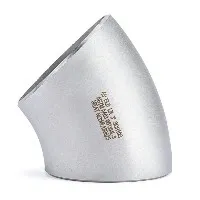
As a supplier of 45 Degree Steel Elbows, I often encounter inquiries from clients about various technical aspects of our products. One question that comes up quite frequently is, "What is the expansion coefficient of a 45 Degree Steel Elbow?" In this blog post, I will delve into this topic, providing a comprehensive understanding of the expansion coefficient and its significance in the context of 45 Degree Steel Elbows.
Understanding the Expansion Coefficient
The expansion coefficient, also known as the coefficient of thermal expansion (CTE), is a measure of how much a material expands or contracts when its temperature changes. It is defined as the fractional change in length or volume per unit change in temperature. For linear expansion, the coefficient of linear expansion (α) is used, which is expressed in units of per degree Celsius (°C⁻¹) or per kelvin (K⁻¹).
Mathematically, the linear expansion of a material can be calculated using the following formula:
ΔL = α * L₀ * ΔT
Where:
- ΔL is the change in length
- α is the coefficient of linear expansion
- L₀ is the original length
- ΔT is the change in temperature
The expansion coefficient is an important property of materials, especially in applications where temperature variations are significant. In the case of 45 Degree Steel Elbows, understanding the expansion coefficient is crucial for ensuring proper installation, preventing stress and deformation, and maintaining the integrity of the piping system.
Expansion Coefficient of Steel
Steel is a widely used material in the manufacturing of 45 Degree Steel Elbows due to its excellent mechanical properties, durability, and corrosion resistance. The expansion coefficient of steel depends on its composition, microstructure, and temperature range. Generally, the coefficient of linear expansion for carbon steel ranges from approximately 10.8 x 10⁻⁶ °C⁻¹ to 12.6 x 10⁻⁶ °C⁻¹, while for stainless steel, it ranges from about 16 x 10⁻⁶ °C⁻¹ to 18 x 10⁻⁶ °C⁻¹.
It's important to note that these values are approximate and can vary depending on the specific grade of steel and other factors. For example, the expansion coefficient of austenitic stainless steels, such as 304 and 316, is typically higher than that of ferritic stainless steels. Additionally, the expansion coefficient may change with temperature, so it's necessary to consider the operating temperature range when designing and installing 45 Degree Steel Elbows.
Significance of Expansion Coefficient in 45 Degree Steel Elbows
The expansion coefficient plays a crucial role in the design, installation, and performance of 45 Degree Steel Elbows. Here are some key points to consider:
Installation and Alignment
During installation, it's important to account for the expansion and contraction of the steel elbows due to temperature changes. If the expansion is not properly accommodated, it can lead to stress concentration, deformation, and even failure of the elbow or the entire piping system. To prevent these issues, expansion joints, flexible connectors, or proper support structures may be required to allow for the movement of the elbows.
Thermal Stress and Fatigue
Temperature variations can cause thermal stress in the 45 Degree Steel Elbows, which can lead to fatigue and cracking over time. The expansion coefficient determines the magnitude of the thermal stress, so it's essential to select the appropriate grade of steel with a suitable expansion coefficient for the operating conditions. Additionally, proper insulation and heat tracing can help reduce the temperature gradient and minimize thermal stress.
System Integrity
The expansion and contraction of the 45 Degree Steel Elbows can affect the overall integrity of the piping system. If the elbows are not designed and installed correctly, they can cause leaks, vibrations, and other problems that can compromise the safety and efficiency of the system. By understanding the expansion coefficient and taking appropriate measures to accommodate thermal expansion, the integrity of the piping system can be maintained.
Factors Affecting the Expansion Coefficient
In addition to the composition and temperature range, several other factors can affect the expansion coefficient of 45 Degree Steel Elbows. These include:
Manufacturing Process
The manufacturing process can have a significant impact on the microstructure and properties of the steel, which in turn can affect the expansion coefficient. For example, heat treatment, cold working, and welding can all alter the grain structure and residual stresses in the steel, leading to changes in the expansion coefficient.
Alloying Elements
The addition of alloying elements to the steel can also affect the expansion coefficient. For example, the addition of nickel to stainless steel can increase the expansion coefficient, while the addition of chromium can decrease it. By carefully selecting the alloying elements, the expansion coefficient of the steel can be tailored to meet the specific requirements of the application.
Operating Conditions
The operating conditions, such as the temperature, pressure, and fluid flow rate, can also affect the expansion coefficient of the 45 Degree Steel Elbows. For example, high temperatures and pressures can cause the steel to expand more than at lower temperatures and pressures. Additionally, the fluid flow rate can affect the heat transfer and temperature distribution in the elbow, which can also impact the expansion coefficient.
Choosing the Right 45 Degree Steel Elbow
When selecting a 45 Degree Steel Elbow, it's important to consider the expansion coefficient and other factors to ensure the proper performance and reliability of the piping system. Here are some tips to help you choose the right elbow:
Determine the Operating Conditions
First, determine the operating conditions, including the temperature range, pressure, and fluid characteristics. This will help you select the appropriate grade of steel with a suitable expansion coefficient for the application.
Consider the Expansion Requirements
Next, consider the expansion requirements of the piping system. If the temperature variations are significant, you may need to use expansion joints or other flexible components to accommodate the expansion and contraction of the elbows.
Select the Right Grade of Steel
Choose a grade of steel that has the appropriate mechanical properties, corrosion resistance, and expansion coefficient for the operating conditions. For example, if the application requires high corrosion resistance, you may choose a stainless steel elbow, such as 2520 310s Stainless Steel Elbow. If the application involves high temperatures, you may need to select a steel with a low expansion coefficient to minimize thermal stress.


Ensure Proper Installation
Finally, ensure that the 45 Degree Steel Elbows are installed correctly by following the manufacturer's instructions and industry standards. Proper installation is essential for preventing stress concentration, deformation, and other issues that can affect the performance and reliability of the elbows.
Related Products
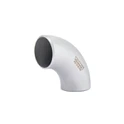
In addition to 45 Degree Steel Elbows, we also offer a wide range of other stainless steel elbows, including Stainless 90 Degree Elbow and Butt Weld 90 Degree Elbow. These elbows are available in various sizes, grades, and end connections to meet the diverse needs of our customers.
Conclusion
The expansion coefficient is an important property of 45 Degree Steel Elbows that affects their design, installation, and performance. By understanding the expansion coefficient and its significance, you can select the appropriate grade of steel, design the piping system correctly, and ensure the proper installation and maintenance of the elbows. If you have any questions or need further information about 45 Degree Steel Elbows or our other products, please don't hesitate to contact us. We are here to help you find the right solutions for your piping needs.
References
- ASME B31.3 Process Piping Code
- ASTM Standards for Steel Products
- Manufacturer's Technical Data Sheets