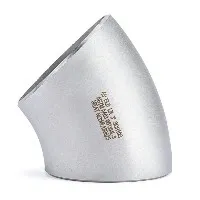
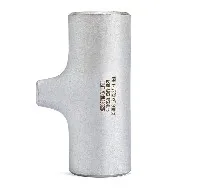
Hey there! I'm a supplier of Stainless Pipe Flanges, and today I'm gonna take you through the manufacturing process of forged stainless pipe flanges. It's a pretty fascinating journey from raw materials to the finished product, so let's dive right in.
Step 1: Material Selection
The first step in making forged stainless pipe flanges is choosing the right material. We usually go for stainless steel, which is known for its durability, corrosion resistance, and strength. Different grades of stainless steel are available, and the choice depends on the specific application of the flanges. For example, if the flanges are going to be used in a high - temperature environment, we might pick a grade that can withstand the heat.
Stainless steel comes in various forms, like bars and billets. These raw materials are sourced from reliable suppliers. We make sure to check the quality of the material thoroughly before starting the forging process. This includes inspecting the chemical composition and physical properties to ensure they meet the required standards.
Step 2: Heating the Material
Once we've got the right stainless steel material, it's time to heat it up. Heating is a crucial step because it makes the steel malleable, which is necessary for forging. We use special furnaces to heat the stainless steel to a specific temperature. The temperature range can vary depending on the grade of stainless steel, but it's typically between 1,000°C and 1,200°C.
This heating process needs to be carefully controlled. If the temperature is too low, the steel won't be soft enough to be forged properly. On the other hand, if it's too high, the steel might lose some of its desirable properties. So, we use advanced temperature monitoring systems to keep everything in check.
Step 3: Forging
Now comes the main event - forging. Forging is the process of shaping the heated stainless steel into the desired flange shape. There are two main types of forging: open - die forging and closed - die forging.
In open - die forging, the heated steel is placed between two flat dies, and a hammer or a press is used to apply pressure. This method is great for creating simple shapes and is often used for initial shaping. The advantage of open - die forging is that it allows for some flexibility in the forging process.
Closed - die forging, on the other hand, is used to create more complex and precise flange shapes. In this method, the heated steel is placed in a die cavity that has the exact shape of the desired flange. A press then applies high pressure to force the steel to fill the die cavity. Closed - die forging results in flanges with better dimensional accuracy and a smoother surface finish.
Step 4: Trimming
After the forging process, there might be some excess material around the edges of the flange. This excess material is called flash, and it needs to be removed. Trimming is done using special trimming dies and presses. The trimming process is quick and efficient, and it helps to give the flange its final, clean shape.
Step 5: Heat Treatment
Once the flanges are forged and trimmed, they go through a heat treatment process. Heat treatment is important because it helps to improve the mechanical properties of the stainless steel. There are different types of heat treatments, such as annealing, quenching, and tempering.
Annealing involves heating the flanges to a specific temperature and then slowly cooling them. This process relieves internal stresses in the steel and makes it more ductile. Quenching, on the other hand, involves rapid cooling of the heated flanges. This can increase the hardness of the steel. Tempering is often done after quenching to reduce the brittleness and improve the toughness of the steel.
Step 6: Machining
After heat treatment, the flanges usually need some machining to achieve the final dimensions and surface finish. Machining operations include turning, milling, drilling, and tapping. Turning is used to create the outer diameter and the smooth surface of the flange. Milling is used to create flat surfaces and keyways. Drilling is used to create holes for bolts, and tapping is used to create the threads inside the bolt holes.
We use advanced CNC (Computer Numerical Control) machines for machining. These machines are highly accurate and can produce flanges with very tight tolerances. The machining process is carefully programmed to ensure that each flange meets the customer's specifications.
Step 7: Surface Treatment
The next step is surface treatment. Surface treatment helps to protect the flanges from corrosion and improve their appearance. One common surface treatment for stainless steel flanges is passivation. Passivation is a chemical process that removes free iron from the surface of the steel and forms a protective oxide layer.
Another surface treatment option is coating. We can apply different types of coatings, such as paint, zinc plating, or epoxy coating, depending on the application and the customer's requirements. Coatings can provide additional protection against corrosion and also make the flanges look more appealing.
Step 8: Inspection and Testing
Before the flanges are ready to be shipped, they go through a rigorous inspection and testing process. We check the dimensions of the flanges using precision measuring tools, such as calipers, micrometers, and coordinate measuring machines (CMMs). This ensures that the flanges meet the required dimensional tolerances.
We also conduct non - destructive testing (NDT) methods, such as ultrasonic testing, magnetic particle testing, and dye penetrant testing. These tests help to detect any internal or surface defects in the flanges, such as cracks or porosity. Additionally, we perform mechanical property testing, such as tensile testing and hardness testing, to ensure that the flanges have the required strength and hardness.


Step 9: Packaging and Shipping
Once the flanges have passed all the inspections and tests, they are ready to be packaged and shipped. We use high - quality packaging materials to protect the flanges during transportation. This includes wrapping the flanges in plastic or paper and placing them in wooden crates or boxes.
We work with reliable shipping companies to ensure that the flanges are delivered to our customers on time and in good condition. We also provide all the necessary documentation, such as certificates of quality, material test reports, and packing lists.
Now, if you're in the market for high - quality Stainless Pipe Flanges, you can count on us. We've got years of experience in manufacturing forged stainless pipe flanges, and we're committed to providing the best products and services. And if you're interested in Stainless Steel Round Pipe, you can check out our related products. We also have a great Stainless Steel Round Pipe factory and are a reliable Stainless Steel Round Pipe supplier.
If you have any questions or want to discuss your specific requirements, don't hesitate to reach out. We're here to help you find the perfect solution for your piping needs.
References
- ASME B16.5 - Pipe Flanges and Flanged Fittings
- ASTM A182 - Standard Specification for Forged or Rolled Alloy and Stainless Steel Pipe Flanges, Forged Fittings, and Valves and Parts for High - Temperature Service
- ISO 7005 - Metallic Flanges for Piping
- Manufacturing Processes for Engineering Materials by Serope Kalpakjian and Steven R. Schmid