Hey there! As a supplier of butt weld fittings, I often get asked about the standards for butt weld fitting dimensions. It's a crucial topic because getting the dimensions right is key to ensuring that these fittings work well in various applications. So, let's dive into what those standards are all about.
General Understanding of Butt Weld Fittings
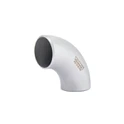
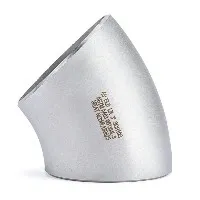
First off, let's talk a bit about butt weld fittings. These are used to connect pipes in a variety of industries, like oil and gas, chemical processing, and water treatment. They come in different shapes, such as elbows, tees, reducers, and caps. Each type has its own set of dimension requirements that need to be met for a proper fit and function.
The dimensions of butt weld fittings are mainly determined by the pipe size they are meant to connect. Pipe sizes are usually specified by their nominal diameter, which is a rough indication of the pipe's inside diameter. For example, a 2-inch pipe doesn't actually have an inside diameter of exactly 2 inches, but it's a standardized size that all fittings for that pipe are designed to match.
Industry Standards for Dimensions
There are several industry standards that govern the dimensions of butt weld fittings. One of the most widely recognized is the American National Standards Institute (ANSI) and the American Society of Mechanical Engineers (ASME) standards. These standards, like ASME B16.9 for factory-made wrought buttwelding fittings, provide detailed specifications for the dimensions of different types of fittings.
For elbows, the key dimensions include the center-to-face dimension, which is the distance from the center of the elbow to the face where it connects to the pipe. This dimension is critical for ensuring that the pipe layout is accurate and that the elbows fit properly in the system. Another important dimension is the wall thickness. The wall thickness of the elbow needs to be appropriate for the pressure and temperature conditions of the fluid flowing through the pipes.
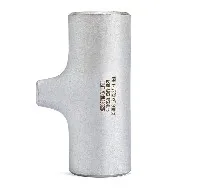
Tees are another common type of butt weld fitting. When it comes to tees, the dimensions include the run length (the length of the main pipe section), the branch length (the length of the side branch), and the wall thickness. Just like with elbows, the wall thickness is crucial for withstanding the pressure and stress in the system. For instance, if you're looking for a high - quality tee, you might be interested in our 304 Stainless Steel Reducer Tee. It's designed to meet the strict ASME standards for dimensions and quality.
Reducers are used to connect pipes of different sizes. The dimensions of reducers are defined by the large end diameter, the small end diameter, and the length. The transition between the two diameters needs to be smooth to minimize turbulence in the fluid flow. Our Stainless Steel Reducer Tee is a great example of a reducer that adheres to the industry standards for dimensions.
Caps are used to close the end of a pipe. The main dimension for caps is the inside diameter, which needs to match the outside diameter of the pipe it's meant to cover. The wall thickness of the cap also needs to be appropriate for the pressure in the system.
Tolerances in Dimensions
It's important to note that there are tolerances allowed in the dimensions of butt weld fittings. Tolerances are the acceptable range of variation from the specified dimension. For example, the ASME standards define specific tolerances for the outside diameter, wall thickness, and length of fittings. These tolerances are in place because it's almost impossible to manufacture fittings with exactly the same dimensions every time. However, they need to be within a certain range to ensure that the fittings can still be used effectively.
Manufacturers use various techniques to control the dimensions within the tolerance range. This includes using precision machining equipment, quality control inspections at different stages of the manufacturing process, and testing the finished products. At our company, we have a strict quality control system in place to make sure that all our Stainless Steel Tee Fittings meet the required dimensional tolerances.
Material Considerations and Dimensions
The material of the butt weld fitting also plays a role in determining the dimensions. Different materials have different properties, such as thermal expansion and corrosion resistance. For example, stainless steel has a higher corrosion resistance compared to carbon steel. When designing the dimensions of fittings made from stainless steel, the manufacturer needs to take into account the potential for thermal expansion during operation. This might mean allowing for a slightly larger clearance in the dimensions to prevent the fitting from getting damaged due to expansion.
Impact of Incorrect Dimensions
Using butt weld fittings with incorrect dimensions can have serious consequences. If the dimensions are too small, the fitting might not fit properly onto the pipe, leading to leaks and potential safety hazards. On the other hand, if the dimensions are too large, the fitting might not provide a secure connection, which can also result in leaks and instability in the pipe system. In some cases, incorrect dimensions can also cause increased turbulence in the fluid flow, which can lead to higher energy consumption and premature wear and tear on the pipes and fittings.
How We Ensure Dimension Accuracy
As a supplier of butt weld fittings, we take dimension accuracy very seriously. We have a team of experienced engineers and technicians who are well - versed in the industry standards. They use advanced measurement tools and techniques to ensure that every fitting we produce meets the required dimensions.
We start by carefully selecting the raw materials. The quality of the raw materials is essential for achieving accurate dimensions. Then, during the manufacturing process, we use state - of - the - art machining equipment that can produce fittings with high precision. After the fittings are manufactured, we conduct thorough quality control inspections. We measure the key dimensions using calibrated measuring instruments to make sure they are within the tolerance range specified by the standards.
Why Choose Our Fittings
Our butt weld fittings are not only dimensionally accurate but also made from high - quality materials. We offer a wide range of fittings, including elbows, tees, reducers, and caps, in different sizes and materials like stainless steel and carbon steel. Whether you're working on a small - scale project or a large industrial installation, we can provide the right fittings for your needs.


Let's Connect
If you're in the market for butt weld fittings and want to ensure that you're getting products with accurate dimensions and high - quality, we'd love to hear from you. Whether you have questions about the dimensions, materials, or need help selecting the right fittings for your project, don't hesitate to reach out. We're here to assist you in making the best choice for your piping system.
References
- ASME B16.9 - Factory - Made Wrought Buttwelding Fittings
- ANSI standards related to pipe fittings