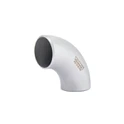
Hey there! As a supplier of 90 degree weldable elbows, I often get asked whether these elbows can be used in steam pipelines. Well, let's dive right into it and figure this out together.
First off, let's understand what steam pipelines are all about. Steam pipelines are used to transport steam from a steam - generating source, like a boiler, to where it's needed, such as in industrial processes or heating systems. Steam can be pretty demanding on the pipeline components. It usually operates at high temperatures and pressures, and it can carry contaminants and moisture that might cause corrosion and wear over time.
Now, let's talk about 90 degree weldable elbows. These elbows are designed to change the direction of the pipeline by 90 degrees. They're typically joined to the pipeline through welding, which creates a strong and leak - proof connection. There are different types of 90 degree weldable elbows available in the market, made from various materials like stainless steel, carbon steel, and alloy steel.
Material Compatibility
One of the most important factors when considering using 90 degree weldable elbows in steam pipelines is material compatibility. Steam pipelines often require materials that can withstand high temperatures and pressures. Stainless steel is a popular choice for steam pipelines, and 304 Stainless Steel Elbow is a great option. It has excellent corrosion resistance, which is crucial as steam can cause oxidation and rusting in the pipeline. The 304 grade stainless steel can handle temperatures up to around 870°C (1600°F), making it suitable for many steam applications.
Carbon steel elbows are also used in steam pipelines, especially in lower - temperature and lower - pressure systems. However, carbon steel is more prone to corrosion compared to stainless steel. So, if you're using carbon steel 90 degree weldable elbows in a steam pipeline, you might need to apply some form of corrosion protection, like painting or coating.
Alloy steel elbows offer a balance between strength and corrosion resistance. They can be used in high - pressure and high - temperature steam pipelines. Alloy steel is often alloyed with elements like chromium, molybdenum, and nickel to enhance its properties.
Pressure and Temperature Ratings
Another key aspect is the pressure and temperature ratings of the 90 degree weldable elbows. Steam pipelines operate at different pressure and temperature levels depending on the application. You need to make sure that the elbows you choose can handle the specific pressure and temperature conditions of your steam pipeline.
Manufacturers usually provide pressure and temperature ratings for their elbows. These ratings are based on extensive testing and engineering calculations. For example, a Steel Pipe 90 Degree Elbow might have a maximum pressure rating of 1000 psi and a maximum temperature rating of 500°F. If your steam pipeline operates at a pressure of 800 psi and a temperature of 450°F, then this elbow would be suitable. But if your pipeline operates at a much higher pressure or temperature, you'll need to look for elbows with higher ratings.
Weld Quality
Since 90 degree weldable elbows are joined to the pipeline by welding, the quality of the weld is of utmost importance. A poor - quality weld can lead to leaks, which are a major safety hazard in steam pipelines. When welding the elbows, it's essential to follow proper welding procedures and use the right welding materials.
For example, when welding stainless steel elbows, you should use stainless steel welding rods that are compatible with the base material. The welder should also have the necessary skills and experience to ensure a strong and defect - free weld. Proper pre - heating and post - welding heat treatment might also be required, depending on the material and the thickness of the elbow.
Flow Characteristics
The flow of steam through the pipeline is also affected by the use of 90 degree weldable elbows. When steam flows through an elbow, it experiences a change in direction, which can cause turbulence and pressure drop. A high - pressure drop can reduce the efficiency of the steam system.


To minimize the pressure drop, it's important to choose elbows with a smooth internal surface. Elbows with a large radius are generally better for steam flow as they cause less turbulence compared to elbows with a small radius. For example, a long - radius Buttweld Elbow can provide a more gradual change in direction, resulting in a lower pressure drop.
Installation and Maintenance
Proper installation and maintenance are crucial for the long - term performance of 90 degree weldable elbows in steam pipelines. During installation, make sure that the elbows are aligned correctly with the pipeline. Any misalignment can cause stress concentrations in the weld and the elbow itself, which can lead to premature failure.
Regular maintenance is also necessary. This includes inspecting the elbows for signs of corrosion, wear, and leaks. If any issues are detected, they should be addressed immediately. For example, if you notice some corrosion on a carbon steel elbow, you might need to clean and re - coat it.
Conclusion
So, can 90 degree weldable elbows be used in steam pipelines? The answer is yes, but with some important considerations. You need to choose the right material based on the temperature and pressure conditions of the steam pipeline. Ensure that the elbows have the appropriate pressure and temperature ratings, and pay close attention to the weld quality, flow characteristics, installation, and maintenance.
If you're in the market for high - quality 90 degree weldable elbows for your steam pipeline, I'd be more than happy to help. We offer a wide range of elbows made from different materials, including stainless steel, carbon steel, and alloy steel. Our elbows are manufactured to the highest standards and come with reliable pressure and temperature ratings.
Don't hesitate to reach out if you have any questions or if you're ready to start a procurement discussion. We're here to ensure that you get the best elbows for your steam pipeline needs.
References
- ASME B31.1 Power Piping Code
- ASTM Standards for Pipe Fittings
- Welding Handbook, American Welding Society