


Stainless Steel Eccentric Reducer
What is Stainless Steel Eccentric Reducer
A stainless steel eccentric reducer is a type of pipe fitting used to connect two pipes of different diameters, where one end of the fitting is larger than the other, forming an eccentric shape. This design allows for the reduction of the pipe diameter while maintaining alignment of the centerlines of the pipes. The eccentric shape ensures a smooth transition between pipes, minimizing turbulence and pressure drop within the system. Made from high-quality stainless steel, these reducers offer excellent corrosion resistance, durability, and reliability in demanding industrial environments.
Why Choose Us
High productivity
Our factory covers an area of more than 10,000+㎡, equipped with 60+ sets of production equipment and 70+ sets of supporting molds. Our annual production capacity can reach 5,000+ tons to meet various pipe fitting ordering needs.
Caring service
Our team has more than 30 years of experience in pipe fitting manufacturing and sales, and is online 24/7 to provide you with timely product consultation and customized design services.
Multi-transportation
We provide different product transportation methods according to customer needs, including but not limited to TNT, FedEx Express, EMS, DHL, SF, UPS, etc.
Quality assurance
Our production processes and stainless steel pipe fittings products strictly comply with industry guidelines and quality standards, and have passed ISO9001, DAS and TS certifications.


Benefits of Stainless Steel Eccentric Reducer
1. Flow control
Stainless steel eccentric reducers facilitate smooth and controlled flow within piping systems by effectively transitioning between pipes of different diameters. This ensures optimal fluid velocity and reduces turbulence, minimizing pressure drop and energy loss.
2. Space optimization
The eccentric design of these reducers allows for space-saving installation in confined areas where vertical misalignment or clearance issues exist. By offsetting the centerlines of the connected pipes, they enable efficient use of available space without compromising flow efficiency.
3. Versatility
Stainless steel eccentric reducers offer versatility in piping configurations, accommodating various pipe sizes and orientations. They can be used in horizontal, vertical, or inclined piping systems to meet specific layout requirements and adapt to changing operational needs.
4. Corrosion resistance
Constructed from high-quality stainless steel alloys, eccentric reducers exhibit excellent corrosion resistance, making them suitable for use in corrosive environments encountered in industries such as chemical processing, oil and gas, and marine applications.
5. Durability and longevity
Stainless steel eccentric reducers are known for their durability and long service life, even in harsh operating conditions. They withstand exposure to high temperatures, pressures, and corrosive substances without deteriorating, ensuring reliable performance and minimal maintenance requirements.
6. Cost-effectiveness
Despite their initial investment, stainless steel eccentric reducers offer long-term cost savings due to their durability, corrosion resistance, and low maintenance requirements. Their ability to optimize flow efficiency and minimize pressure drop contributes to energy savings over the lifespan of the piping system.
How Does a Stainless Steel Eccentric Reducer Differ From a Concentric Reducer?
A stainless steel eccentric reducer differs from a concentric reducer in its design and functionality. While both reducers are used to connect pipes of different diameters, the eccentric reducer features an offset configuration, with one end having a larger diameter than the other, creating an eccentric shape. This design allows for the adjustment of the pipe centerlines, making it ideal for applications where vertical misalignment or space constraints exist. A concentric reducer maintains a uniform centerline between the connected pipes, with both ends aligned at the same level. Concentric reducers are typically used when maintaining fluid velocity and minimizing turbulence is critical, such as in gravity-flow systems.
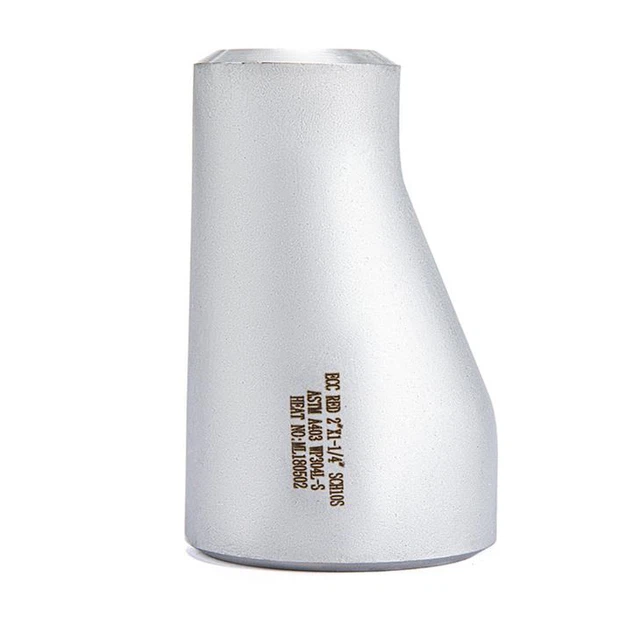

Stainless steel eccentric reducers are versatile fittings that can be used in both horizontal and vertical piping systems. Their eccentric design allows for the offset of the centerlines of connected pipes, facilitating smooth transitions between pipes of different diameters while maintaining alignment. This versatility enables their application in various orientations, including horizontal, vertical, and inclined piping configurations, making them suitable for a wide range of installation scenarios. Whether adjusting pipe sizes in a horizontal pipeline or accommodating changes in elevation in a vertical system, stainless steel eccentric reducers provide efficient flow control and space optimization while ensuring compatibility with different piping layouts and requirements.
Stainless steel eccentric reducers can effectively convey a wide range of fluids in various industrial applications. These include liquids such as water, oil, chemicals, solvents, acids, and beverages, as well as gases like natural gas and compressed air. Their corrosion resistance, durability, and versatility make them suitable for use with different types of fluids encountered in industries such as chemical processing, oil and gas, pharmaceuticals, food and beverage, water treatment, and HVAC systems. The smooth transition provided by eccentric reducers ensures efficient flow and minimal turbulence, making them reliable components for fluid handling systems.
What Fittings are Stainless Steel Eccentric Reducers Compatible With?
These include but are not limited to elbows, tees, couplings, flanges, valves, and adapters. The versatility of stainless steel eccentric reducers allows them to seamlessly integrate with various fittings to accommodate changes in pipe size, direction, or flow requirements within the system. Whether used in horizontal, vertical, or inclined piping configurations, stainless steel eccentric reducers provide flexibility and adaptability, ensuring efficient and reliable fluid conveyance in diverse industrial applications.
Types of Stainless Steel Eccentric Reducer
Standard eccentric reducers
These reducers have a standard eccentric design, with one end larger in diameter than the other. They are commonly used for reducing pipe size while maintaining a consistent flow direction in piping systems.
Long-radius eccentric reducers
Long-radius eccentric reducers feature a longer taper, providing a smoother transition between pipe sizes and reducing the risk of turbulence or pressure drop in the system. They are preferred for applications where flow characteristics are critical.
Short-radius eccentric reducers
Short-radius eccentric reducers have a shorter taper, making them more compact and suitable for installations where space constraints or limited clearance exist. They offer a more abrupt transition between pipe sizes but are still effective for flow control.
Threaded eccentric reducers
Threaded eccentric reducers come with threaded connections on both ends, allowing for easy installation and disassembly without the need for welding. They are commonly used in applications requiring frequent maintenance or adjustments.
Flanged eccentric reducers
Flanged eccentric reducers feature flanged connections on both ends, providing a secure and leak-proof joint for high-pressure applications. They are suitable for connecting pipes to equipment, valves, or other components in the system.
Welded eccentric reducers
Welded eccentric reducers are designed for permanent installations and feature welded connections on both ends. They offer robust and reliable joints, making them suitable for high-temperature and high-pressure applications.
How are Stainless Steel Eccentric Reducers Installed?
Stainless steel eccentric reducers are installed by carefully aligning them with the pipes of different diameters, ensuring that the larger end of the reducer matches the larger diameter pipe. Once aligned, the reducer is secured in place using appropriate fastening methods such as welding, threading, or flanging, depending on the type of connections used. It's essential to ensure a tight and leak-free seal between the reducer and the adjoining pipes to maintain the integrity of the piping system. Proper alignment and installation are crucial to minimize turbulence, pressure drop, and potential flow disruptions within the system, ensuring efficient fluid conveyance.

Leak detection in stainless steel eccentric reducers can be performed through visual inspection for signs of fluid seepage or moisture accumulation around the joints or connections. Additionally, pressure testing the system can help identify leaks by pressurizing the piping and monitoring for pressure drops over time. Once a leak is detected, it should be promptly addressed by identifying the source, such as damaged seals, gaskets, or improperly tightened connections. Depending on the severity of the leak, solutions may include replacing faulty components, tightening fittings, applying sealants, or welding repairs. Regular maintenance and inspection can help prevent leaks and ensure the continued integrity of stainless steel eccentric reducers in fluid handling systems.
Material of Stainless Steel Eccentric Reducer
Stainless steel eccentric reducers are typically crafted from high-quality stainless steel alloys, such as 304, 316, or 316L stainless steel. These alloys offer excellent corrosion resistance, durability, and mechanical properties, making them well-suited for a wide range of industrial applications. The choice of material grade depends on factors such as the specific requirements of the application, the operating environment, and considerations regarding temperature, pressure, and chemical exposure.
Application of Stainless Steel Eccentric Reducer
Oil and gas industry
Stainless steel eccentric reducers are used in oil and gas processing facilities for transferring crude oil, natural gas, and petroleum derivatives between different pipeline sections. They ensure smooth flow transitions and help control fluid velocity in various processing stages.
Chemical processing
In chemical plants, eccentric reducers facilitate the transfer of corrosive chemicals, acids, solvents, and other fluids. Their corrosion-resistant properties and precise flow control make them suitable for maintaining the integrity of chemical processing systems.
Water treatment
Stainless steel eccentric reducers play a crucial role in water treatment plants for conveying treated water, chemicals, and slurry between different treatment units. They help regulate flow rates and minimize pressure fluctuations, ensuring efficient water purification processes.
Pharmaceutical manufacturing
Stainless steel eccentric reducers are employed in pharmaceutical facilities for transferring pharmaceutical ingredients, solvents, and sterile fluids during manufacturing processes. Their hygienic properties and precise flow control support compliance with strict regulatory standards for pharmaceutical production.
Food and beverage processing
In food and beverage processing plants, eccentric reducers are utilized for conveying ingredients, beverages, and food products through processing lines. Their smooth interior surface and corrosion-resistant properties ensure product integrity and hygiene compliance in food handling applications.
Marine and offshore applications
Stainless steel eccentric reducers are used in marine and offshore installations for fluid transfer between onboard systems, pipelines, and storage tanks. Their resistance to corrosion and harsh environmental conditions make them suitable for marine and offshore environments.
How to Choose The Correct Size of Stainless Steel Eccentric Reducer?
Determine the nominal pipe size (NPS) of the larger and smaller pipes to be connected. The reducer size should match the NPS of the larger pipe, while the smaller end size should accommodate the flow requirements and velocity constraints of the system. Considerations such as fluid velocity, pressure drop, and flow rate should guide the selection process. Ensure that the eccentric reducer's dimensions, including the larger and smaller end diameters and overall length, align with the piping layout and space constraints of the installation site.
1. Material selection
The process begins with the careful selection of high-quality stainless steel sheets or plates, typically of grades 304, 316, or 316L, ensuring they meet the required specifications for chemical composition, mechanical properties, and surface finish.
2. Cutting and forming
The selected stainless steel sheets or plates are cut into blanks of appropriate sizes using shearing machines or laser cutting equipment. These blanks are then formed into cylindrical shapes using hydraulic presses or rolling machines, with one end larger than the other to create the eccentric shape.
3. Cold forming or hot forming
Depending on the size and thickness of the reducers, they may undergo cold forming or hot forming processes to achieve the desired dimensions and shape. Cold forming involves shaping the blanks at room temperature, while hot forming involves heating the blanks to high temperatures before shaping to improve formability.
4. Machining and finishing
After forming, the eccentric reducers undergo machining processes such as turning, milling, or grinding to achieve precise dimensions, smooth surfaces, and tight tolerances. This step ensures uniformity and enhances the aesthetics and functionality of the reducers. Additionally, surface treatments such as pickling, passivation, or polishing may be applied to improve corrosion resistance and surface finish.
5. Quality control and testing
Throughout the manufacturing process, stringent quality control measures are implemented to ensure the dimensional accuracy, structural integrity, and surface quality of the stainless steel eccentric reducers. This includes visual inspection, dimensional checks, non-destructive testing (NDT) methods such as ultrasonic testing or dye penetrant testing, and pressure testing to verify leak-tightness and compliance with industry standards and specifications.
Components of Stainless Steel Eccentric Reducer
A stainless steel eccentric reducer typically consists of two main components: a larger end and a smaller end, forming an eccentric shape. The larger end is designed to fit over a pipe with a larger diameter, while the smaller end connects to a pipe with a smaller diameter, allowing for a smooth transition between pipes of different sizes. The reducer may also feature flanged, threaded, or welded connections on each end, depending on the installation requirements and compatibility with other pipe fittings.
Maintenance Tips for Stainless Steel Eccentric Reducer
1. Regular inspection
Conduct routine visual inspections of the eccentric reducer for signs of corrosion, leaks, or damage. Address any issues promptly to prevent further deterioration and potential system failures.
2. Regular cleaning
Clean the surface of the eccentric reducer periodically to remove dirt, debris, and contaminants that can accumulate over time. Use mild detergents, water, and non-abrasive cleaning tools to avoid scratching or damaging the stainless steel surface.
3. Regular corrosion protection
Apply corrosion-resistant coatings or treatments to the surface of the eccentric reducer to enhance its resistance to corrosive environments. This is particularly important in industries such as chemical processing or marine applications where exposure to corrosive substances is common.
4. Regular leak detection
Regularly check for leaks or signs of fluid seepage around the joints or connections of the eccentric reducer. Address any leaks immediately by tightening fittings, replacing seals, or applying appropriate sealants to prevent further leakage.
5. Regular pressure testing
Periodically perform pressure testing on the piping system, including the eccentric reducer, to ensure its integrity and leak-tightness under operating conditions. This helps identify potential weaknesses or vulnerabilities that may require attention.
Are Stainless Steel Eccentric Reducers Suitable for Underground Piping Systems?
Stainless steel eccentric reducers are suitable for underground piping systems, provided they are selected based on their corrosion resistance, pressure ratings, and compliance with regulations governing underground installations. Stainless steel offers excellent resistance to corrosion, making it well-suited for underground applications where pipes may be exposed to moisture, soil conditions, and other corrosive elements. Eccentric reducers can accommodate changes in pipe diameter while maintaining efficient fluid flow, making them suitable for underground installations where space constraints or clearance issues may exist. Proper installation techniques, such as corrosion protection measures and adequate support, should be employed to ensure the longevity and integrity of stainless steel eccentric reducers in underground piping systems.
Things to Note When Using Stainless Steel Eccentric Reducer
Proper sizing
Select the correct size of the eccentric reducer based on the nominal pipe sizes (NPS) of the larger and smaller pipes to be connected. Ensure that the reducer's dimensions, including the larger and smaller end diameters and overall length, align with the piping layout and flow requirements of the system.
Flow direction
Install the eccentric reducer with the larger end positioned in the direction of the flow to minimize turbulence and pressure drop within the system. Maintaining proper flow direction ensures efficient fluid conveyance and prevents flow restriction or blockage.
Alignment
Ensure proper alignment of the eccentric reducer with the adjacent piping to prevent misalignment, stress concentrations, or uneven loading. Proper alignment helps distribute mechanical forces evenly, reducing the risk of leaks or premature failure.
Sealing
Use appropriate gaskets, seals, or sealants to ensure a tight and leak-proof connection between the eccentric reducer and adjoining components. Proper sealing prevents fluid leakage and maintains system integrity, especially in high-pressure or hazardous applications.
Corrosion protection
Consider the operating environment and potential exposure to corrosive substances when selecting stainless steel grades and surface treatments for the eccentric reducer. Apply corrosion-resistant coatings or treatments to enhance its resistance to corrosion and extend its service life.
Temperature and pressure ratings
Verify that the stainless steel eccentric reducer is suitable for the temperature and pressure conditions of the intended application. Ensure that the reducer's temperature and pressure ratings meet or exceed the operating conditions to prevent structural failure or deformation.
The working principle of a stainless steel eccentric reducer is based on its design to facilitate smooth and controlled fluid flow within piping systems. By connecting pipes of different diameters with one end larger than the other, the eccentric reducer effectively reduces the pipe size while maintaining alignment of the centerlines. This design ensures that fluid flow is redirected gradually, minimizing turbulence and pressure drop in the system. The larger end of the reducer accommodates the higher flow rate, while the smaller end regulates the flow to match downstream requirements. As fluid passes through the eccentric reducer, the gradual transition between pipe sizes helps optimize flow velocity, prevent blockages, and maintain system efficiency.
The factory area is 10,000+㎡, with 60+ sets of production equipment and 70+ sets of supporting molds. Our factory has a standing inventory of 800+ tons, and the annual production capacity can reach 5,000+ tons. We support OEM/ODM, processing according to the drawings, and also provide surface treatment such as sandblasting, sand rolling, mirror surface etc.

FAQ
Q: What is a stainless steel eccentric reducer?
Q: How does a stainless steel eccentric reducer differ from a concentric reducer?
Q: What are the benefits of using a stainless steel eccentric reducer?
Q: In what industries are stainless steel eccentric reducers commonly used?
Q: What are the standard sizes available for stainless steel eccentric reducers?
Q: How do I select the correct size of a stainless steel eccentric reducer for my piping system?
Q: Can stainless steel eccentric reducers be used in both horizontal and vertical piping systems?
Q: Are stainless steel eccentric reducers resistant to corrosion?
Q: What are the temperature and pressure ratings for stainless steel eccentric reducers?
Q: How are stainless steel eccentric reducers installed?
Q: Are stainless steel eccentric reducers compatible with other pipe fittings?
Q: Can stainless steel eccentric reducers be customized for specific applications?
Q: What types of fluids can be conveyed through stainless steel eccentric reducers?
Q: Do stainless steel eccentric reducers require any special maintenance?
Q: How can leaks in stainless steel eccentric reducers be detected and addressed?
Q: Can stainless steel eccentric reducers be used in high-temperature applications?
Q: What are the differences between seamless and welded stainless steel eccentric reducers?
Q: Are stainless steel eccentric reducers suitable for underground piping systems?
Q: How can I ensure the proper alignment and installation of stainless steel eccentric reducers?
Q: Are there any environmental considerations associated with stainless steel eccentric reducers?
As one of the most professional stainless steel eccentric reducer manufacturers in China, we're featured by quality products and good service. Please rest assured to wholesale customized stainless steel eccentric reducer made in China here from our factory.
fitting for 4 inch pvc elbow, , rubber pipe fitting