Zhejiang Mingli Management Co., Ltd. was founded in 1994 with a registered capital of 50 million. We have more than 30 years of experience in production and processing of stainless steel pipelines.The factory area is 10,000+㎡, with 60+ sets of production equipment and 70+ sets of supporting molds. Our factory has a standing inventory of 800+ tons, and the annual production capacity can reach 5,000+ tons.We support OEM/ODM, processing according to the drawings, and also provide surface treatment such as sandblasting, sand rolling, mirror surface etc.
Why Choose Us
High productivity
Our factory covers an area of more than 10,000+㎡, equipped with 60+ sets of production equipment and 70+ sets of supporting molds. Our annual production capacity can reach 5,000+ tons to meet various pipe fitting ordering needs.
Caring service
Our team has more than 30 years of experience in pipe fitting manufacturing and sales, and is online 24/7 to provide you with timely product consultation and customized design services.
Multi-transportation
We provide different product transportation methods according to customer needs, including but not limited to TNT, FedEx Express, EMS, DHL, SF, UPS, etc.
Quality assurance
Our production processes and stainless steel pipe fittings products strictly comply with industry guidelines and quality standards, and have passed ISO9001, DAS and TS certifications.

Forged butt weld pipe fittings are manufactured according to ANSI/ASME B16.9. Butt weld fittings can be provided as elbows, tees, caps, reducers, and outlets (pipe nipples).

Stainless Steel Butt Weld Pipe Fittings
Stainless steel butt weld pipe fittings are commonly used components in piping systems for joining and connecting pipes of various sizes and configurations.

A butt weld reducer tee is a type of pipe fitting that allows for the connection of three pipes of different sizes in a pipeline.

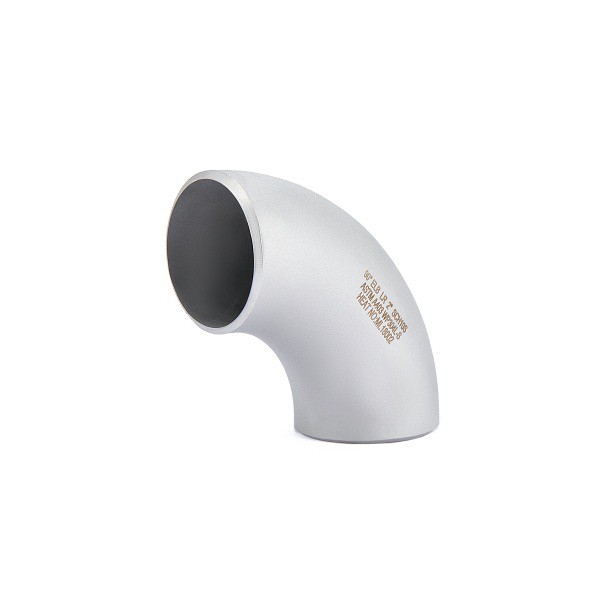
Steel 90 degree elbow are designed for pharmaceutical applications and are used to connect stainless steel pipes that need to be turned.

In order to prevent the eye erosion due to heating, the welding current should not be too old, 20%less than the carbon steel electrode, the arc should not be too long, the layer is fast, and the narrow welding track should be.

The elbow 180 -degree card hoop is used to connect the two pipes or pipes at a certain angle. Purpose: Clamp the tube at both ends to achieve non -permanent sealing and provide a disassembly channel. Rust -resistant material: high pressure resistance, corrosion resistance,...

304 Stainless Steel 90 Degree Elbow
[Specifications] -The outer diameter of stainless steel pipe parts: 25mm / 1 ", wall thickness: 1 mm, a length of 90 degrees of radius to change the flow
[Advantages] -304 stainless steel 90 degree elbow welded short elbow, which is used to connect two pipes or pipelines from a certain angle to ensure that the possibility of tightly sealing and reducing the possibility of leakage

ASME 16.9 Stainless Steel Butt Welded Fittings, Reducing Tee For Connection

What Is Stainless Steel Tubing Elbows
Coude en acier inoxydableest l'un des plus utilisésraccords de tuyauteriedans les tuyaux. Sa proportion atteint 70% et 80% dans les raccords de tuyauterie. Il occupe une proportion considérable de tous les raccords de tuyauterie, ce qui montre qu'il est important dans la tuyauterie. La fonction principale du coude est de changer la direction du tuyau. Il n'est pas toujours possible d'orienter tous les tuyaux, c'est pourquoi il est nécessaire d'utiliser des coudes.
Benefits of Stainless Steel Tubing Elbows
Excellent corrosion resistanc
Stainless steel pipe elbows have excellent corrosion resistance. The thin and strong oxide film on the surface of stainless steel makes stainless steel have excellent corrosion resistance in all water qualities, and it also has excellent corrosion resistance even if it is buried underground. Therefore, it is suitable for all kinds of water quality. In addition to disinfection and sterilization, there is no need to control the water quality. At the same time, there is no corrosion or excessive exudate. It can keep the water quality pure and hygienic, eliminate secondary pollution, and can withstand up to 30 meters per second. High water flow impact.
High connection strength and are resistant to vibration
Stainless steel pipe elbows have high connection strength and are resistant to vibration. The connection parts can be firmly fixed at one time to avoid the possibility of loosening the 'union joint'. The construction is convenient and fast, avoiding on-site welding operations and wire threading operations. The stainless steel elbows are long-lasting. Field corrosion test data shows that the service life can reach 100 years, and the stainless steel elbow requires almost no maintenance. Therefore, its performance-price ratio is very good, the operating life cost is low, and the economic benefits are significant.
Stainless steel elbows is extremely convenient
The on-site installation of stainless steel elbows is extremely convenient. The installation time is only 1/3 of that of welded pipe fittings or threading, which shortens the construction period and cost and avoids water leakage.
Combines mechanical strength and high elongatio
Stainless steel stamping elbows will not cause corrosion, pitting, rust, or wear. Stainless steel is also the strongest material among metal materials used in construction. Because stainless steel has good corrosion resistance, it allows structural components to maintain the integrity of their engineering designs. Chromium-containing stainless steel also combines mechanical strength and high elongation, making it easy to process and manufacture components and meet the needs of architects and structural designers.
Type of tubing
There are a few things to consider when choosing a tubing type. Bend radius, material thickness, and material type all play a role in the final decision. Thin-walled tubing bends more easily, but is also more prone to damage. Thicker-walled tubing is more durable, but harder to bend.
Bending radius
One thing to consider when choosing a pipe bender is the bend radius. The bend radius will determine how much space the pipe takes up when bent. You also need to consider material thickness and pipe type.
Material thickness
When selecting tubing for your project, you need to consider material thickness. Thicker tubing will be stronger and more durable, but also heavier and more expensive. Thinner tubing is less durable, but also lighter and less expensive. You need to decide which is more important to you: strength or weight.

Application of Stainless Steel Tubing Elbows

Oil and gas
Stainless steel tubing elbows are commonly used in oil and gas, where pipelines are exposed to harsh environments and corrosive fluids. They resist corrosion, erosion, and high temperatures, making them ideal for use in these applications.
Chemical processing
Stainless steel tubing elbows are commonly used in chemical processing plants, where pipelines are exposed to harsh chemicals and extreme temperatures. They are resistant to corrosion and chemical attack, ensuring a longer lifespan for the pipeline.
Food and beverage
Stainless steel tubing elbows are commonly used in the food and beverage industry, where pipelines must be hygienic and contamination-free. They are easy to clean and maintain and are resistant to bacterial growth.
External diameter
Whether in inches or mm, it represents the main characteristic for the choice as it must be made on the basis of the system in which it will operate.
Thickness
It is essential for the structural resistance of the system as it guarantees certain resistance characteristics. For this reason it must be made uniform along the entire section.
Distance between the entrance section and the axis of the other entrance
It is an important dimensional characteristic and valid only for 90° elbows;
Distance between the entry section and the center of the elbow
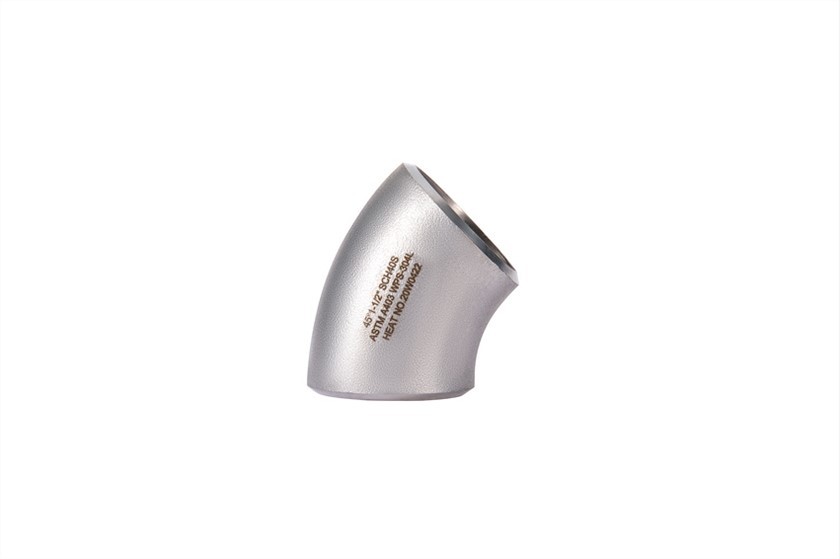
It is an important dimensional characteristic and valid only for 45° elbows;
Elbow weight
It may be necessary to estimate the loads and inertias during operation.
Size
First, you need to clarify the diameter of the pipeline system. The size of the elbow usually matches the inner or outer diameter of the pipe.Flow demand is the key factor in determining the size of the elbow. When the flow increases, the required elbow size will also increase accordingly. Therefore, when choosing an elbow, make sure it can meet the flow requirements required by the system.
Material of Elbow Pipe Fittings
Pipe elbows should be made of the same material as the pipes. Chemical plants are basically stainless steel pipes, which have strong corrosion resistance.Stainless steel elbows are divided into 304, 316 and other materials. In our daily life, many underground pipes are made of carbon steel, so elbows are made of carbon steel.Thermal insulation pipes require insulation elbows, of course, they are also made of carbon steel, so it is easy to choose pipe elbows according to the material.
Angle
Pipe elbows are available in 45 degrees, 90 degrees, etc., that is, if the pipe needs to change its direction by 90 degrees, a 90-degree elbow is used.Sometimes, when the pipe reaches the end, it needs to flow in the opposite direction, and then a 180-degree elbow can be used. According to the construction environment and space, elbows with special calibers, pressures, and angles can be customized.For example, if you want to change the direction but 90 degrees is too large and 70 degrees is too small, you can customize elbows with any angle between 70 and 90 degrees.
Process
The production process of pipe elbows can be divided into many types according to the caliber, including push-making, stamping, and mid-plate welding. Most push-made elbows are seamless, and there are also straight seams.The prices of elbows made by different processes vary a lot, so sometimes you choose according to your own situation. The quality of seamless elbows must be better than that of straight seams, and the pressure-bearing capacity is relatively stronger.
Welding of Stainless Steel Tubing Elbows
Preparation for caulking
It is important to remove the oxide layer in correspondence with the welding area by means of mechanical abrasion;
Use of austenitic stainless steels
They have better weldability than other stainless steels, reducing the upstream problem.
Use of appropriate filler material
This addition improves the characteristics of the area, avoiding resistance problems that can arise in correspondence with the welded or heat-altered area.Efficient and precise processing and testing equipment.
The Processing Method of Stainless Steel Elbow Is As Follows
Forging method
The end of the pipe or a section is punched by a swaging machine to reduce the outer diameter. The common forging machine has a rotary type, a link type and a roller type.
Rolling method
Generally, the mandrel is not used, and it is suitable for the inner edge of the thick-walled tube. The core is placed in the tube, and the outer circumference is pressed by a roller for round edge processing.
Stamping method
The pipe end is expanded to the required size and shape with a tapered core on the punching machine.
Bending forming method
There are three methods that are more commonly used. One method is called stretching method, the other method is called pressing method, the third method is roller method, there are 3-4 rollers, two fixed rollers, one adjusting roller, and adjustment. With the fixed roll distance, the finished pipe is curved.
Inflating method
one is to place rubber in the tube, and the upper part is compressed by a punch to make the tube convex and convex; the other method is to form a hydraulic bulge, fill the middle of the tube with liquid, and the liquid pressure drums the tube into the required The shape, the bulk of the production of bellows is used in this way.
Maintenance and Precautions For Stainless Steel Elbow
When stainless steel elbow store in somewhere for a long time, they should be examined regularly, cleaned frequently, and neatly stored in a dry and ventilated place. Remember to keep them clean and ventilated and store them in correct ways.
When it comes to installment, stainless steel elbow can be connected directly in pipes, and installed according to the location it will be used. Normally, it can be installed in any position, but in order to be easily checked, the flow of media should be vertical and upward flow below the valve, stainless steel elbow can only be installed horizontally. When installing, pay attention to its tightness, prevent leakage and affect the operation of pipes.
When using valves of elbows, they should be fully opened or closed, instead of be used as adjust flow, so as to prevent the surface from erosion and abrasion. There is threads in the gate and pour off valve seals, tighten the handwheel to the uppermost position, which can also block leakage.
Stainless steel elbow should use handwheel instead of lever or other tools, otherwise the valve may be damaged. If handwheel is clockwise, it means the valve is closed, otherwise it is opened. Accurate usage should be guaranteed when use the stainless steel elbow.
The bolt of stainless steel elbow should be tightened evenly and not press it into a crooked state, so as to not hinder the movement of the spindle bruise or cause leaks.
During use, stainless steel elbow should always be clean and the transmission screw should be lubricated regularly. When it does not work normally, stop using immediately and examine the reason to repair it.
Certificate

Our factory

FAQ
Hot Tags: stainless steel tubing elbows, China stainless steel tubing elbows manufacturers, factory, elbow made of stainless, stainless steel elbow in rubber coating, ss 202 elbow, stainless steel elbow in water treatment, metal elbows, stainless steel 45 degree elbow