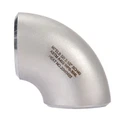
Hey there! As a supplier of steel 90 degree elbows, I'm super excited to walk you through the manufacturing process of these nifty little components. Steel 90 degree elbows are used in a ton of industries, from plumbing to construction, and even in some heavy - duty machinery. So, let's dive right in!
1. Material Selection
The first step in making a steel 90 degree elbow is picking the right material. We've got a bunch of options here, like carbon steel, stainless steel, and alloy steel. Each type has its own unique properties.
Carbon steel is pretty common. It's strong, relatively inexpensive, and can handle a fair amount of stress. Stainless steel, on the other hand, is corrosion - resistant, which makes it perfect for applications where the elbow will be exposed to moisture or chemicals. You can check out our Stainless Steel Elbow Fitting for more details on this type. Alloy steel combines the best of both worlds, offering high strength and corrosion resistance.
Once we've decided on the material, we source it from reliable suppliers. We make sure the steel meets all the required quality standards, like having the right chemical composition and mechanical properties.
2. Cutting the Steel
After getting the right steel, it's time to cut it into the appropriate size. We use different cutting methods depending on the thickness and type of steel. For thinner steel, we might use a laser cutter. It's super precise and can cut through the steel quickly, leaving a clean edge.
For thicker steel, we often go with a plasma cutter. It works by creating a high - energy plasma arc that melts through the steel. This method is great for cutting large pieces of steel, but it might not be as precise as a laser cutter.


Once the steel is cut, we end up with pieces that are the right length and width to start forming the elbow.
3. Bending the Steel
Now comes the fun part - bending the steel into a 90 - degree angle. There are a few ways to do this. One common method is hot bending. In hot bending, we heat the steel to a very high temperature, usually around 900 - 1200 degrees Celsius. When the steel is hot, it becomes more malleable, which means it's easier to bend.
We use a special bending machine that has a die in the shape of a 90 - degree angle. The heated steel is placed in the machine, and the machine applies pressure to bend the steel around the die. This process requires a lot of skill because we need to make sure the bend is exactly 90 degrees and the wall thickness of the elbow remains uniform.
Another method is cold bending. Cold bending is done at room temperature. It's suitable for thinner steel and when we need a more precise bend. We use a different type of bending machine for cold bending, which uses a series of rollers to gradually bend the steel.
4. Welding (if necessary)
In some cases, we might need to weld parts of the elbow together. For example, if we're making a Weld 90 Degree Elbow, we'll use welding to join the sections. There are different welding techniques, like TIG (Tungsten Inert Gas) welding and MIG (Metal Inert Gas) welding.
TIG welding is great for stainless steel because it produces a clean and precise weld. It uses a non - consumable tungsten electrode to create an arc that melts the steel. MIG welding, on the other hand, is faster and can be used for a wider range of materials. It uses a consumable wire electrode that is fed through the welding gun.
After welding, we need to make sure the weld is strong and free of defects. We use various testing methods, like visual inspection, ultrasonic testing, and X - ray testing, to check the quality of the weld.
5. Heat Treatment
Heat treatment is an important step to improve the mechanical properties of the steel 90 degree elbow. After bending and welding, the steel might have some internal stresses. Heat treatment helps to relieve these stresses and improve the strength and toughness of the elbow.
One common heat treatment process is annealing. In annealing, we heat the elbow to a specific temperature and then cool it slowly. This process makes the steel more ductile and reduces its hardness. Another process is quenching and tempering. Quenching involves rapidly cooling the steel after heating it, which makes it very hard. Then, tempering is done to reduce the brittleness and improve the toughness of the steel.
6. Surface Finishing
Once the heat treatment is done, we move on to surface finishing. The surface finish of the elbow is important for both aesthetic and functional reasons. A smooth surface finish can reduce friction and prevent corrosion.
We use different methods for surface finishing, like sandblasting, polishing, and coating. Sandblasting involves shooting small particles of sand at the surface of the elbow to remove any impurities and create a rough surface. This rough surface can then be polished to make it smooth.
Polishing is done using abrasive materials to give the elbow a shiny finish. We can also apply a coating, like a paint or a galvanized coating, to protect the elbow from corrosion.
7. Quality Inspection
Before we send the steel 90 degree elbows out to our customers, we conduct a thorough quality inspection. We check the dimensions of the elbow to make sure they meet the specifications. We measure the angle, the diameter, and the wall thickness.
We also check the surface finish for any defects, like scratches or dents. And of course, we test the mechanical properties of the elbow, like its strength and hardness. We use a variety of testing equipment, such as calipers, hardness testers, and pressure testers.
8. Packaging and Shipping
Once the elbows pass the quality inspection, we package them carefully. We use materials like cardboard boxes and plastic wrap to protect the elbows during shipping. We also label the packages with all the necessary information, like the size, material, and quantity of the elbows.
Then, we ship the elbows to our customers all over the world. We work with reliable shipping companies to ensure that the elbows arrive at their destination on time and in good condition.
So, there you have it - the whole manufacturing process of a steel 90 degree elbow. If you're in the market for high - quality steel 90 degree elbows, whether it's Stainless Steel Elbow Fitting, Weld 90 Degree Elbow, or 304 Buttweld Elbow And Stainless Steel Seamless Elbow, we're here to help. Just reach out to us, and we can start a great business relationship!
References
- ASME B16.9 - Factory - Made Wrought Buttwelding Fittings
- ASTM A234 - Standard Specification for Piping Fittings of Wrought Carbon Steel and Alloy Steel for Moderate and High - Temperature Service