Formability is a crucial aspect when it comes to stainless 90 degree elbows, especially for those in the manufacturing and construction industries. As a supplier of stainless 90 degree elbows, I've witnessed firsthand the importance of understanding formability and its impact on the performance and application of these essential components.
Understanding Formability
Formability refers to the ability of a material to undergo plastic deformation without cracking or failing. In the context of stainless 90 degree elbows, formability determines how easily the elbow can be shaped into its final 90 - degree configuration during the manufacturing process. It also affects the elbow's ability to withstand subsequent bending, flaring, or other forming operations that may be required during installation.
Several factors influence the formability of stainless 90 degree elbows. One of the primary factors is the type of stainless steel used. Different grades of stainless steel have varying chemical compositions and microstructures, which directly impact their formability. For example, austenitic stainless steels, such as 304 and 316, are known for their excellent formability due to their face - centered cubic (FCC) crystal structure. This structure allows for easy slip of atomic planes during deformation, resulting in less internal stress and a lower likelihood of cracking.


The thickness of the stainless steel also plays a significant role in formability. Thinner - walled elbows are generally more formable than thicker - walled ones. This is because thinner materials require less force to deform, and the stress distribution during forming is more uniform. However, it's important to note that while thin - walled elbows may be more formable, they may also have lower mechanical strength and pressure - bearing capacity.
Manufacturing Processes and Formability
The manufacturing process of stainless 90 degree elbows can greatly affect their formability. There are several common methods for producing these elbows, including hot bending, cold bending, and seamless manufacturing.
Hot bending is a process where the stainless steel tube is heated to a high temperature, typically above the recrystallization temperature, and then bent into a 90 - degree shape. This method is suitable for thick - walled elbows and materials with poor formability at room temperature. The high temperature reduces the yield strength of the stainless steel, making it easier to shape. However, hot bending can also lead to changes in the material's microstructure, which may affect its corrosion resistance and mechanical properties.
Cold bending, on the other hand, is performed at room temperature. It is often used for thinner - walled elbows and materials with good room - temperature formability, such as austenitic stainless steels. Cold bending has the advantage of maintaining the original microstructure of the stainless steel, which helps preserve its corrosion resistance and mechanical properties. However, cold bending requires more force than hot bending, and there is a higher risk of cracking if the material's formability limits are exceeded.
Seamless manufacturing is another method for producing stainless 90 degree elbows. In this process, a seamless stainless steel tube is used, which eliminates the presence of a weld seam. Seamless elbows generally have better formability and mechanical properties compared to welded elbows. The absence of a weld seam reduces the risk of stress concentration and cracking during forming.
Applications and Formability Requirements
The formability requirements of stainless 90 degree elbows vary depending on their applications. In the plumbing industry, for example, elbows are often used to connect pipes at right angles. These elbows need to be highly formable to ensure a proper fit and connection. They may also need to withstand some degree of bending or adjustment during installation. In this case, a thin - walled, austenitic stainless steel elbow with good formability would be a suitable choice.
In the chemical and petrochemical industries, stainless 90 degree elbows are used in pipelines that transport corrosive fluids under high pressure. Here, formability is important not only for installation but also for withstanding the internal pressure and external forces during operation. A thicker - walled elbow made of a corrosion - resistant stainless steel grade, such as 316, may be required. Although these elbows may have slightly lower formability compared to thinner - walled ones, they offer better mechanical strength and corrosion resistance.
Our Offerings
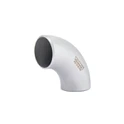
As a supplier of stainless 90 degree elbows, we offer a wide range of products to meet different formability and application requirements. Our 304 Stainless Steel 90 Degree Elbow is made from high - quality 304 austenitic stainless steel, which provides excellent formability and corrosion resistance. It is suitable for a variety of applications, including plumbing, food processing, and general industrial use.
We also offer 304 Buttweld Elbow, which is a popular choice for applications where a strong and reliable connection is required. These elbows are manufactured using advanced welding techniques to ensure a high - quality weld and good formability.
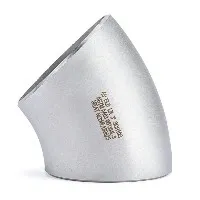
In addition, our Stainless Steel 45 Degree Pipe Elbow is available for applications where a 45 - degree angle is needed. These elbows are also made from high - quality stainless steel and offer excellent formability and performance.
Conclusion
In conclusion, formability is a critical factor in the production and application of stainless 90 degree elbows. Understanding the factors that influence formability, such as the type of stainless steel, thickness, and manufacturing process, is essential for selecting the right elbow for a specific application. As a supplier, we are committed to providing high - quality stainless 90 degree elbows with excellent formability and performance. If you are in need of stainless 90 degree elbows or have any questions about formability and our products, please feel free to contact us for a detailed discussion and procurement negotiation.
References
- ASM Handbook, Volume 8: Mechanical Testing and Evaluation, ASM International.
- Stainless Steel: A Practical Guide, C. R. Barrett, ASM International.
- Welding Metallurgy and Weldability of Stainless Steels, John C. Lippold and David J. Kotecki, Wiley.