Hey there! As a supplier of buttweld elbows, I've been getting a lot of questions lately about what it takes for these elbows to work well in a vacuum system. So, I thought I'd break it down for you all in this blog post.
First off, let's talk about what a vacuum system is. In simple terms, a vacuum system is designed to create and maintain a pressure below atmospheric pressure. These systems are used in a wide range of industries, from semiconductor manufacturing to food packaging. And in these systems, buttweld elbows play a crucial role in directing the flow of gases or fluids.


Material Requirements
One of the most important aspects when it comes to buttweld elbows in a vacuum system is the material. You can't just use any old elbow; it has to be made from a material that can withstand the unique conditions of a vacuum.
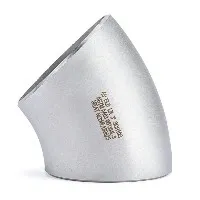
Stainless steel is a top choice for vacuum systems. It's corrosion - resistant, which is super important because in a vacuum, any corrosion can lead to leaks and contaminate the system. Our Stainless Steel Bends Elbows are made from high - quality stainless steel that can handle the rigors of a vacuum environment.
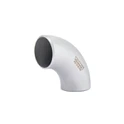
The type of stainless steel matters too. For example, 304 and 316 stainless steel are commonly used. 304 stainless steel offers good general corrosion resistance, while 316 stainless steel has even better resistance, especially against chloride - containing environments. If you're dealing with a vacuum system that might come into contact with chemicals or salts, 316 stainless steel 90 Degree Stainless Steel Elbow could be the way to go.
Another factor related to the material is its outgassing properties. In a vacuum, materials can release gases, which can mess up the vacuum level. So, the buttweld elbows need to have low outgassing rates. High - quality stainless steel has relatively low outgassing, but it's still something that needs to be considered during the manufacturing process.
Precision and Quality of Welding
When it comes to buttweld elbows, the welding is everything. In a vacuum system, even the tiniest leak can cause big problems. That's why the welding has to be done with extreme precision.
The welds should be smooth and free of any cracks or porosity. A cracked or porous weld can act as a pathway for gases to leak out of the system. Our manufacturing process ensures that each Stainless steel 90 elbow is welded to the highest standards. We use advanced welding techniques and have strict quality control measures in place.
The fit - up of the elbow is also crucial. The two pieces being welded together need to be perfectly aligned. Any misalignment can lead to a weak weld and potential leaks. Our team of experts makes sure that every elbow is properly aligned before the welding process begins.
Surface Finish
The surface finish of the buttweld elbow can have a significant impact on its performance in a vacuum system. A rough surface can trap gases and particles, which can then be released into the system.
We aim for a smooth surface finish on all our elbows. A smooth surface not only reduces the chances of gas and particle trapping but also makes it easier to clean the elbows. In a vacuum system, cleanliness is key to maintaining the integrity of the vacuum.
Dimensions and Tolerances
Accurate dimensions are a must for buttweld elbows in a vacuum system. The elbows need to fit perfectly into the existing piping system. Any deviation from the specified dimensions can lead to installation problems and leaks.
We adhere to strict dimensional tolerances during the manufacturing process. This ensures that our elbows will fit seamlessly into your vacuum system. Whether it's the outer diameter, wall thickness, or the angle of the elbow, we make sure everything is within the acceptable range.
Compatibility with Other Components
In a vacuum system, the buttweld elbow doesn't work alone. It needs to be compatible with other components like pipes, valves, and flanges.
The connection types need to match. For example, if your system uses a certain type of flange connection, the elbow should be designed to connect to that flange properly. We offer a variety of connection options to ensure compatibility with different systems.
Testing and Certification
Before our buttweld elbows are shipped out, they go through a series of tests. We test for leaks using methods like helium mass spectrometry. This is a very sensitive test that can detect even the smallest leaks.
We also ensure that our elbows meet relevant industry standards and certifications. This gives you peace of mind knowing that the elbows you're getting are of high quality and suitable for use in a vacuum system.
Why Choose Our Buttweld Elbows
We've been in the business of supplying buttweld elbows for a long time. Our experience has taught us what it takes to make elbows that work well in a vacuum system. We use the best materials, the latest manufacturing techniques, and have a team of experts who are dedicated to quality.
If you're in the market for buttweld elbows for your vacuum system, we'd love to talk to you. Whether you need a small quantity for a research project or a large order for an industrial application, we can help. Reach out to us to discuss your specific requirements, and let's find the perfect buttweld elbows for your vacuum system together.
References
- ASME B31.3 Process Piping Code
- ASTM Standards for Stainless Steel
- Vacuum Technology Handbook