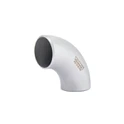
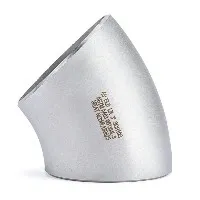
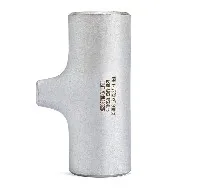
As a seasoned supplier of stainless pipe fittings, I understand the paramount importance of ensuring the quality of our products. In the world of plumbing, construction, and various industrial applications, the reliability of stainless pipe fittings can make or break a project. This blog post will delve into the comprehensive process of testing the quality of stainless pipe fittings, providing valuable insights for both industry professionals and those new to the field.
Visual Inspection
The first step in assessing the quality of stainless pipe fittings is a thorough visual inspection. This initial evaluation can reveal a wealth of information about the product's surface finish, dimensional accuracy, and overall integrity. When conducting a visual inspection, pay close attention to the following aspects:


- Surface Finish: A high-quality stainless pipe fitting should have a smooth, uniform surface without any visible scratches, dents, or pits. These imperfections can compromise the fitting's structural integrity and lead to premature failure. Additionally, check for any signs of corrosion or discoloration, as these can indicate poor material quality or improper storage.
- Dimensional Accuracy: Ensure that the fitting's dimensions match the specified requirements. This includes checking the outer diameter, wall thickness, and length of the fitting. Any deviations from the specified dimensions can result in improper installation and potential leaks. Use precision measuring tools such as calipers and micrometers to verify the accuracy of the dimensions.
- Weld Quality: If the fitting has welded joints, inspect the welds for any signs of defects such as cracks, porosity, or incomplete fusion. A well-executed weld should be smooth, continuous, and free of any visible flaws. Weld defects can weaken the fitting and reduce its overall strength and durability.
Material Analysis
In addition to visual inspection, material analysis is a crucial step in determining the quality of stainless pipe fittings. This involves testing the chemical composition and mechanical properties of the material to ensure that it meets the required standards. The following are some common methods of material analysis:
- Spectroscopy: Spectroscopy is a non-destructive testing method that can be used to analyze the chemical composition of the stainless steel. This technique involves shining a light on the material and analyzing the wavelengths of the light that are absorbed or emitted. By comparing the results to a known standard, it is possible to determine the exact composition of the material and identify any impurities or alloying elements.
- Hardness Testing: Hardness testing is a simple and effective way to assess the mechanical properties of the stainless steel. This involves applying a known force to the material using a hardness tester and measuring the depth of the indentation. The hardness of the material can provide valuable information about its strength, toughness, and resistance to wear and corrosion.
- Tensile Testing: Tensile testing is a more comprehensive method of assessing the mechanical properties of the stainless steel. This involves subjecting a sample of the material to a controlled tensile force until it breaks. By measuring the force required to break the sample and the amount of deformation that occurs, it is possible to determine the material's yield strength, ultimate tensile strength, and elongation.
Pressure Testing
Pressure testing is another important step in testing the quality of stainless pipe fittings. This involves subjecting the fitting to a specified pressure to ensure that it can withstand the operating conditions without leaking or failing. There are two main types of pressure testing: hydrostatic testing and pneumatic testing.
- Hydrostatic Testing: Hydrostatic testing involves filling the fitting with water and applying a pressure that is higher than the normal operating pressure. The fitting is then monitored for any signs of leaks or deformation. Hydrostatic testing is a reliable and widely used method of pressure testing, as it can detect even small leaks and ensure the integrity of the fitting.
- Pneumatic Testing: Pneumatic testing involves filling the fitting with air or another gas and applying a pressure that is higher than the normal operating pressure. The fitting is then monitored for any signs of leaks or deformation. Pneumatic testing is a faster and more convenient method of pressure testing, but it is also less reliable than hydrostatic testing, as it can be more difficult to detect small leaks.
Non-Destructive Testing
Non-destructive testing (NDT) is a group of techniques that can be used to detect internal defects in stainless pipe fittings without causing any damage to the material. These techniques are particularly useful for detecting defects such as cracks, porosity, and inclusions that may not be visible during a visual inspection. The following are some common methods of non-destructive testing:
- Ultrasonic Testing: Ultrasonic testing involves using high-frequency sound waves to detect internal defects in the material. The sound waves are transmitted into the material using a transducer, and any defects in the material will cause the sound waves to reflect back to the transducer. By analyzing the reflected sound waves, it is possible to detect the presence and location of the defects.
- Radiographic Testing: Radiographic testing involves using X-rays or gamma rays to detect internal defects in the material. The X-rays or gamma rays are passed through the material, and any defects in the material will appear as shadows on a film or digital detector. By analyzing the shadows, it is possible to detect the presence and location of the defects.
- Magnetic Particle Testing: Magnetic particle testing is a method of detecting surface and near-surface defects in ferromagnetic materials such as stainless steel. This involves applying a magnetic field to the material and then sprinkling magnetic particles on the surface. Any defects in the material will cause the magnetic particles to accumulate, making the defects visible.
Conclusion
Testing the quality of stainless pipe fittings is a critical process that ensures the reliability and performance of these products in various applications. By conducting a comprehensive visual inspection, material analysis, pressure testing, and non-destructive testing, it is possible to identify any potential defects or issues and ensure that the fittings meet the required standards. As a supplier of stainless pipe fittings, we are committed to providing our customers with high-quality products that are tested and certified to meet the highest industry standards.
If you are in the market for stainless pipe fittings, we invite you to explore our extensive range of products, including Stainless Steel Reducer Tee, 304 Stainless Steel Reducer Tee, and 316 Stainless Steel Pipe Tee. Our team of experts is available to assist you with your specific requirements and provide you with the best solutions for your projects. Contact us today to discuss your needs and start a fruitful partnership.
References
- ASME B16.9 - Factory-Made Wrought Steel Buttwelding Fittings
- ASTM A403 - Standard Specification for Wrought Austenitic Stainless Steel Piping Fittings
- API 5L - Specification for Line Pipe
- ISO 9001 - Quality Management Systems