Hey there! If you're working on a project that requires stainless steel U bends, you're in the right place. I'm a supplier of these handy little components, and I've seen firsthand how crucial it is to choose the right ones for your specific needs. In this blog, I'll walk you through the key factors to consider when selecting stainless steel U bends, so you can make an informed decision and ensure the success of your project.
Understanding Stainless Steel U Bends
First things first, let's talk about what stainless steel U bends are and what they're used for. Stainless steel U bends are essentially pipes that are bent into a U shape. They're commonly used in a variety of industries, including plumbing, HVAC, and manufacturing, to change the direction of fluid or gas flow in a system. They're also used in applications where space is limited, as they allow for a more compact design.
One of the main advantages of using stainless steel U bends is their durability. Stainless steel is resistant to corrosion, rust, and staining, making it ideal for use in harsh environments. It's also strong and can withstand high pressures and temperatures, making it suitable for a wide range of applications.
Factors to Consider When Choosing Stainless Steel U Bends
Now that you have a basic understanding of what stainless steel U bends are, let's dive into the key factors to consider when choosing the right ones for your project.
Material Grade
The first thing you need to consider is the material grade of the stainless steel U bends. There are several different grades of stainless steel available, each with its own unique properties and characteristics. The most common grades used for U bends are 304 and 316.
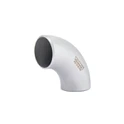
- 304 Stainless Steel: This is the most widely used grade of stainless steel. It's a versatile material that offers good corrosion resistance and is suitable for a wide range of applications. It's also relatively inexpensive, making it a popular choice for many projects. You can check out our 304 Buttweld Elbow for more information on this grade.
- 316 Stainless Steel: This grade of stainless steel is more corrosion-resistant than 304, especially in environments where there is exposure to saltwater or other corrosive substances. It's also more expensive than 304, but it's worth the investment if you need a higher level of corrosion resistance.
When choosing the material grade, you need to consider the specific requirements of your project. If you're working in a corrosive environment, such as a marine or chemical processing facility, you'll likely need to choose a higher-grade stainless steel. If you're working in a less demanding environment, such as a residential plumbing system, 304 stainless steel may be sufficient.
Size and Dimensions
The size and dimensions of the stainless steel U bends are also important factors to consider. You need to choose U bends that are the right size and shape for your specific application. The size of the U bends is typically measured by the outer diameter (OD) and the wall thickness.
- Outer Diameter (OD): The OD of the U bends refers to the diameter of the pipe on the outside. You need to choose U bends with an OD that matches the size of the pipes in your system. If the OD is too small, the U bends may not fit properly, and if it's too large, they may not provide a secure connection.
- Wall Thickness: The wall thickness of the U bends refers to the thickness of the pipe wall. You need to choose U bends with a wall thickness that is appropriate for the pressure and temperature requirements of your system. If the wall thickness is too thin, the U bends may not be able to withstand the pressure, and if it's too thick, they may be more expensive and heavier than necessary.
In addition to the OD and wall thickness, you also need to consider the radius of the U bends. The radius refers to the curvature of the U shape. You need to choose U bends with a radius that is appropriate for the space available in your system. If the radius is too small, the U bends may not fit properly, and if it's too large, they may take up too much space.
Bend Angle
The bend angle of the stainless steel U bends is another important factor to consider. The bend angle refers to the angle at which the pipe is bent. The most common bend angles for U bends are 90 degrees and 180 degrees, but other angles are also available.


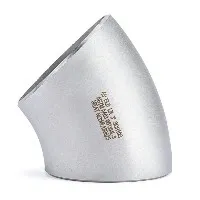
- 90 Degree Bend Angle: This is the most common bend angle for U bends. It's used to change the direction of fluid or gas flow by 90 degrees. It's suitable for a wide range of applications, including plumbing, HVAC, and manufacturing. You can check out our 45 Degree Steel Elbow for more information on different bend angles.
- 180 Degree Bend Angle: This bend angle is used to change the direction of fluid or gas flow by 180 degrees. It's commonly used in applications where the fluid or gas needs to be redirected back in the opposite direction.
When choosing the bend angle, you need to consider the specific requirements of your project. If you need to change the direction of fluid or gas flow by a specific angle, you'll need to choose U bends with the appropriate bend angle.
End Connection Type
The end connection type of the stainless steel U bends is also an important factor to consider. The end connection type refers to the way the U bends are connected to the pipes in your system. There are several different end connection types available, including butt weld, socket weld, and threaded.
- Butt Weld: This is the most common end connection type for stainless steel U bends. It involves welding the U bends directly to the pipes in your system. Butt weld connections are strong and leak-proof, but they require specialized welding equipment and skills. You can find more information about our Stainless Steel Elbow Fitting which includes butt weld options.
- Socket Weld: This end connection type involves inserting the U bends into a socket on the pipes in your system and then welding them in place. Socket weld connections are also strong and leak-proof, but they're easier to install than butt weld connections.
- Threaded: This end connection type involves screwing the U bends onto the pipes in your system using threads. Threaded connections are easy to install and remove, but they're not as strong or leak-proof as butt weld or socket weld connections.
When choosing the end connection type, you need to consider the specific requirements of your project. If you need a strong and leak-proof connection, you'll likely need to choose butt weld or socket weld connections. If you need a connection that's easy to install and remove, threaded connections may be a better option.
Other Considerations
In addition to the factors mentioned above, there are a few other things to consider when choosing stainless steel U bends.
Quality and Certification
It's important to choose stainless steel U bends that are of high quality and meet the relevant industry standards and certifications. Look for U bends that are made from high-quality materials and are manufactured using advanced production techniques. You should also look for U bends that are certified by reputable organizations, such as the American Society of Mechanical Engineers (ASME) or the International Organization for Standardization (ISO).
Supplier Reputation
Another important consideration is the reputation of the supplier. You want to choose a supplier that has a good track record of providing high-quality products and excellent customer service. Look for a supplier that has been in business for a long time and has a good reputation in the industry. You can also check online reviews and testimonials from other customers to get an idea of the supplier's reputation.
Cost
Finally, you need to consider the cost of the stainless steel U bends. The cost of the U bends will depend on several factors, including the material grade, size and dimensions, bend angle, and end connection type. It's important to compare prices from different suppliers to get the best deal. However, you shouldn't sacrifice quality for cost. Make sure you choose U bends that are of high quality and meet the requirements of your project.
Conclusion
Choosing the right stainless steel U bends for your project is crucial for ensuring the success of your project. By considering the factors mentioned in this blog, such as the material grade, size and dimensions, bend angle, end connection type, quality and certification, supplier reputation, and cost, you can make an informed decision and choose the U bends that are best suited for your specific needs.
If you have any questions or need further assistance in choosing the right stainless steel U bends for your project, please don't hesitate to contact us. We're a leading supplier of stainless steel U bends, and we're here to help you find the perfect solution for your project. Whether you're working on a small residential plumbing project or a large industrial manufacturing project, we have the expertise and the products to meet your needs.
Let's start the conversation and see how we can help you with your stainless steel U bend requirements. We look forward to working with you!
References
- ASME Boiler and Pressure Vessel Code
- ISO Standards for Stainless Steel Products
- Stainless Steel Handbook